The Unseen Cost Of “Space Saving” Seed Starting Shelves

The Real Price Of Compact Design
You want to feel resourceful. That’s why you’re drawn to compact shelf setups that promise to do more with less. But the mechanism here borrows from economics: you’re experiencing what economists call “hidden costs” – expenses that don’t appear on the price tag but drain your wallet and time anyway. A cramped seed shelf forces you to buy specialty fixtures, LED arrays that cost more per watt because they’re slim, and humidity domes that don’t fit standard trays. You end up spending more to solve the problems compactness creates.
The real trap is thinking smaller shelves reduce overall cost. They don’t. A four-foot by two-foot shelf holding standard full-size trays costs less to outfit than a wall-mounted vertical unit holding half-trays. You buy more fixtures, more connectors, more extensions to replace what a standard setup gives you for free. Your per-seedling infrastructure cost rises the moment you optimize for space instead of efficiency.
The Optimization Rabbit Hole
Most people frame this as “maximizing space,” which sounds smart until you track where your time actually goes. You spend hours researching compact shelf designs, comparing modular systems, and then rebuilding the setup mid-season because the configuration doesn’t match reality. This is opportunity cost dressed as productivity. Every hour spent fine-tuning a shelf system is an hour you’re not actually starting seeds or managing the ones you have.
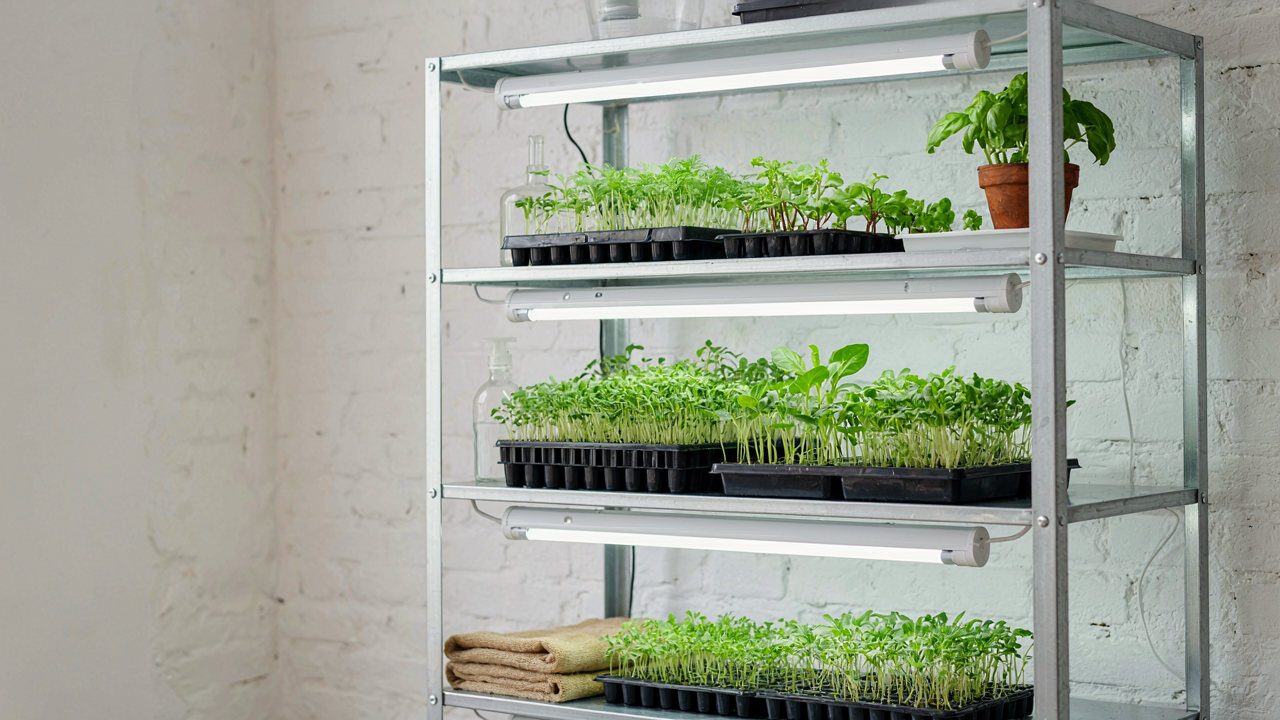
The protocol to avoid this is simple: build once, scale horizontally, not vertically. Use one standard four-foot fluorescent shop light on a basic metal shelf frame. Repeat that unit as space allows. You adjust lighting, watering, and spacing with proven methods instead of inventing new ones every season. Standardization kills complexity faster than optimization ever will.
The Minimalist’s Seed Starting Rack: Less Is The Only More

One Shelf Beats Sprawl
You want to believe you need a whole unit. You don’t. The real reason most people buy oversized racks is the fantasy that they’ll start 500 seeds and become self-sufficient. They won’t. A single shelf forces the actual constraint: what will you realistically tend? Economics calls this scarcity pricing—you allocate your limited resource (the shelf) to items with the highest return. One shelf means you pick tomatoes, peppers, and herbs over ornamentals you’ll kill anyway.

A standard two-foot shelf holds 24 to 36 four-inch pots depending on pot arrangement. That’s enough for a season. Fluorescent shop lights mount directly above with simple chains or brackets. The mechanism is brutal: fewer plants means stronger seedlings because you water deliberately instead of blanket-watering 200 weak starts. One shelf also means one light cycle, one watering schedule, one temperature zone to monitor. Complexity dies when you can see and reach everything without moving.
Start With Tomatoes And Peppers
Forget diversity for diversity’s sake. Tomatoes and peppers cost the most at transplant size and grow reliably indoors under basic light. This isn’t opinion—it’s economics. A single pepper plant can cost three dollars at retail; you start one for pennies. Herbs like basil and cilantro fill remaining space because they germinate fast and mature in time for harvest before your seedlings go into soil.
The protocol: allocate two-thirds of your shelf to tomato and pepper varieties you actually eat. Use the remaining third for herbs that bolster your kitchen output immediately. Start them in succession, not all at once, so you’re not drowning in hardening-off work in May. Stagger by one week. This prevents the common failure: having 40 seedlings ready simultaneously with nowhere to put them outdoors, so they get leggy and weak waiting for soil to warm.
DIY Grow Light Shelves: The ‘Set It And Forget It’ Principle

Automated Light Cycles, Simplified
You want to believe that plants just need light and water, so you don’t have to think about timing. The real mechanism is photomorphogenesis: plants respond to light duration, not just intensity. Most seedlings need 14 to 16 hours of light daily to develop properly without stretching. A basic timer solves this. Plug your grow lights into a mechanical or digital timer set to turn on at 6 AM and off at 8 PM. That consistency matters more than the specific hours you choose.

Don’t waste money on smart home integration for this. A fifteen-dollar mechanical timer from any hardware store works as well as a WiFi-enabled system and doesn’t fail when your router glitches. Set it once, and the plants get the same photoperiod every single day without your input. The only reason to check the timer is to verify it’s still running after a power outage. Consistency beats optimization here.
Durable, Low Maintenance Materials
Steel shelving units and aluminum light fixtures outlast particle board and plastic by years. Moisture from misting and watering degrades cheap materials fast. Industrial shelving rated for 500 pounds per shelf handles wet trays and soil without sagging. Aluminum T5 or LED fixtures don’t rust like bare steel bulb holders do, and they mount cleanly without wire clutter.
Wire shelving collects algae and mineral deposits where moisture pools. Use steel mesh trays or rigid plastic plant trays that you can actually remove and clean. The goal is a system you can rinse down without replacing components every two seasons. Choose materials that tolerate water contact repeatedly, then swap out only the consumables like soil and bulbs.
The Scarcity Mindset Indoor Seed Starting Setup
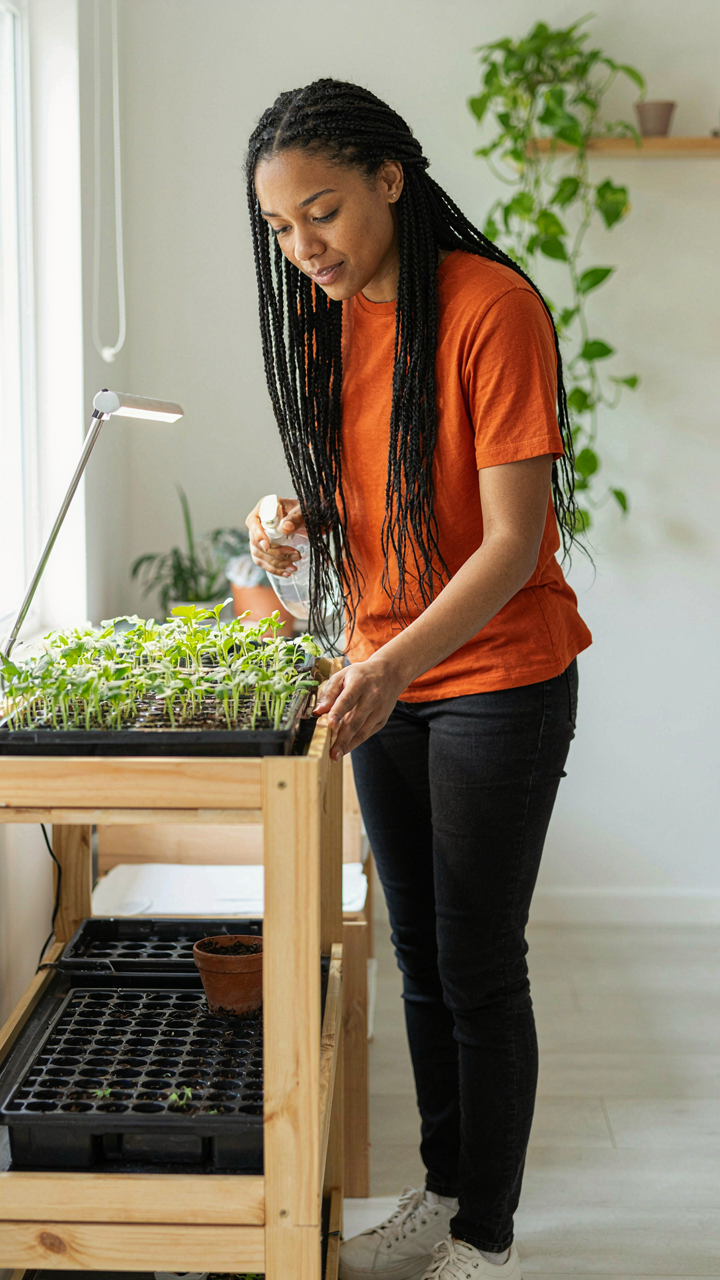
When Budget Forces Better Decisions
You’re looking for permission to spend less and feel smart about it. The real mechanism is economic constraint: scarcity forces optimization. In economics, this principle states that limited resources demand allocation discipline. Apply this to your seed shelf, and you stop buying redundant equipment and start engineering one system that handles multiple crops across seasons without waste or breakage.

Most growers overcorrect by treating their setup like a nursery operation. They stack trays, buy modular shelving, add timers for every outlet, then use thirty percent of it. The constraint isn’t money or space—it’s attention. One well-built shelf with thoughtful placement beats five half-used shelves every time. You need heat tape under seedlings, one quality light fixture angled correctly, and a watering method that doesn’t flood your closet floor.
The Real Cost Of Excess Gear
Stop buying “just in case” equipment because each piece you don’t use forces you to maintain it, store it, and mentally manage it later. When you add a second light you never turn on, you’ve now committed to dusting two lights, checking two timers, and justifying why one sits idle. The opportunity cost isn’t the money spent—it’s the mental weight and physical space you surrender.
Redundancy kills consistency, not supports it. Pick one seed tray size, one light height rule, one watering day. Constraints make systems repeatable. When you have fewer variables, you control germination rates, identify what actually works, and scale up only what proves itself. Build your shelf around your cheapest durable shelf base, the most efficient light source per square foot available to you, and nothing optional.
Vertical Real Estate: The Often Botched Seed Starting Room Fix
Light Penetration Limits
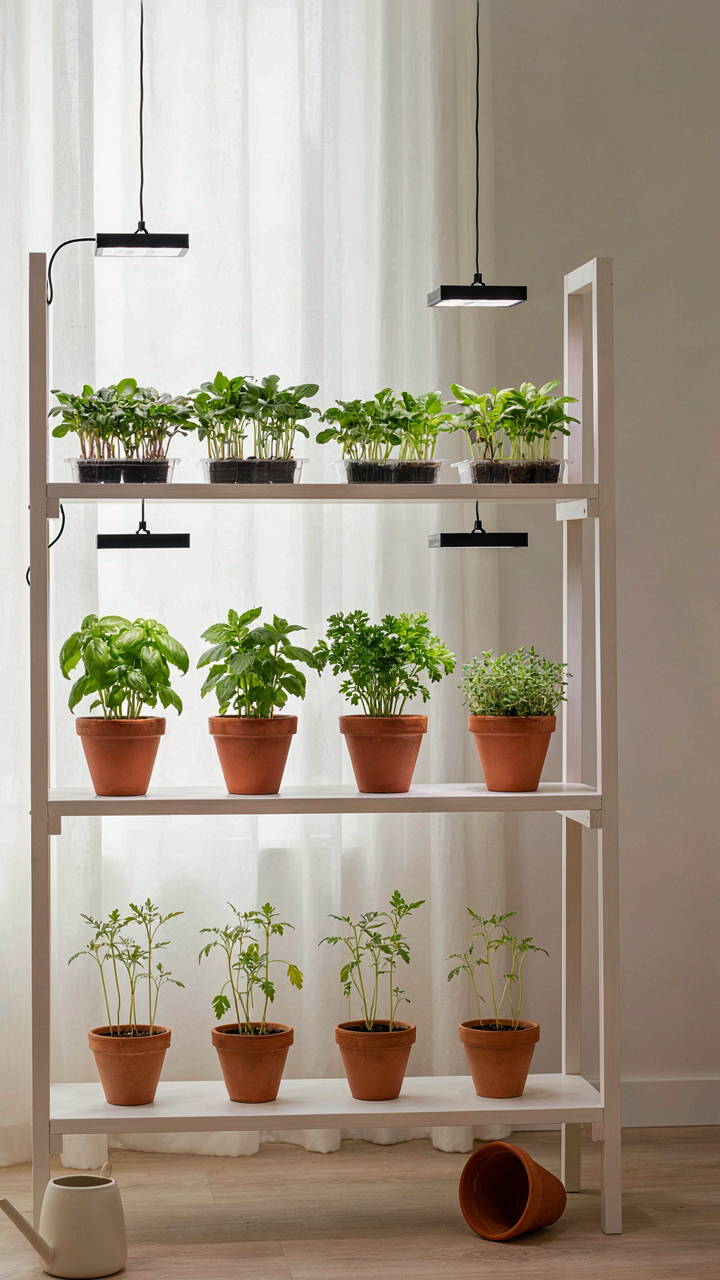
You want vertical shelves because they look efficient and save floor space, but you’re actually hoping nobody notices your setup doesn’t work. Here’s the mechanism: light from a single fixture spreads in a cone, and intensity follows the inverse square law from physics. Double your distance from the light source and you receive one quarter the light energy. Stacking seedlings three shelves high under one fixture guarantees the bottom tier gets starved.

Most growers stack shelves 12 to 18 inches apart and mount one fluorescent or LED fixture above the top shelf. The math fails immediately. Bottom seedlings receive 60 to 70 percent less usable light than top seedlings, causing etiolation and weak growth even with adequate hours. You need independent fixtures per shelf or accept that only the top two tiers will perform. The solution is brutal: either install individual T5 or LED panels above each growing level, or stop pretending the bottom shelf works and use it for storage.
Air Circulation Physics
Stagnant air around seedlings creates microclimate dead zones where humidity spikes and fungal pressure explodes. Borrowing from HVAC principles, you need velocity gradient across your growing medium: air must move consistently but not violently. Most setups deploy one desktop fan aimed at the shelves from a distance, which creates uneven exposure and actually forces some seedlings into stress while others dry out too fast.
Install a low-speed fan that runs 14 to 16 hours daily, positioned to pull air across all shelves horizontally rather than blasting from one direction. The fan should move air without causing visible leaf flutter. Oscillating fans waste energy because seedlings need consistent exposure, not sweeping coverage. Mount it perpendicular to your shelf unit so air passes through the canopy, not around it. This single change eliminates damping off risk and strengthens stem lignification far more than any nutrient adjustment.
The 3 Tier Seed Starting Protocol
Germination Growth And Hardening Stages
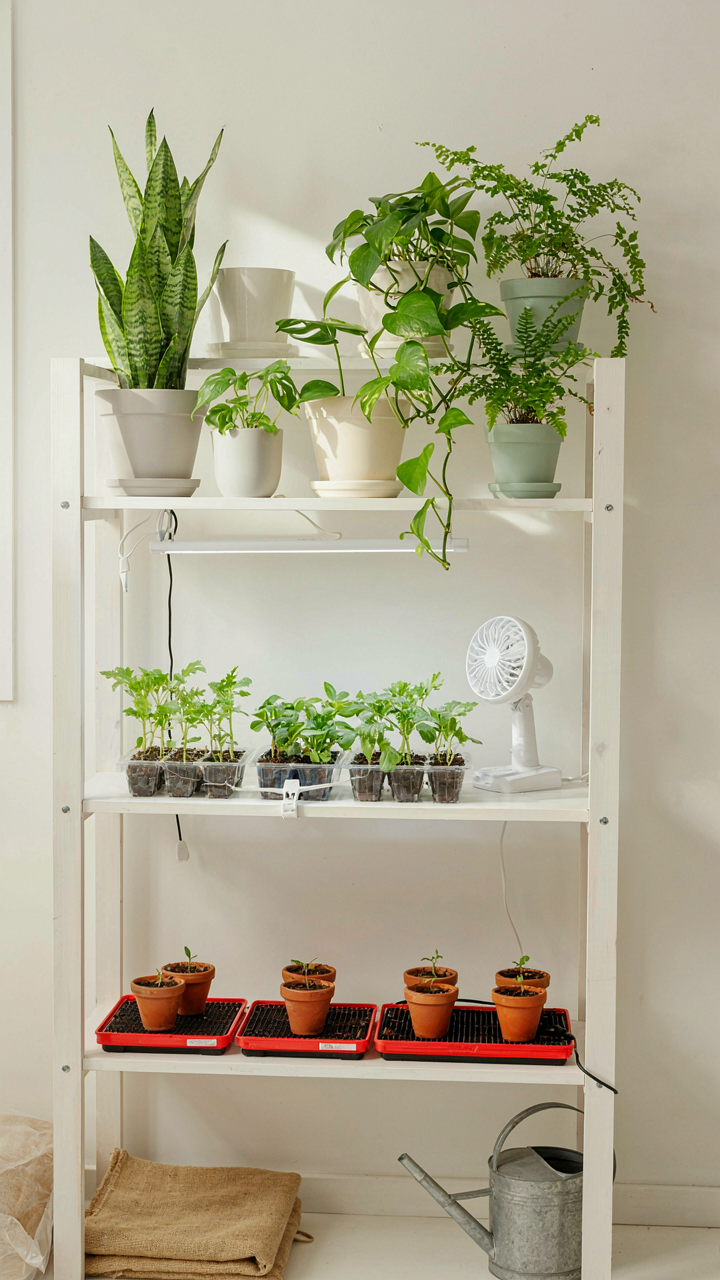
You want a system that looks organized so you feel like you’re doing this right. What actually matters is matching environmental conditions to what the plant needs at each biological stage, not the aesthetic. Germination requires warmth and moisture but no light. Growth demands light intensity and cooler air. Hardening needs wind stress and temperature fluctuation.

These stages demand different shelf positions and equipment. Most people run everything under the same lights at the same temperature for weeks, which produces weak, leggy seedlings. Bottom heat tape under germination trays accelerates germination by seven to ten days. Once cotyledons emerge, move seedlings to the growth stage where light sits four to six inches above foliage and temperatures drop ten degrees. Hardening happens off-shelf, outside or in a cold frame, where plants toughen before transplant.
Dedicated Zones For Efficiency
Borrowed from manufacturing’s concept of workflow stations, your shelf system needs spatial segregation where each zone performs one function only. A germination zone and a growth zone mixed together create bottlenecks and kill efficiency. Germination trays occupy bottom space with heat mats underneath. They stay there until sprouting completes, then you remove them entirely to make room for new seed batches starting their own cycle.
Growth zone takes middle and upper tiers where fluorescent or LED panels run sixteen hours daily. Air circulation matters here more than anywhere else. A small oscillating fan running two hours daily prevents fungal issues and builds stem strength. Keep hardening outside the shelf structure completely. The moment you try to harden seedlings on the same shelf as your growth stage, you compromise light and temperature for both groups. Compartmentalization compounds output without adding square footage.
Beyond The Buzz: Real Seed Starting Setup Indoors Components
What Actually Needs To Be There
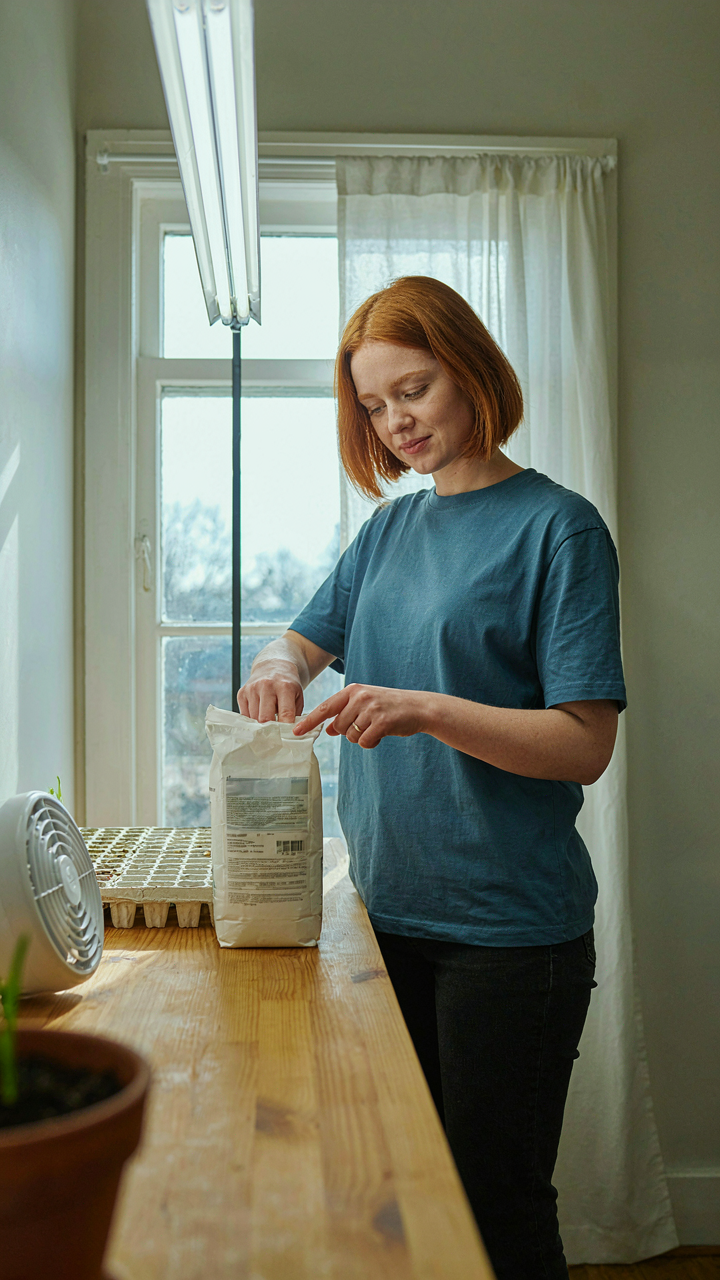
You want to feel like you’re doing this right, so you’re looking for permission to buy things. Here’s the mechanism: seedlings need three inputs—light, warmth, and air movement—and nothing else matters until those three work. Everything else is scaffolding around those three.
- T5 or T8 fluorescent lights: Deliver the spectrum seedlings need without excessive heat. Position 2-3 inches above seedlings and raise as they grow. LED grow lights work but cost more upfront for the same PAR output.
- Heat mat (optional but proven): Warms soil to 70-75°F, accelerating germination. Most useful for cold-season starts in unheated homes. Not necessary if your room stays above 65°F consistently.
- Trays and seed-starting mix: Use standard 1020 trays with drainage holes and sterile seed-starting medium. Reuse trays across seasons; they’re durable plastic designed for this. Buy new medium each time to prevent disease carryover.
- Small fan: Creates air movement that prevents damping off and strengthens seedling stems. A basic desk fan on low, positioned to move air without direct blast, runs 10-14 hours daily alongside lights.
- Shelving that holds weight: Metal utility shelves handle 300+ pounds per shelf when properly assembled. Wood shelves sag under wet seed trays and grow lights. Verify shelf depth matches your light fixture footprint.

Everything beyond these five components is optimization, not necessity. Most seed starting fails because people skip light intensity or air movement while obsessing over soil blends and nutrient timing. Growers have started seeds in wet paper towels under a window. Your setup beats that by an order of magnitude if you nail the fundamentals.
The Trap Of Adding What Doesn’t Work
The common advice says to buy a “complete seed starting kit” with built-in humidity domes, integrated watering systems, and labeled compartments. This is lazy marketing dressed as convenience. These kits fail because they prioritize appearance over the actual physics of plant growth and they create passive buyers instead of active growers.
Humidity domes trap too much moisture, creating conditions where damping off fungi thrive. Built-in watering systems deliver inconsistent moisture and you lose the tactile feedback that tells you when soil is dry. You learn more from bottom-watering in a shallow tray than from any automated system that mutes the signal between you and the seedling’s actual need. Skip the integrated approach and buy components separately so you can adjust each one independently based on what you observe happening in front of you.
Building A DIY Grow Light Shelf That Actually Works

Light Intensity Without Overkill
You want your shelf to look purposeful, like you’ve invested in something that matters. The real mechanism is photosynthetic photon flux density, borrowed from plant physiology. PPFD measures the actual photons hitting your seedlings per second, not watts or lumens. Most seedlings need 200 to 400 micromoles per square meter per second. Overshooting this wastes electricity and creates leggy, stressed plants anyway.

Position T5 fluorescents or full-spectrum LEDs 2 to 4 inches above seedlings, then adjust based on what you see. Stretching means light is too far. Purple or stunted growth means insufficient intensity or wrong spectrum. Run lights 14 to 16 hours daily, not 24. The dark period matters more than people admit because it’s when seedlings actually build structure. Start conservative, measure if you’re serious, and stop guessing.
Wiring For Durability, Not Aesthetics
Plug strips that look clean fail in humid environments because they skimp on internal spacing and insulation. Run individual heavy-duty outdoor extension cords rated for wet locations to each light fixture instead. Seedling shelves create constant condensation and water splash. Standard indoor wiring corrodes within a season. Secure cords with cable clips every 12 inches so they don’t pull free or create tripping hazards. Use timers with mechanical backs, not digital, because they survive moisture better and don’t need batteries dying mid-cycle.
Inspect your entire setup monthly for visible corrosion or loose connections. Water and electricity require respect here. Plug each light into its own timer so you control zones independently if you expand. This prevents a single failure from killing an entire shelf. When condensation builds on fixture casings, wipe it weekly. The infrastructure outlasts your intention to use it only if you treat the wiring as a critical system, not an afterthought.
The Single Source Seed Starting Station: Focus Multiplies
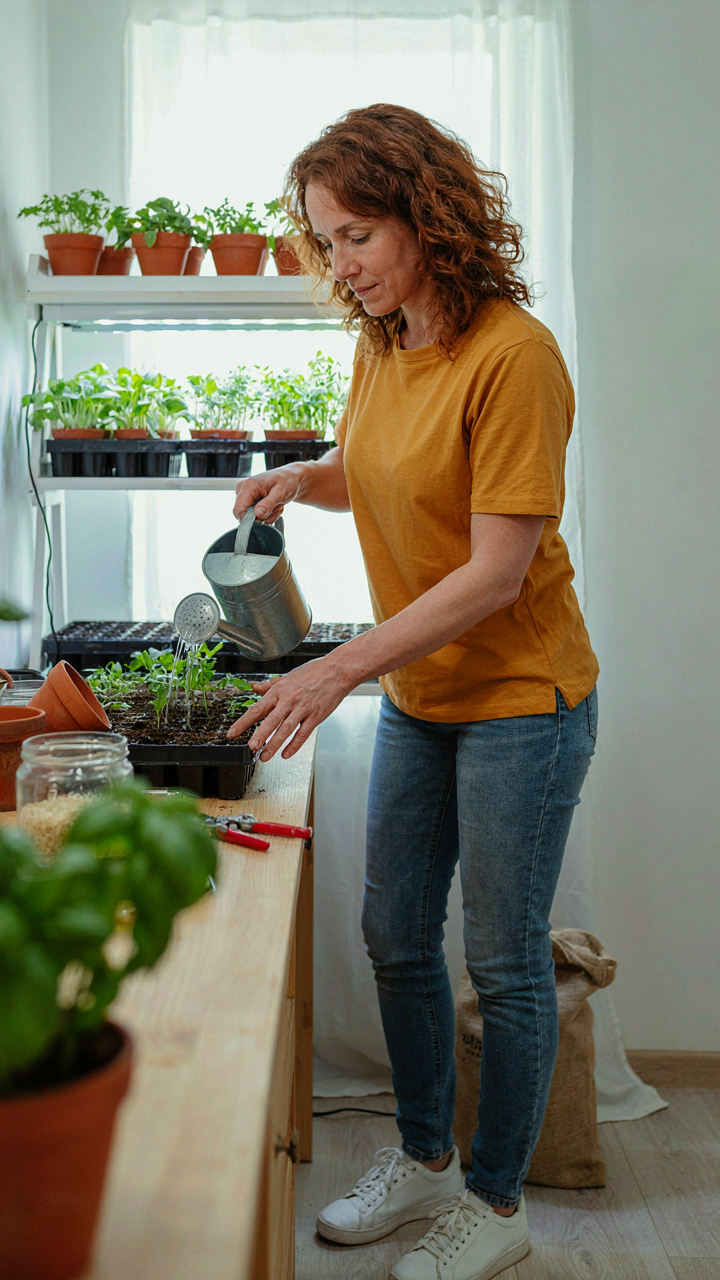
Consolidate Everything In One Location
You want to believe scattered supplies across your home won’t cost you anything. They will. Scattering introduces friction, and friction kills consistency. Think of your seed starting shelf as a supply depot in logistics terms: centralization reduces transport time and decision fatigue. Every trip to another room for heat mat cables or labels is a break in momentum. Your brain switches context. You lose the thread. Small homes force this choice anyway, so use constraint as design principle.
The mechanism is simple. Everything your seedlings need lives within arm’s reach: soil, containers, labels, watering can, fertilizer, heat mats, grow lights. No hunting. No substitutions with wrong tools. When you’re watering at 6 AM, you grab the spray bottle that’s already there instead of using a cup from the kitchen that splashes unevenly. When you pot up, your soil mix sits next to your containers. Your hands stay busy. Your mind stays focused. One station eliminates the gap between intention and execution.
Stop Moving Between Multiple Rooms
You lose more time walking than you think. Every seed starting task breaks into micro steps: assess, gather, execute, clean, store. Common advice says organize by task type and keep supplies “nearby.” That’s incomplete. Nearby still means multiple locations. Real efficiency means zero distance between related actions. If you water seedlings, then check growth under lights, then adjust racks, your feet should not move. Your station becomes the verb, not the noun.
Measure the actual distance from your seed shelf to anywhere you currently store backup soil or extra containers. Multiply that by the number of trips per week. That’s the time tax you’re paying for split storage. Consolidation forces a one time reorganization cost that pays every single day afterward. The protocol is direct: audit what you touch during a full seed cycle, then build your station to contain all of it. No exceptions for occasional items. Store them elsewhere or accept the friction cost.
Your Biggest Obstacle Isn’t Space; It’s Your Addiction To Complexity

You don’t need the perfect setup. You need a shelf, a light, and soil. Most people fail because they’re waiting for conditions that don’t exist instead of starting with what they have. Pick one shelf in your home today. Put a grow light above it. Start seeds tomorrow. Everything else you think you need will reveal itself through doing, not planning. Your setup beats perfection sitting in your head.