Beyond The Instagram Aesthetic: Why Your Keyhole Garden Fails

The Myth Of Shape Over Function
You want to believe a garden design solves your yield problem so you don’t have to change your habits. The truth is simpler and more uncomfortable: the keyhole shape itself produces nothing. It’s a traffic pattern, not a productivity engine. The shape lets you reach the center bed without stepping on soil. That’s it. The real work happens in what you fill it with and how you maintain it, not the geometry.
Most people buy into keyhole gardens because they see the aesthetic online and assume the design carries some inherent magic. It doesn’t. The shape became popular in permaculture circles because it maximizes accessible growing area in tight spaces, but accessibility alone won’t feed you. A poorly maintained keyhole garden yields worse than a poorly maintained rectangle because the curved paths trap moisture and create dead zones where disease spreads faster.
What Actually Determines Your Harvest
Borrow a term from soil science called cation exchange capacity. It measures a soil’s ability to hold and release nutrients to plants. Your keyhole garden’s real productivity hinges on this single variable more than any other factor. A keyhole bed with depleted, compacted soil produces nothing. The same shape filled with actively managed, nutrient-rich soil produces abundance. The design is neutral. The soil quality is everything.
Most keyhole garden guides skip this entirely and focus on composting the kitchen waste in the central chimney. That’s necessary but incomplete. You need to know your soil’s pH, organic matter content, and nutrient profile before planting anything. The central compost chamber speeds decomposition and feeds nutrients into the bed below it, but only if you feed it the right materials and manage temperature and moisture correctly. Without baseline soil testing, you’re guessing. Test your soil first, amend based on results, then use the keyhole structure to organize your growing strategy around those facts.
The Biomimicry Advantage: Keyhole Garden Design
How Soil Builds Itself Without You
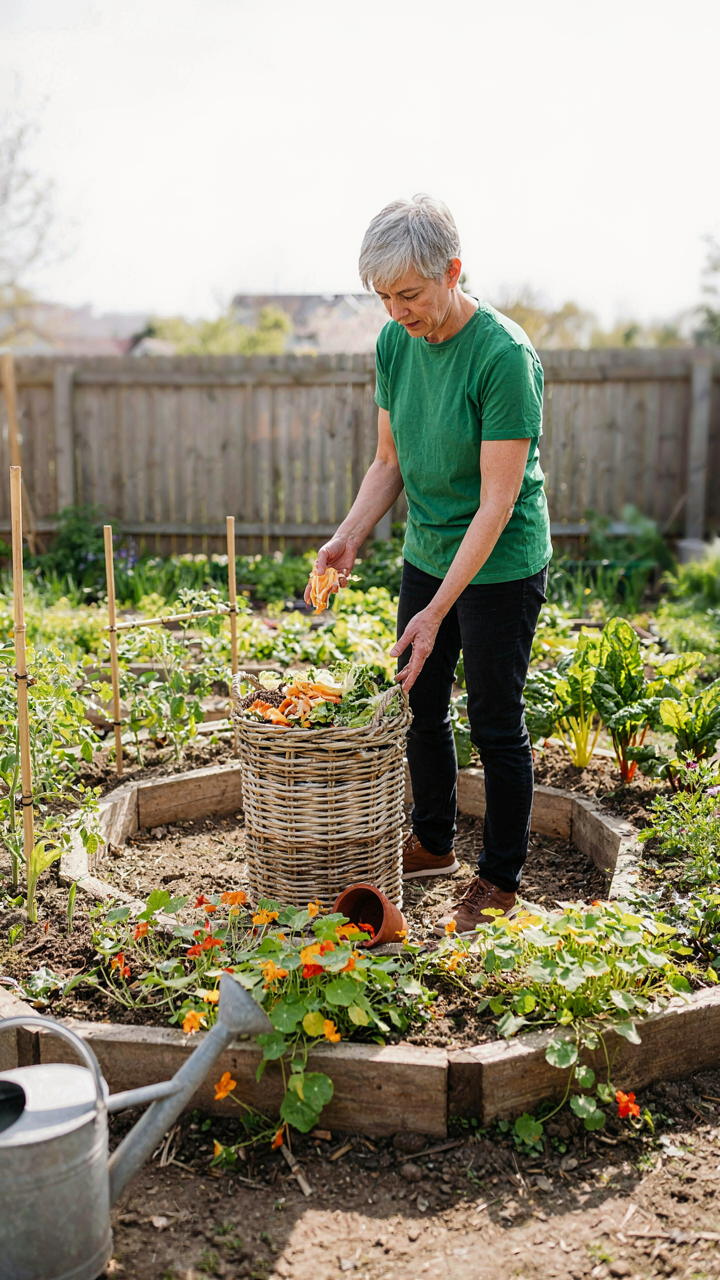
You want to believe that good soil is something you buy or manufacture. It isn’t. The real mechanism at work in keyhole gardens comes from systems ecology: the principle of succession, where ecosystems move toward complexity and stability through layered inputs over time. A keyhole garden doesn’t fight this process—it accelerates it by stacking decomposition zones in one compact footprint. The basin catches organic matter. The keyhole arm channels it. Microbes and fungi colonize the layers before you plant anything.

Most gardeners treat soil amendment like a one-time transaction: add compost, add fertilizer, add mulch, then hope. Keyhole design inverts this. It creates a permanent processing unit where every organic input—kitchen scraps, grass clippings, leaf matter—feeds a living system that converts dead material into biological capital. You’re not managing soil. You’re managing a decomposition pipeline that produces soil as a side effect.
Where Forest Floor Logic Meets Garden Math
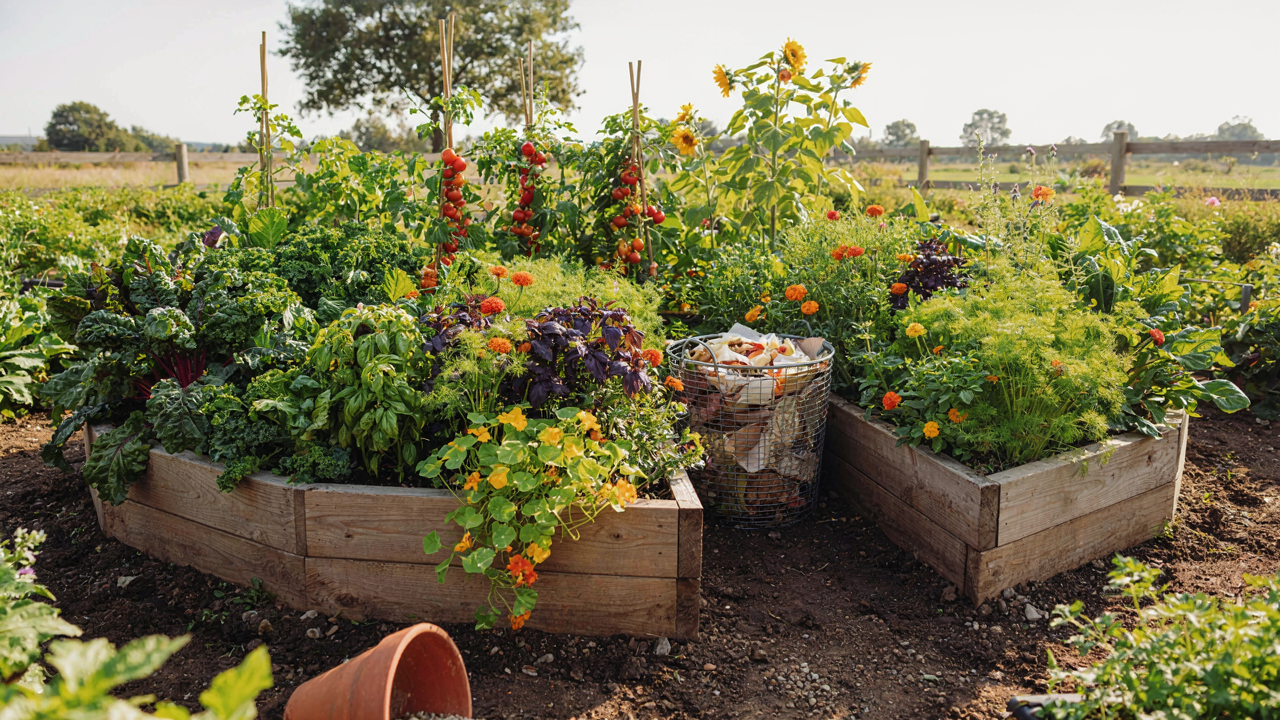
Forests don’t haul in nutrients. They recycle them through layers. Nutrient cycling in ecology describes how carbon, nitrogen, and minerals move through organisms and soil in closed loops. A keyhole garden mimics this by creating a vertical decomposition stack: the basket or compost chamber at the center accelerates breakdown, the mulch layer retains moisture and feeds the soil food web, the raised beds sit above this slow-release nutrient engine. What takes a forest decade to establish happens in a keyhole garden in one season.
The conventional wisdom says add compost yearly. That’s incomplete. You’re not trying to add more each year—you’re trying to build a self-regulating system that produces its own compost continuously. The keyhole arm funnels water through decomposing matter before it reaches plant roots, meaning every drop of water becomes a nutrient solution. Stop thinking about soil amendments as separate from the garden structure. The structure itself is the amendment machine. Feed the basket year-round with kitchen scraps and yard waste, and the system never stops working.
DIY Keyhole Garden: The “Scrappy Efficiency” Method
Repurposing Materials For Minimal Cost
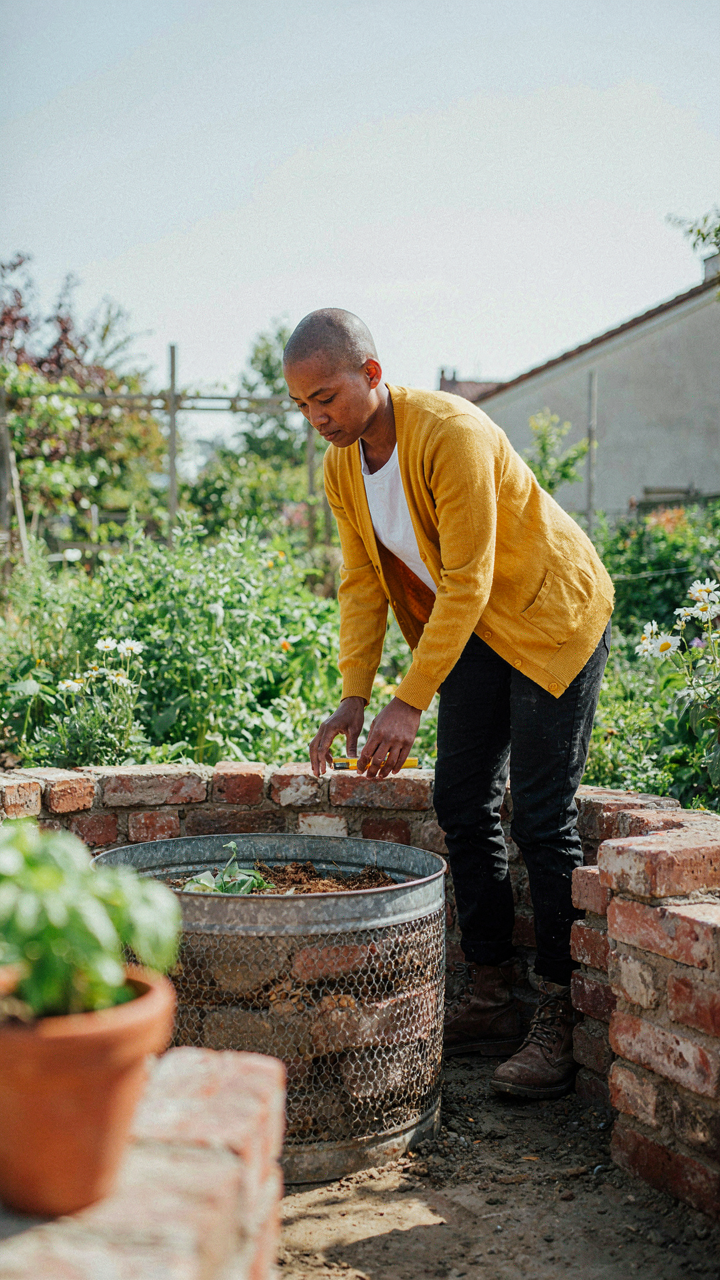
You want to build this without dropping cash because you suspect everyone selling “premium garden kits” is extracting margin from your scarcity. The real mechanism is substitution: any material that holds soil, allows drainage, and won’t leach toxins into your food works. The keyhole shape is just geometry. The fill is just decomposition. Neither requires branded materials.

Here’s what actually works:
- Reclaimed bricks or concrete blocks: Stack them in a keyhole perimeter. They’re weatherproof, widely available free from demolition sites, and outlast most people’s gardens.
- Shipping pallets: Disassemble and use the boards as retaining walls. Check the stamp—heat-treated (HT) is safe; chemically treated (DB) is not. Free from warehouses.
- Stacked stone or fieldstone: Collect from your property or nearby creek beds. Requires no mortar if you stack tight. Drains perfectly.
- Corrugated metal or aluminum sheets: Old roofing or barn siding works. Rust doesn’t hurt—it’s iron. Cut and bend to shape. Heavy but durable for years.
- Bamboo poles or saplings: Lash together with twine or wire. Creates an open frame you fill with smaller materials. Rots eventually but costs nothing and biodecomposes.
The basin fills with layered compost, aged manure, and kitchen scraps. The central chimney—usually a perforated pipe or bundle of sticks—speeds decomposition and water penetration. You’re not buying a system. You’re assembling local waste into a soil-building machine.
Building For Longevity, Not Just Looks
Most people build keyhole gardens expecting them to last like hardscape. They fail within a season because they prioritize aesthetics over material science. The mechanism is exposure: whatever touches soil, water, and freeze-thaw cycles degrades. Plan for it.
Untreated wood rots. Thin plastic degrades under UV. Unfired clay cracks. Concrete cracks worse. The materials that survive longest are those that oxidize on the surface but maintain structural integrity underneath: stacked stone, fired brick, or metal that’s allowed to rust as a protective layer rather than fought against. Build your keyhole three inches deeper than you think necessary. Soil settles. Compost compacts. The basin that’s flush now will be sunken next spring. Use a level when building, not a ruler. Account for slope toward the chimney so water actually channels where you want it. Reinforce the keyhole’s inner curve—that’s where water pressure and soil weight concentrate. If using wood, sit it on gravel, not soil, so air circulates underneath and extends its life by years. The protocol is simple: choose materials that age into strength, not materials that photograph well on day one.
The Soil Wealth Principle: Beyond Just “Good Dirt”
Microbial Ecosystems As The True Engine
You’re reading this because you want proof that small-space gardening actually works, and you’re tired of being sold generic “quality soil” as the answer. Here’s what nobody states plainly: soil isn’t dirt. It’s a living system. Borrow the ecology framework from microbiology, and think of your keyhole garden bed as a closed-loop bioreactor, not a container. The bacteria, fungi, and organisms do the nutrient conversion work. You’re just the operator maintaining conditions.

Most gardeners fixate on NPK ratios and miss the mechanism entirely. A keyhole garden’s tight space means you cannot rely on passive decomposition or diluted biology. You build microbial density by stacking organic matter in layers and sustaining moisture and airflow. The compost basket creates temperature and moisture gradients that accelerate microbial colonization. Without understanding this as an active biological engine rather than passive potting soil, you’ll rebuild your bed every season instead of compounding fertility year over year.
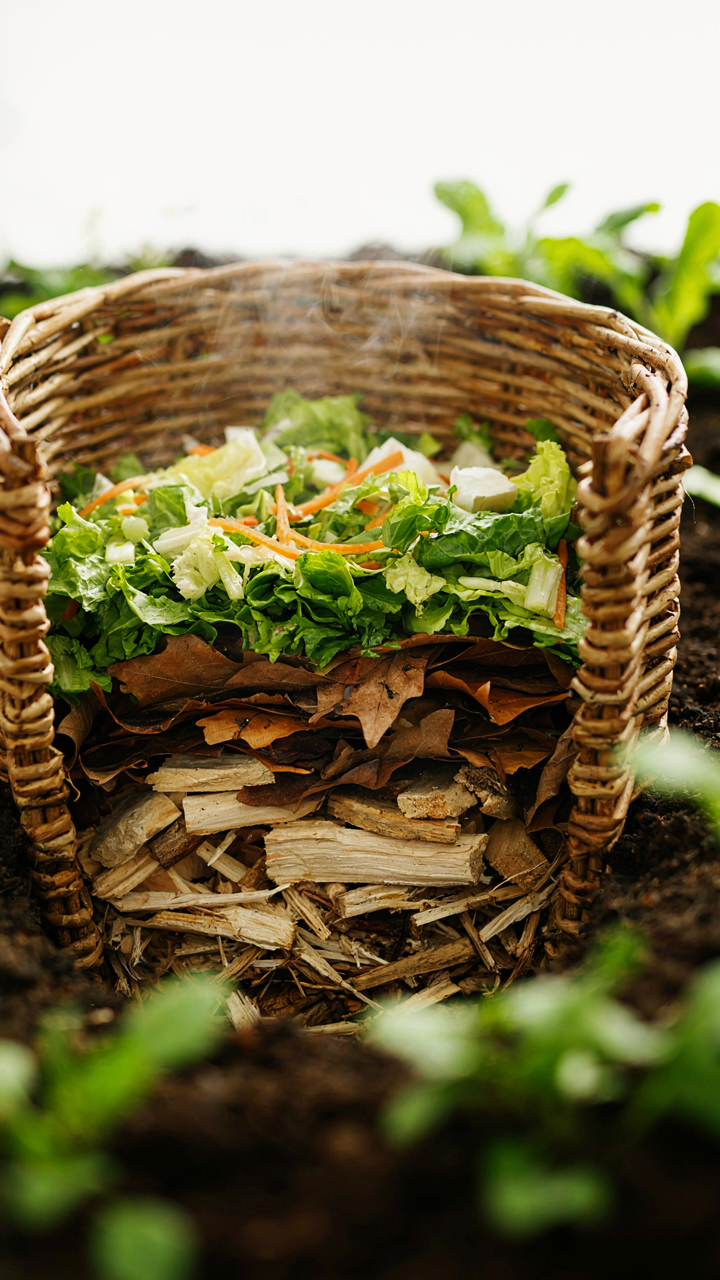
Compost Basket As A Living Nutrient Pump
The compost basket isn’t decorative or merely convenient. It’s the nutrient delivery mechanism that distinguishes keyhole gardens from flat beds. Kitchen scraps and garden waste decompose inside the basket while moisture percolates downward, carrying soluble nutrients directly to root zones. This isn’t slow-release fertilizer. This is active microbial conversion happening on demand, where decomposition rate matches plant demand because plants signal through root exudates which organisms to activate.
Place the basket off-center in the keyhole’s circular design so nutrients distribute unevenly across the bed, forcing roots to forage and develop strength. Fill the basket with nitrogen-rich materials first, carbon materials second, then repeat the layers. This alternation prevents matting and maintains aerobic decomposition. The basket should drain completely within 7 to 10 days after filling. If water pools at the bottom, your carbon layer is too dense or your basket drainage holes are blocked. Check and adjust weekly during growing season.
Keyhole Garden Layout: The “Perennial Productivity” Playbook

Plant Placement For Year Round Harvests
You want to believe a keyhole garden magically produces food forever without planning. It doesn’t. The mechanism is stacking bloom times and harvest windows so something matures while something else depletes. This is artillery spotting applied to vegetables: you’re calculating fire for effect across time, not space.

Plant fast-cycling crops (lettuce, radish, spinach) in the outer beds where they finish in 30-45 days. Root perennials (asparagus, rhubarb) occupy the compost basin’s outer ring permanently. Herbs bridge the gap: they’re harvested continuously without removal. The keyhole’s central core stays reserved for whatever needs interruption least, because foot traffic there matters more than elsewhere.
Perennials anchor production. Annuals fill gaps. Herbs run interference. This stacking prevents the dead zone every small gardener faces: the month when nothing’s ready but you’re still hungry. Adjust for your growing season length, then lock in planting dates 90 days before the first frost so perennials establish before dormancy hits.
Layering Multiple Plant Guilds
Stop treating a keyhole garden like rows. It’s not. Think of it like forest succession: pioneer plants establish conditions for the next tier. This is ecology’s principle of niche differentiation applied deliberately instead of waiting decades.
Place nitrogen-fixing legumes (beans, peas) where their root nodules feed shallow-feeding greens directly above them. Tall plants (tomatoes, pole beans) shade heat-sensitive crops on the south edge during peak summer. Edible flowers attract pollinators while occupying vertical space annuals can’t reach. The compost basin feeds everything without you hauling nutrients elsewhere. Each layer performs a function that makes the next layer more productive.
Start with perennials as your skeleton. Build annuals around their established root zones. Layer herbs wherever gaps exist vertically. This isn’t aesthetic: it’s resource conversion. Dense keyhole gardens convert more sun and water into food per square foot than single-level systems because nothing sits idle. Your planting density increases by at least 40 percent when you use all three vertical tiers deliberately.

How To Build A Keyhole Garden: The “Set And Forget” Blueprint

Design Your Basin Before You Dig
You want this to work without constant babysitting. That’s the real reason you’re reading this section, and it’s legitimate. The mechanism is simple: a keyhole garden’s efficiency comes from its geometry, not magic. The keyhole shape channels water and nutrients toward a central composting column, which acts like a capillary system drawing moisture upward and distributing it laterally through the soil. Design dictates maintenance burden.
Start with accurate measurements before touching dirt. The basin should slope toward the keyhole’s entry point at a 5 to 10 degree angle. Build your compost column in the center first, not after. The column runs vertically from basin floor to top, typically 3 to 4 feet tall, filled with organic waste that breaks down and feeds surrounding soil. This sequence prevents settling and uneven water distribution later. Get the geometry right upfront, and the garden waters itself more efficiently through decomposition.
Embed Water Retention Into The Foundation
Drip irrigation systems didn’t invent water efficiency, but they made it predictable. Soil composition handles the real work. The moment you build your basin, you’re deciding how water moves through it. Most advice says to add compost on top and hope. That’s incomplete. You need to layer deliberately: sand or gravel at the bottom for drainage, then a soil mix heavy in aged compost or aged manure, then topsoil. This layering slows water escape and feeds plants through breakdown.
Bury soaker hoses or drip lines at the basin perimeter before adding soil. Run them to a timer connected to your water source. Set the timer to run early morning for 20 to 30 minutes every two to three days, depending on rainfall and temperature in your region. The column itself becomes a secondary water source as organic matter decomposes. This dual-source approach means plants never experience drought stress, and you never hand-water. The system becomes passive after setup.

Keyhole Gardening: The “Bio Feedback Loop” Protocol
Reading Plant Signals Like A Cyberneticist
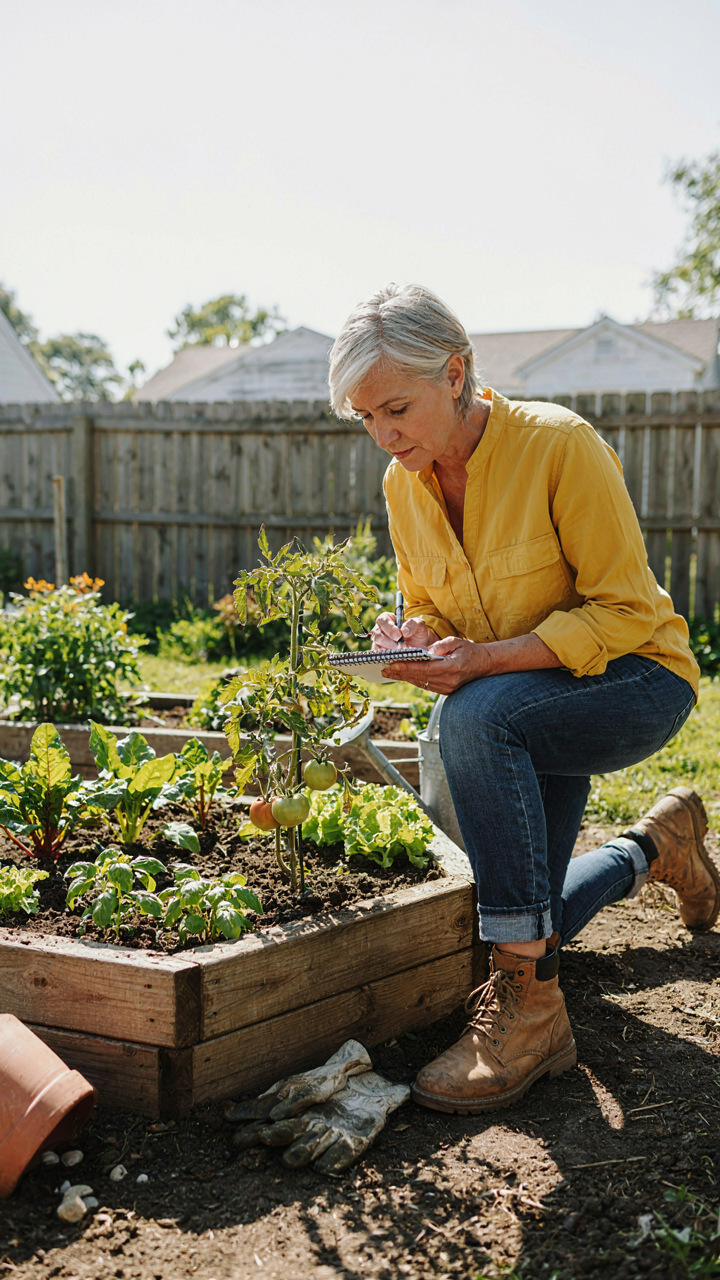
You want to feel like you know what you’re doing without actually observing anything. Here’s what actually matters: Cybernetics treats feedback loops as the core mechanism of any self-regulating system. In a keyhole garden, your plants ARE the feedback. Leaf color, growth rate, pest pressure, and soil moisture tell you whether your inputs matched the system’s actual demands. Most gardeners ignore these signals and follow generic schedules instead. The plants adjust anyway, but inefficiently, wasting space and time. Track one variable at a time: leaf nitrogen status this week, moisture consistency next week, pest threshold the week after. This teaches you to read, not guess.
The keyhole’s basin design accelerates feedback because everything concentrates in one observation zone. Water pooling indicates drainage failure. Wilting at the basin edge signals uneven moisture distribution. Leggy growth in the upper tier shows light competition you can’t see from above. You collect this data by walking the perimeter three times weekly, spending two minutes maximum. Note one observation per visit: “Basin holding water for 4 hours after rain” or “Lower leaflets yellowing despite recent compost addition.” Over four weeks, patterns emerge. Patterns are your actual instruction manual.
Adjusting Inputs For Optimal Yield
The common advice says “add compost regularly.” That’s lazy and wrong. You adjust inputs based on the feedback your plants already gave you last week. If leaf yellowing appeared after two harvests, nitrogen depleted faster than decomposition replaced it. Add nitrogen-rich material to next week’s basin fill: coffee grounds, grass clippings, bone meal. If water pools but plants still stress, the soil structure broke down. Replace the compost layer with coarser material. If pests colonize the upper tier but avoid the basin, they need drier conditions. Reduce watering frequency on elevated sections. The mechanism is simple: observe one output, change one input, observe the result.
The keyhole garden’s tiered design lets you run micro experiments inside a single bed. Treat each tier as a separate input zone. Basin gets frequent nitrogen-rich amendments. Upper tier gets moisture-adjusted inputs based on pest behavior. Outer edge gets light-adjusted inputs if growth lags. After three months of this, you stop following anyone’s schedule. Your plants tell you exactly how much compost, water, and adjustment they need. You move from reactive maintenance to active optimization. The protocol: document one change weekly, observe results over fourteen days, adjust once confirmed.

Water Management: The “Passive Hydration” System
Rainwater Harvesting Integration
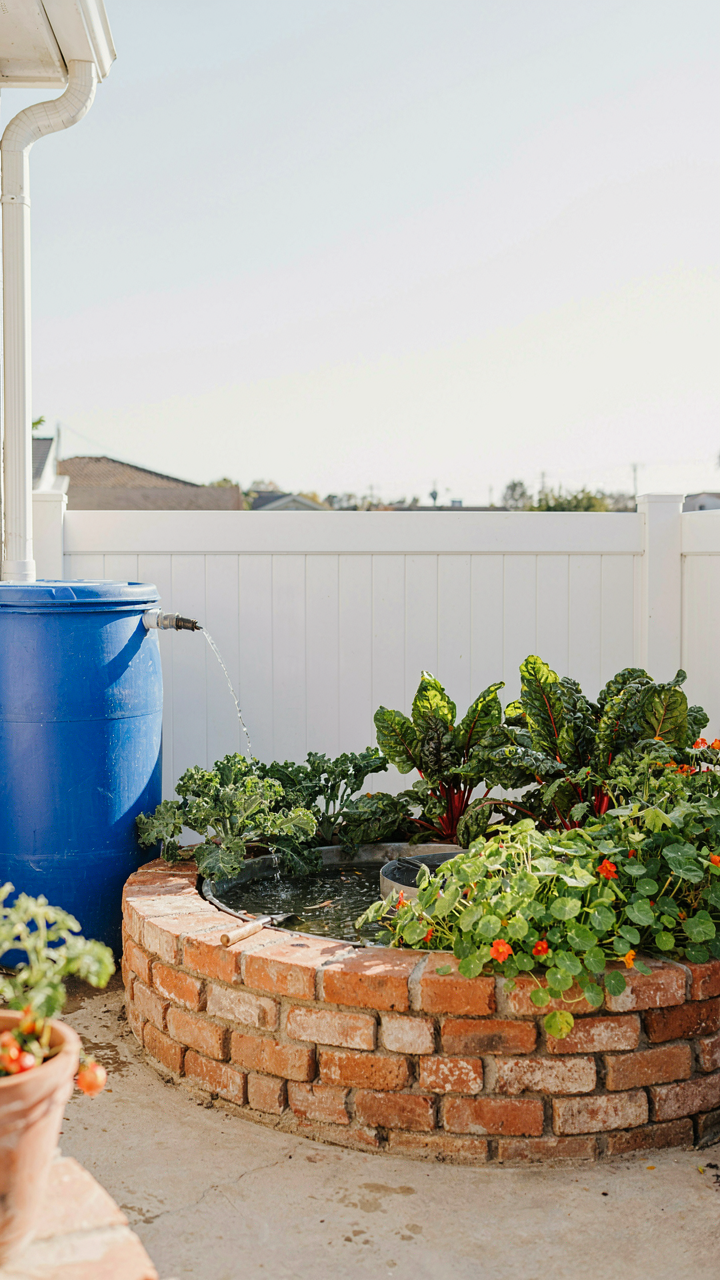
You want this to work without thinking about it. That’s the real reason you’re reading this section. Water management in keyhole gardens operates on a hydraulic principle: gravity moves water downhill through soil layers, and you engineer the structure to intercept and hold it where roots need it most.
The basin at the keyhole’s center acts as your collection point. Roof runoff, ground-level spilloff, or direct rainfall funnels into this basin during storms. The soil below the basin absorbs this water and distributes it laterally into the surrounding planting beds through capillary action. You don’t need a complicated system. The keyhole design itself becomes your rainwater harvesting mechanism.
Mulch And Wicking Beds For Drought Resilience
Most people treat mulch like decoration. It’s not. Mulch is a moisture barrier that slows evaporation from soil surface by 70 percent or more, depending on depth and material. In a keyhole garden, a 3 to 4 inch mulch layer over your planting beds reduces watering frequency dramatically during dry periods.
Wicking beds amplify this effect. Organic matter in the lower soil layers (compost, aged manure, leaf litter) acts as a capillary conductor, pulling moisture upward from deeper zones where water collects. Lay your mulch in the top zone, let the decomposing organic matter in the middle zone handle the water transport, and keep your basin topped with water during droughts. This three-layer structure sustains plants through weeks without supplemental watering.
Keyhole Garden Bed: Beyond The First Harvest
Extending The Growing Season
You want to believe your keyhole garden works year-round so you don’t feel stupid for building it in a climate that isn’t actually tropical. Here’s the mechanism: thermal mass storage. Borrow this from thermodynamics—the compost basket at the center of a keyhole garden acts as a heat sink. It absorbs solar energy during the day and radiates it back at night, raising soil temperature by 5 to 10 degrees Fahrenheit compared to flat garden beds. This extends your growing window on both ends of the season without expensive infrastructure.
The basin design amplifies this effect. The bowl shape concentrates water and heat around plants while the raised edges block wind that accelerates evaporative cooling. In spring, this means you plant 2 to 3 weeks earlier. In fall, tender crops survive light frosts that would kill them in open beds. You don’t need row covers or cold frames if you position the keyhole where it catches morning sun and avoid planting it in wind tunnels.
Building Soil Fertility Over Years
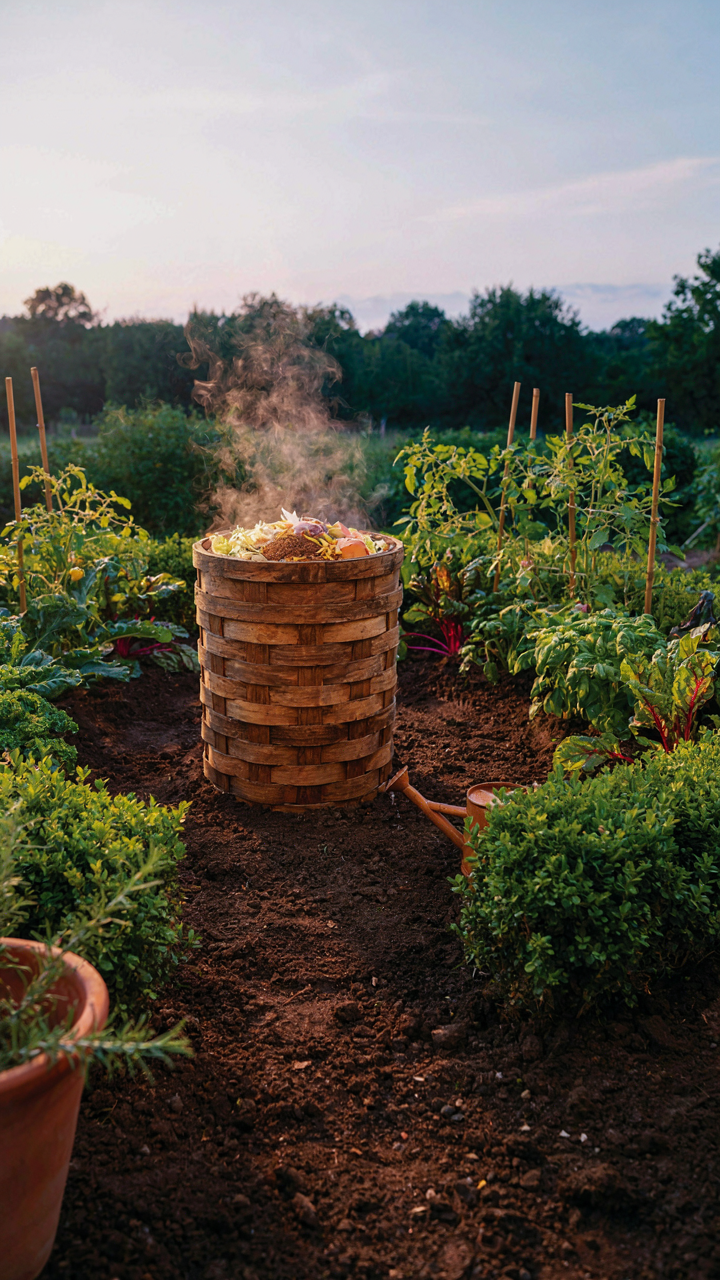
Most gardeners treat soil like a consumable and wonder why their beds tank after 3 seasons. Wrong approach. Your keyhole garden’s real asset is the compost basket—it’s a biological factory that converts waste into fertility while you harvest. Borrow the succession principle from ecology: each organism prepares conditions for the next. Anaerobic decomposition in the basket creates heat and breaks down material. That nutrient-dense liquid percolates into the surrounding soil. Each year, add material, and the soil gets denser and richer.
Stop adding external compost after year two if you’re managing inputs correctly. Kitchen scraps, garden waste, and aged manure go in the basket. The keyhole’s basin catches runoff from the basket, distributing nutrients down and out. By year four, your soil should be dark, crumbly, and hold water without becoming waterlogged. Feed the basket consistently, and the basket feeds your soil. Start recording what you add each season so you identify which materials produce the fastest fertility gains for your climate zone.
The Minimalist Gardener Mindset

Grow What Produces, Not What Looks Good
You want to feel like a real gardener without actually spending time in your garden. The mechanism here is simple: most people optimize for identity and aesthetics instead of output. That’s backwards.
A keyhole garden forces a choice because space is limited. You cannot plant everything. This constraint is the actual feature. Leafy greens, root vegetables, and perennial herbs outproduce ornamental plants by orders of magnitude. Kale yields more calories per square foot than decorative kale. Tomatoes in a keyhole’s sun-facing slope deliver consistent harvests. Beans fix nitrogen and require minimal maintenance. These crops don’t care about your Instagram feed. They produce or they don’t.
The efficiency mathematics work against sentiment. A single compost basket feeds the garden’s nitrogen demands for months. One asparagus crown produces for fifteen years. Herbs like rosemary and oregano die in neglect and thrive in poor soil. The gardener who plants based on yield, not emotion, collects food instead of disappointment. Track output in ounces per month, not feelings per visit.
Strip Away The Unnecessary Complexity
The common advice says keyhole gardens need multiple zones, fancy irrigation, specialty soil mixes, and a rotation schedule. None of that is mandatory. Most of it creates busywork that kills motivation.
A keyhole garden’s actual strength is its geometry and the compost basket. Two elements. The keyhole shape concentrates water and reduces movement. The basket delivers nutrients directly to roots. Everything else is optional decoration masquerading as strategy. Drip irrigation helps if you live in a hot climate and travel. It adds friction if you’re home and have a hose. Raised beds work better than in-ground if your soil is clay or contaminated. Skip them otherwise. Simple soil plus compost output beats engineered mixes every time.
The real constraint isn’t design complexity. It’s consistency. Water when the top inch dries. Feed the basket weekly during growing season. Harvest before plants bolt. That’s the protocol. Overthinking kills more gardens than underwatering does.
The Only Thing Holding Back Your Keyhole Garden Isn’t Space, But Your Expectation Of Instant Gratification

You don’t need perfect soil or a bigger yard. You need to stop waiting for permission to start. Build your keyhole garden this week, not next season. Grab some cardboard, rocks, and compost from your garage. Plant something. Watch it grow for thirty days without touching it. The system works when you stop overthinking and start digging. A keyhole garden doesn’t reward perfection, it rewards action.