Understanding Pollinator Garden Design And Bloom Succession
The Core Concept Of Seasonal Bloom Sequences
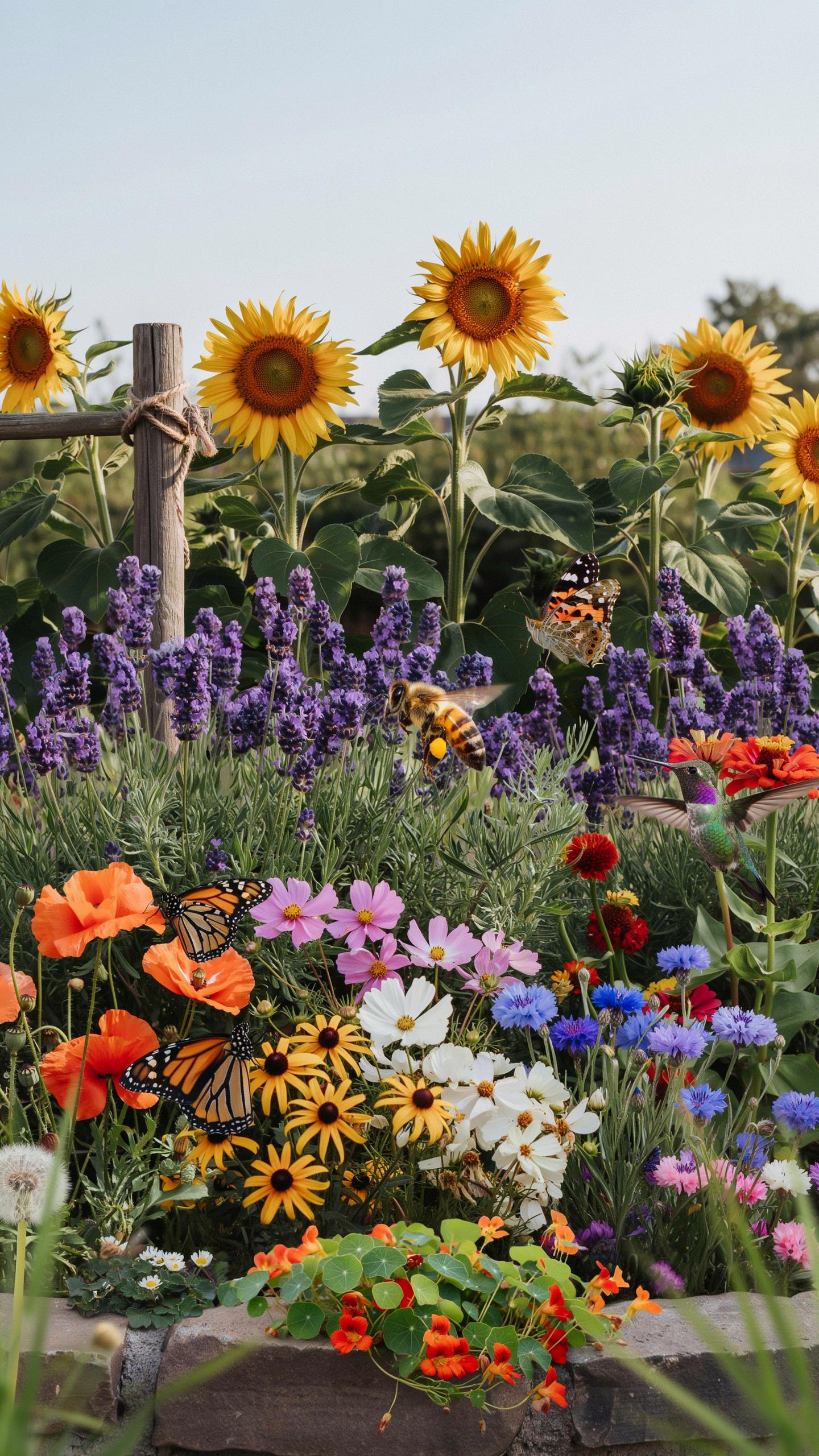
Bloom succession means planting flowers that flower at different times throughout the growing season. This strategy keeps nectar and pollen available from early spring through late autumn. Different pollinators emerge at different times. Early spring brings out mason bees and some butterfly species. Summer supports honeybees and diverse insects. Fall pollinators include late-flying butterflies and native bees preparing for winter.
A well-sequenced garden provides continuous food sources that match pollinator activity cycles. Bees need resources during their active months. Butterflies require nectar in spring and fall. By staggering bloom times, you eliminate the gaps that force pollinators to leave your yard. This approach reduces stress on local pollinator populations and increases their survival rates throughout the year.
Why Relaxed Living And Pollinator Habitats Go Hand In Hand
Low-maintenance garden design removes the burden of constant yard work while attracting wildlife. Once established, succession plantings require minimal intervention. You water less frequently because perennials develop deep root systems. Weeding decreases when dense plantings crowd out unwanted growth. This frees your time for actual enjoyment rather than maintenance tasks.
Watching pollinators work your garden provides genuine relaxation without physical demands. Native plants adapted to your climate need fewer inputs than ornamental alternatives. You skip fertilizer applications, frequent pruning, and intensive pest management. A self-sustaining pollinator garden becomes a stress-reducing outdoor space that runs largely on its own. The payoff is wildlife activity, lower effort, and genuine peace of mind.
Essential Pollinator Plants For Continuous Color And Food
Selecting Native Perennials For Year Round Appeal
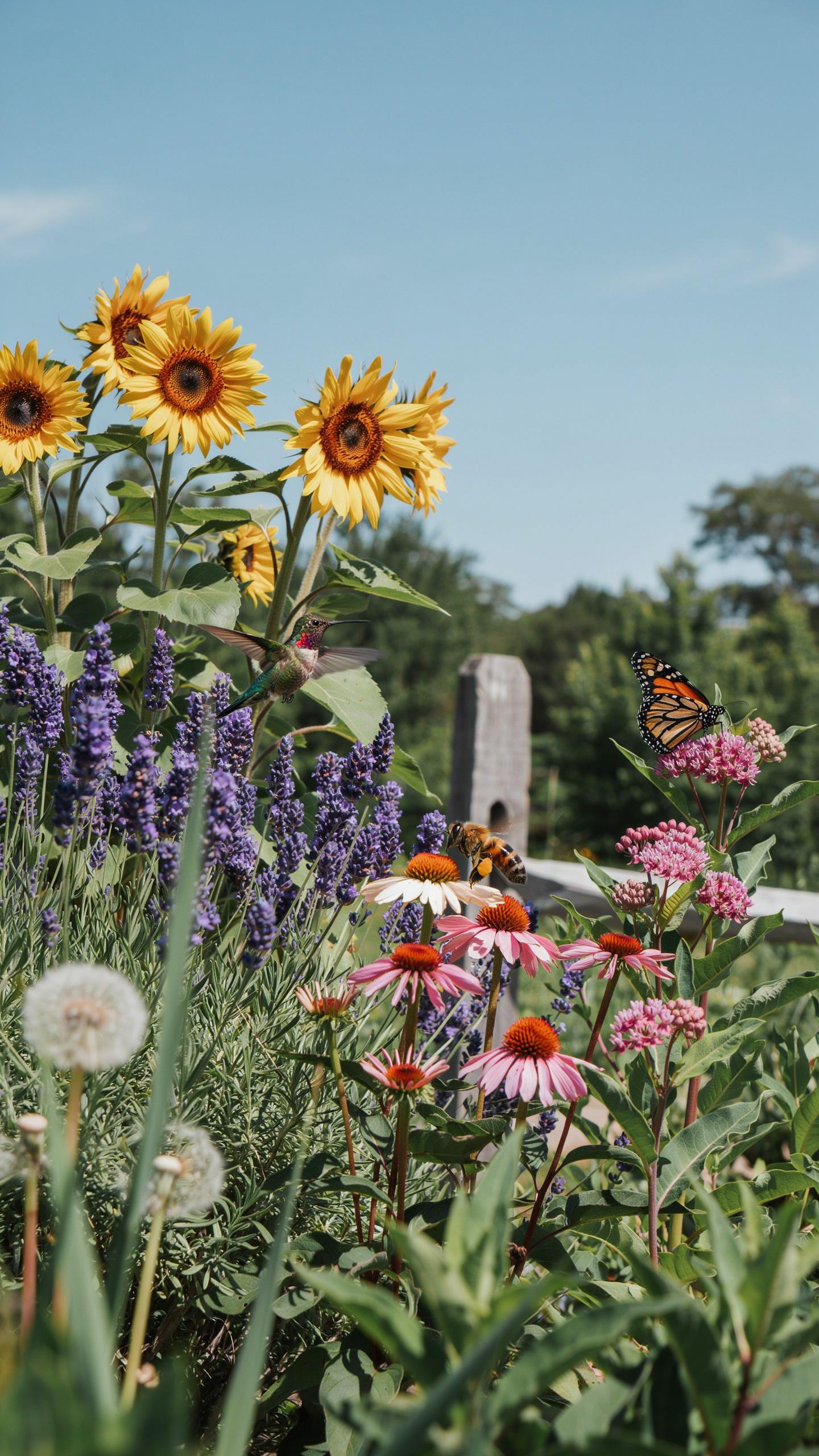
Native perennials anchor a functional pollinator garden. They bloom on predictable schedules that match local pollinator lifecycles. Native plants require less water, fertilizer, and pest management than non-natives. Bees, butterflies, and other pollinators evolved feeding on native species over thousands of years. This genetic alignment means pollinators extract nutrition more efficiently from native blooms.
Regional native plants guarantee food availability when pollinators need it most. Spring emergence, summer reproduction, and fall preparation all depend on native plant timing. Local pollinators recognize native plant signals: flower shape, color, and scent. Non-native ornamentals often lack the nutritional density that supports pollinator development. Choosing natives removes guesswork from garden planning.
Key Flower Choices For Spring Summer And Fall
Early spring bloomers trigger pollinator emergence from winter dormancy. These first nectar sources fuel pollinator activity before summer demands peak. Timing matters more than quantity at season transitions. Native spring flowers provide essential carbohydrates and pollen protein when colonies restart growth. Strategic spring selections prevent pollinator starvation during critical early-season windows.
- Wild Lupine (Lupinus perennis): Blooms early spring. Deep roots access water other plants cannot. Larvae of several butterfly species feed exclusively on lupine leaves. Essential for blue butterfly populations across eastern North America.
- Wild Columbine (Aquilegia canadensis): Red tubular flowers bloom mid to late spring. Hummingbirds favor this species. Also attracts long-tongued bees. Prefers partial shade and moderate moisture.
- Purple Coneflower (Echinacea purpurea): Mid-summer blooms last 4-6 weeks. Goldfinches eat seeds in late summer. Bees work flowers throughout blooming period. Drought tolerant once established.
- Black-Eyed Susan (Rudbeckia hirta): Yellow petals with dark centers bloom mid to late summer. Extended bloom window reaches 8-10 weeks. Native bees forage heavily. Seeds feed birds through fall.
- New England Aster (Symphyotrichum novae-angliae): Late autumn blooms support migrating monarchs. Purple flowers appear when other sources disappear. Blooms continue until frost. Critical fuel for fall migration.
- Goldenrod (Solidago): Late summer through fall blooms. Often blamed for allergies but wind-pollinated plants cause allergies, not goldenrod. Bees and butterflies depend on goldenrod nectar in fall. Yellow flowers signal abundance to pollinators.
Staggered bloom timing prevents gaps in food availability. Spring plants fuel colony emergence. Summer selections sustain reproduction and population growth. Fall bloomers prepare pollinators for winter or migration. This succession model matches natural pollinator needs to flower availability throughout the calendar year.
Drafting Your Pollinator Garden Layout For Relaxed Maintenance
Mapping Your Space For Easy Accessibility And Care
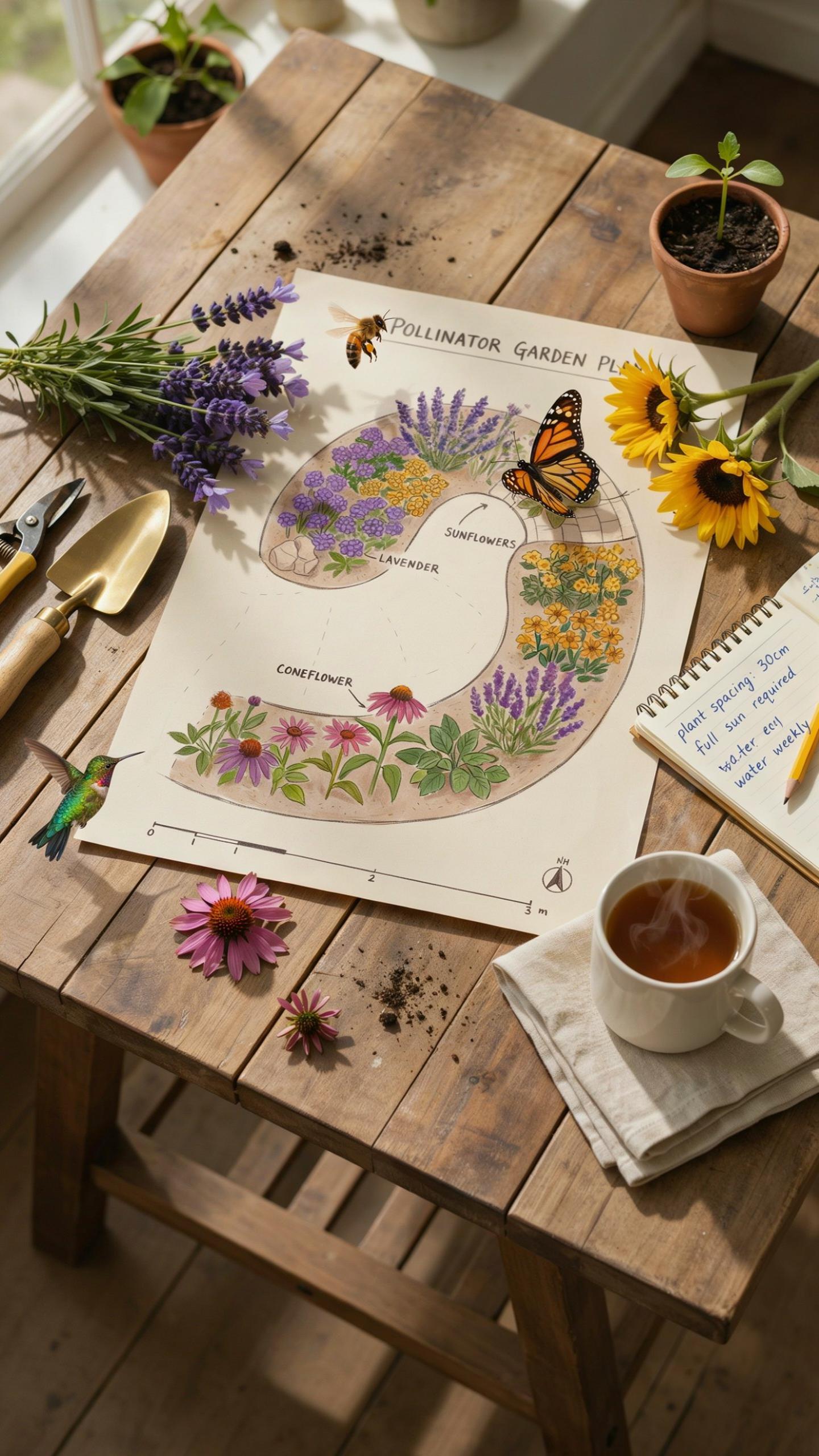
Start by measuring your garden area and identifying existing shade patterns and water drainage zones. Group plants that require identical watering schedules into defined sections rather than scattering them across the space. This clustering strategy cuts maintenance time because you water one zone instead of hunting individual plants. Wide paths at least three feet across prevent you from compacting soil and trampling emerging growth.
Position high traffic areas near your house or seating zones. This placement keeps you engaged with the garden without requiring constant walks to distant corners. Mark irrigation access points and tool storage locations before planting anything. These decisions shape your workflow and determine whether garden care becomes tedious or genuinely manageable on busy days.
Layering Heights To Maximize Foraging Opportunities
Arrange plants in three distinct height tiers starting from the back of the garden. Taller shrubs reaching six to eight feet occupy the rear. They create wind protection and provide nectar sources when upper story flowers open. Medium height perennials measuring two to four feet fill the middle layer. Low growing groundcovers and creeping plants under two feet form the front border closest to walkways.
This vertical structure forces pollinators to work through different flower heights across seasons. Early bloomers often appear at lower levels while late season flowers develop higher on mature stems. The staggered arrangement extends your bloom window across months because plants mature at different rates. Pollinators access abundant forage throughout the growing season rather than facing feast or famine cycles.
Designing A Native Pollinator Garden Design For Ecological Harmony
The Value Of Indigenous Species In Your Local Ecosystem
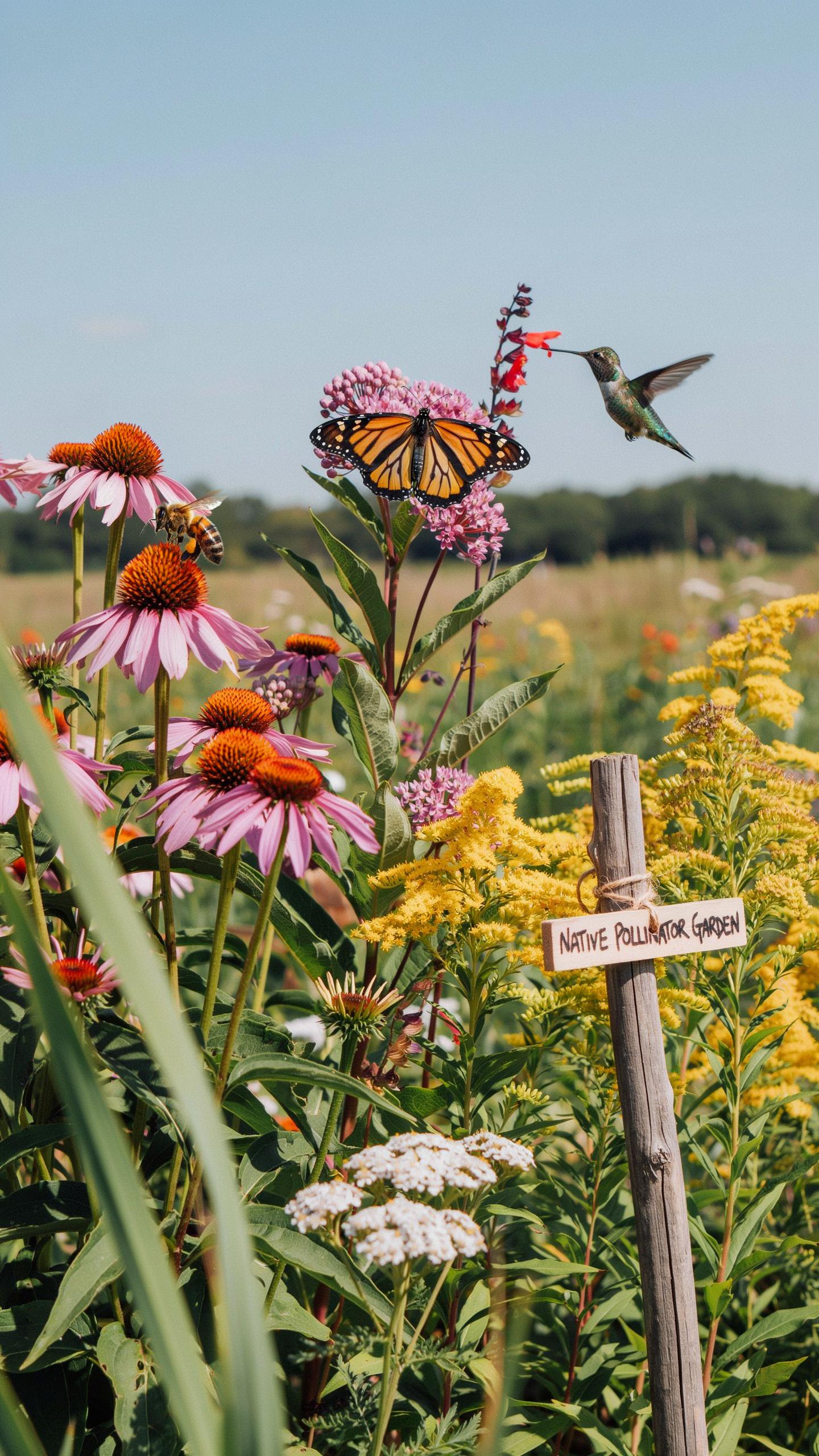
Native plants evolved alongside regional pollinators over thousands of years. This co-evolution created specific chemical and morphological matches between plants and insects. Caterpillars depend on particular native host plants for survival. Bees recognize native flowers through scent, color, and nectar composition. Non-native plants often lack these precise attributes, forcing pollinators to expend energy without adequate reward.
Native plants require less maintenance once established because they tolerate local soil, water, and climate conditions. They don’t need supplemental fertilizers or pesticides to thrive in their adapted region. Native species support entire food webs, including beneficial insects that control pests naturally. This reduces your workload while creating functional garden productivity.
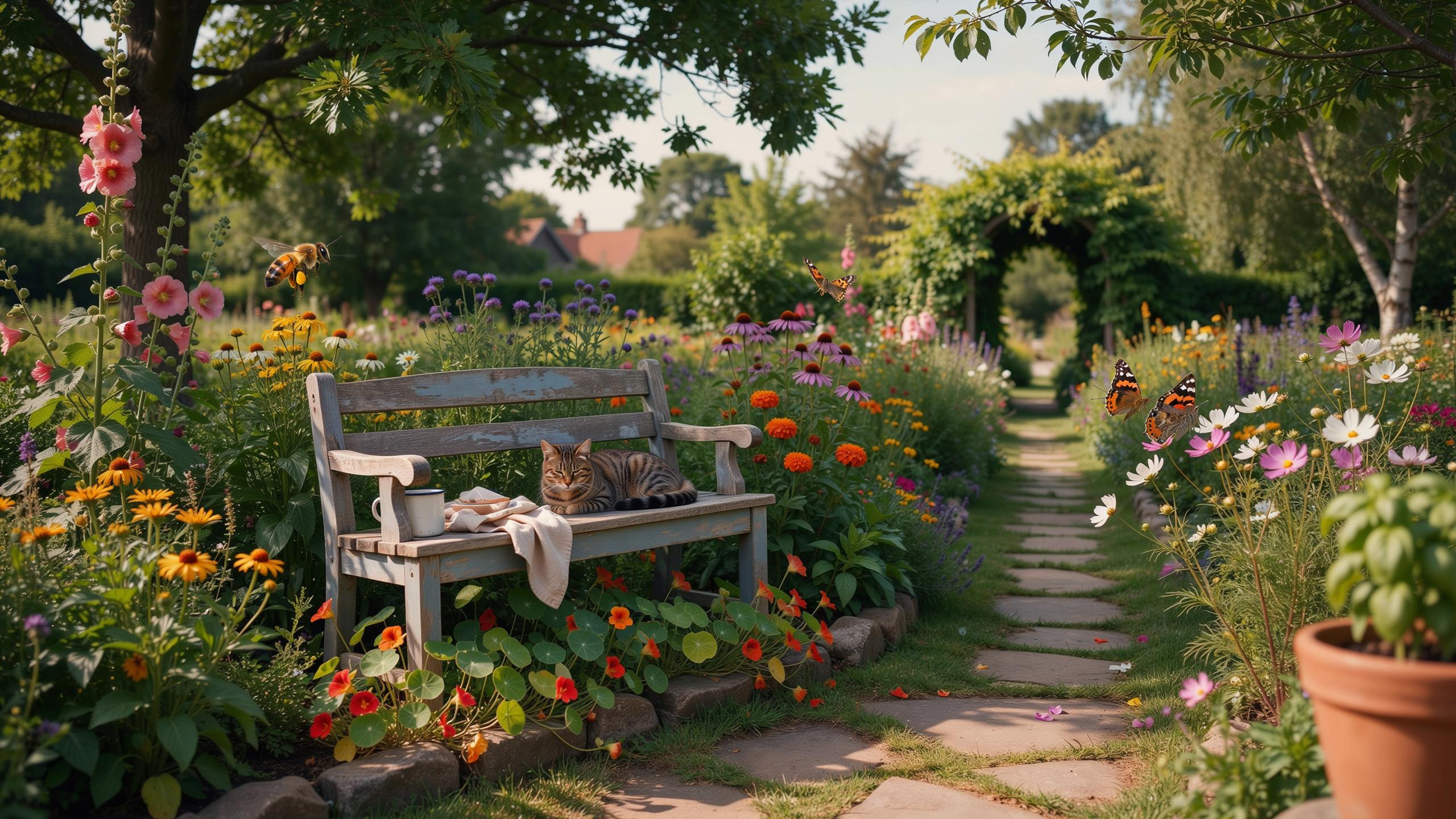
The garden should be a place where time slows down to the pace of a bee among the blossoms. Let each season’s bloom be a gentle invitation to linger and find rest in the changing light.
Sourcing And Establishing Local Ecoregion Wildflowers
Purchase seeds or potted plants from suppliers certified to your specific USDA hardiness zone and native ecoregion. Regional seed companies maintain records of genetic origin, ensuring plants match your exact location. Avoid generic “wildflower mixes” sourced from distant regions. These often contain species unsuitable for your climate, soil type, or pollinator populations.
Collect seeds from established native populations only if permitted by local regulations. Propagate from local stock when possible to maintain genetic adaptation. Establish plants in soil prepared to match native habitat conditions, whether sandy, clay-based, or loamy. Timing matters: plant in fall or spring depending on your region’s seasonal patterns to maximize establishment success.
Creating An Aesthetic Bee And Butterfly Garden Layout
Designing Visual Focus Points With Host And Nectar Plants
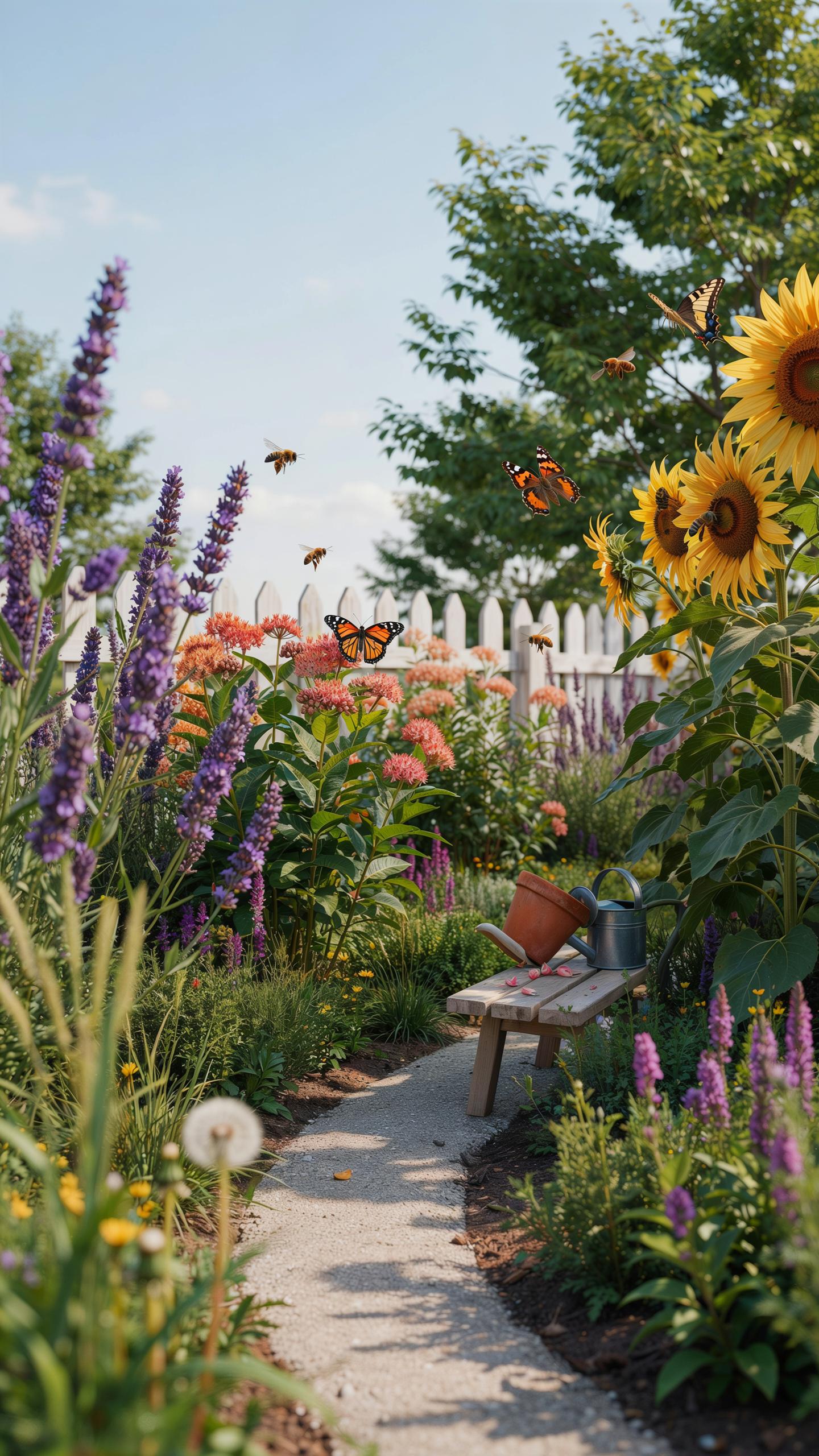
Host plants serve a specific function: they provide the plant material that caterpillars eat during their larval stage. Milkweed species support monarch caterpillars exclusively. Parsley, dill, and fennel host swallowtail caterpillars. Without host plants, butterflies cannot complete their life cycle in your garden. Nectar plants fuel adult butterflies and bees with energy for flight and reproduction.
Combine host and nectar plants strategically to create zones within your garden. Place milkweed clusters alongside purple coneflower, bee balm, and zinnias. This arrangement gives monarchs food for their larvae while providing nectar for adults and other pollinators. The result is a functional garden that supports multiple species through their life stages simultaneously.
Grouping Colors In Drifts To Help Insects Navigate
Pollinators locate flowers through color and pattern recognition. Clustering three to five plants of the same species within a defined area reduces the energy insects spend searching. A drift typically occupies a circular or oval space two to five feet in diameter. Larger drifts work better in spacious gardens. Smaller gardens need tighter clustering to remain visible.
Arrange drifts by bloom time across your garden zones. Plant spring bloomers like hellebores and pulmonaria together. Group summer bloomers like salvia and rudbeckia separately. Fall bloomers such as asters and sedum occupy their own drifts. This arrangement keeps nectar available continuously while helping insects navigate without wasting energy searching between scattered plants.
Tailoring A Specific Bee Garden Layout For Peaceful Observations
Designing Safe Seating Areas Near Foraging Spaces
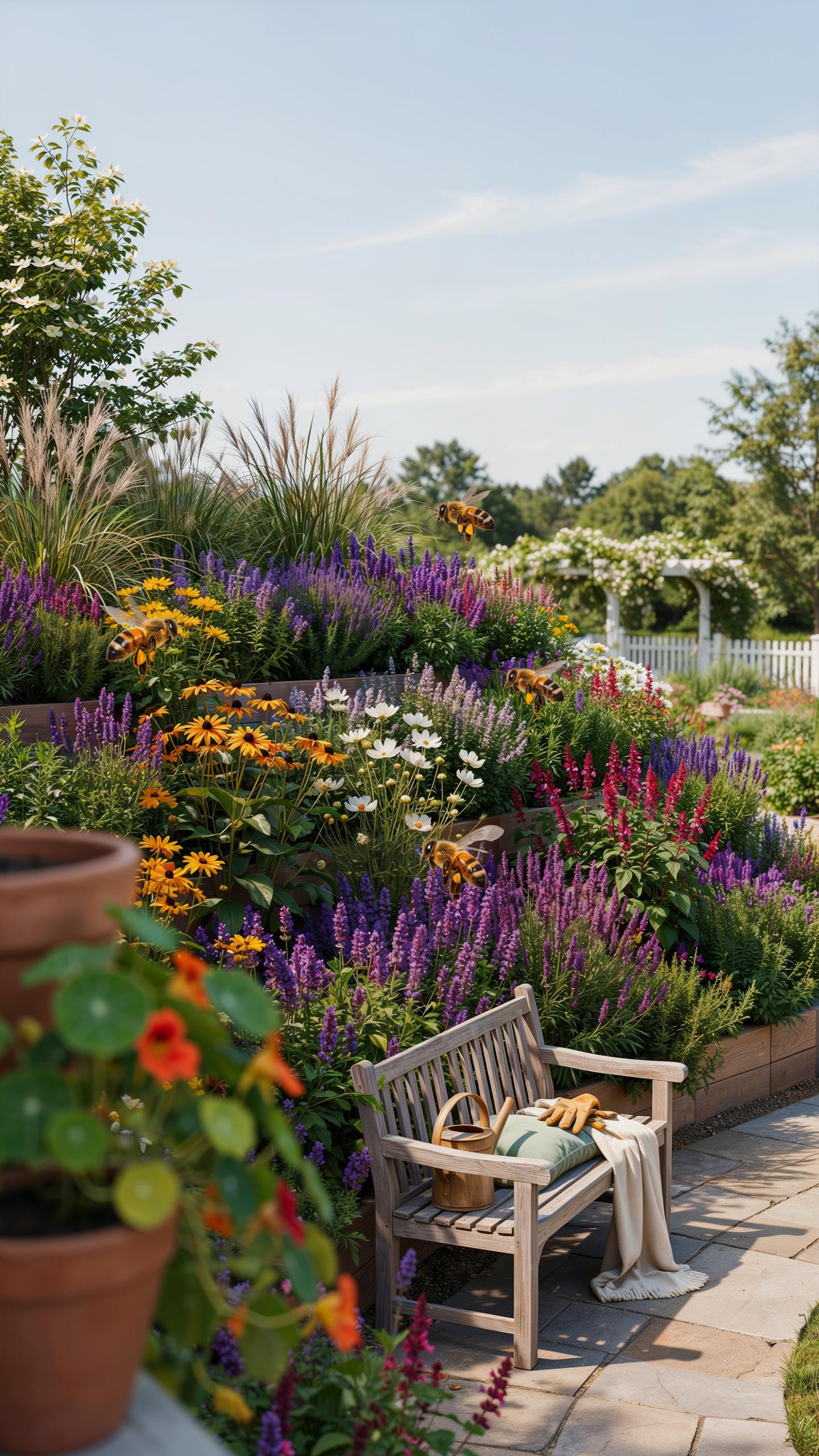
Position seating within 6 to 10 feet of flowering plants where solitary bees forage. This distance allows you to observe bee behavior without triggering defensive responses. Solitary bees lack colony protection instincts, so they ignore stationary humans. Use low-profile furniture like Adirondack chairs or benches that keep you below bee flight paths. Avoid sudden movements or bright clothing that creates visual disruption.
Orient seating to face primary bloom areas during peak foraging hours, typically 9 AM to 3 PM on warm days. Place chairs on stable, level ground to prevent tipping and maintain your viewing angle. Ensure clear sightlines by removing tall ornamental grasses or shrubs that block your view of landing zones. Avoid areas directly beneath tree branches where bees rest, as you may inadvertently disturb them. This setup lets you track pollinator activity patterns across different bloom cycles.
Integrating Water And Mud Stations Into The Landscape
Install shallow stone basins filled with pebbles to create safe drinking platforms for bees. Use containers 1 to 2 inches deep with a 12 to 18-inch diameter. Bees require water during nectar processing and brood development. The pebbles prevent drowning by providing landing surfaces. Place stations within 3 feet of flowering zones so bees access water without exhausting energy traveling long distances.
Maintain water levels consistently throughout the growing season. Refill basins every 2 to 3 days, or daily during heat waves above 85 degrees Fahrenheit. Add mud in spring when bees need extra minerals for early brood production. Use clay or composted soil mixed with water to create a workable consistency. Position stations away from major foot traffic paths to keep the environment undisturbed and functional.
Maximizing Small Spaces With Creative Pollinator Garden Design Ideas
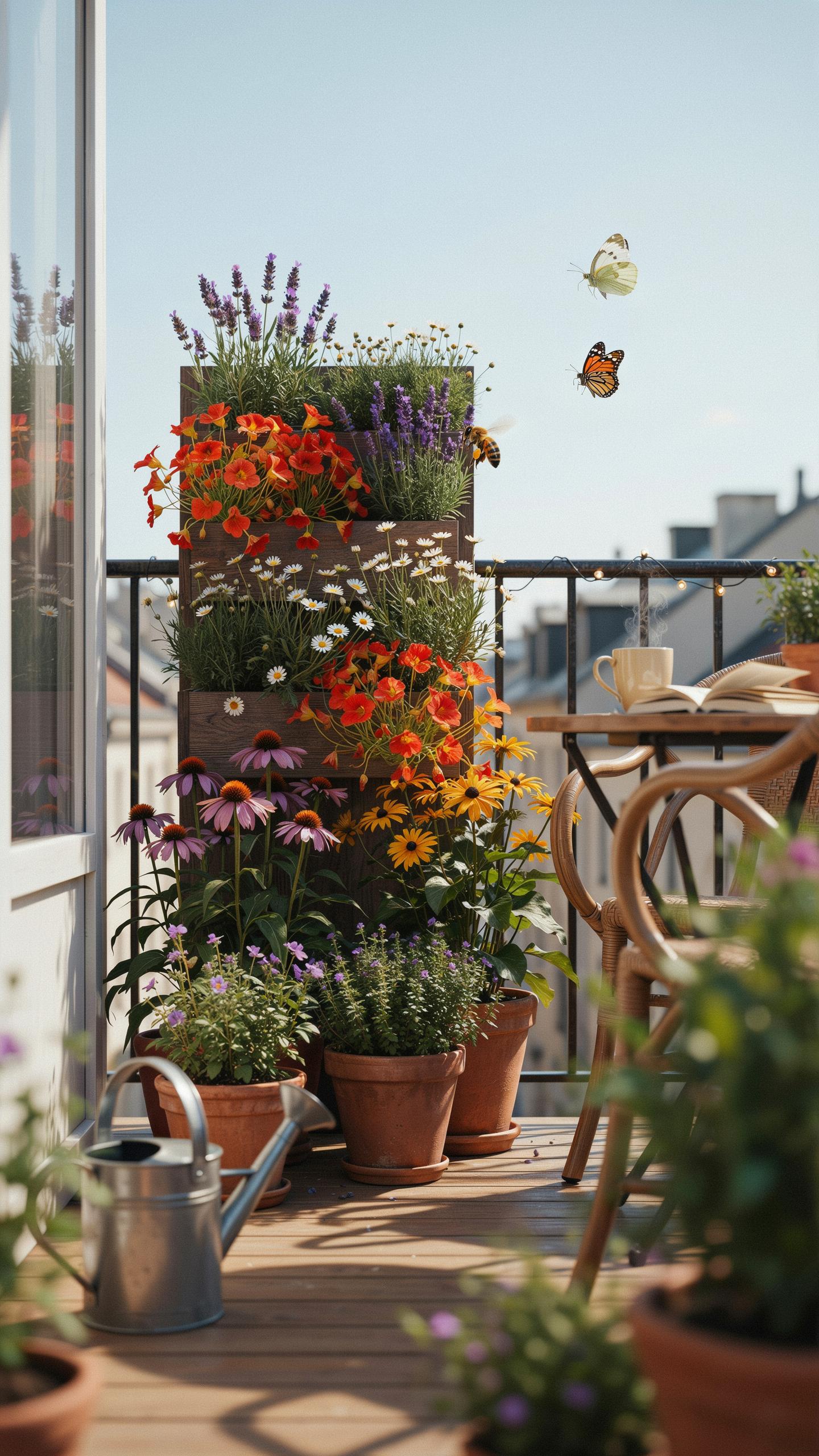
Utilizing Vertical Space And Raised Planting Beds
Vertical gardening solves the constraint of limited ground area. Trellises, arbors, and wall-mounted planters redirect growth upward rather than outward. American Honeysuckle climbs vertical structures while producing nectar that hummingbirds actively seek. This approach delivers pollinator attraction without consuming floor space on balconies, patios, or compact yards.
Raised beds function as containment systems that concentrate soil quality and drainage control. They allow you to garden on concrete, compacted earth, or problematic terrain without extensive ground preparation. Standard heights of twelve to eighteen inches reduce bending and simplify maintenance tasks while creating defined planting zones that support successive blooms throughout the season.
Top Container Selections For Cozy Balconies And Patios
Container gardening demands species that tolerate confined root systems and concentrated heat. Select varieties bred for compact growth rather than sprawling habit. These plants thrive in pots while attracting pollinators consistently throughout their bloom windows.
- Anise Hyssop (Agastache foeniculum): Produces purple-pink spikes that bloom mid to late summer. Bees visit actively. Reaches twelve to eighteen inches tall in containers. Tolerates heat and drought stress reliably.
- Lanceleaf Coreopsis (Coreopsis lanceolata): Generates yellow flowers from early summer through fall. Supports continuous pollinator visits. Stays under two feet in pots. Requires minimal deadheading to sustain blooms.
- Dwarf Butterfly Weed (Asclepias tuberosa): Produces orange clusters that attract monarchs and other butterflies. Blooms mid to late summer. Reaches twelve inches in containers. Functions as essential milkweed for monarch larvae development.
- Common Yarrow (Achillea millefolium): Generates flat flower clusters in red, pink, yellow, or white. Blooms early summer through frost. Grows twelve to twenty-four inches tall. Tolerates poor soil and irregular watering patterns.
These selections handle container stress because they possess shallow root systems and tolerate dry periods between waterings. Succession planting across these varieties extends pollinator visits from early summer through late fall. Space containers eighteen inches apart to allow air circulation and prevent disease pressure in confined areas.
Practical Management Tips For A High Yield Bee Garden
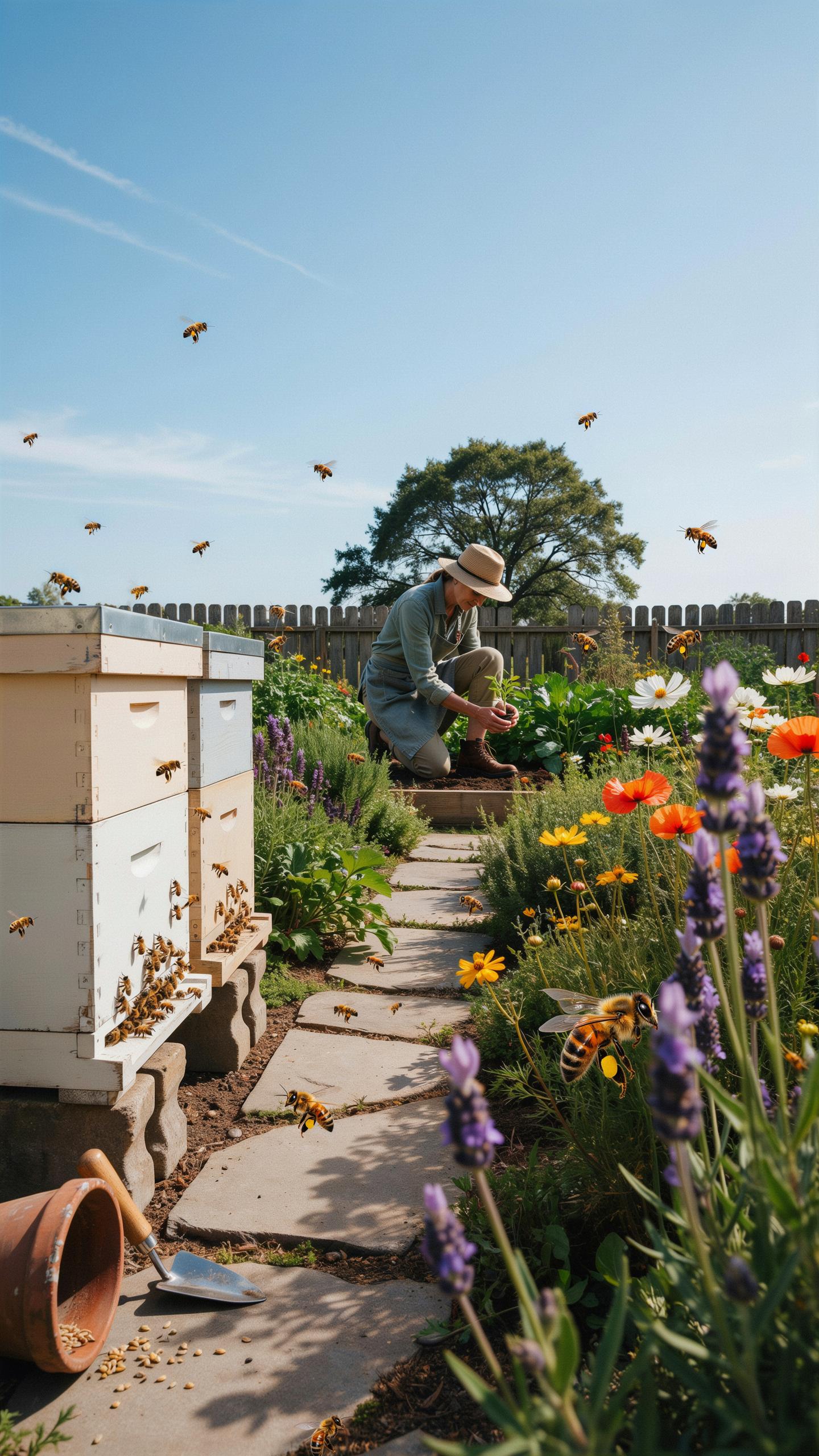
Pruning And Deadheading Techniques For Extended Blooms
Deadheading early bloomers triggers a biological response in plants. Remove spent flowers before seed formation develops. This redirects plant energy from reproduction into new flower production. The result is a secondary bloom flush that extends nectar and pollen availability into late summer when bee populations need consistent food sources most.
Target plants like coreopsis, salvia, and early-season rudbeckia for aggressive deadheading. Cut flowers just below the spent bloom on the stem. Repeat this process every seven to ten days during peak bloom cycles. This maintenance strategy directly increases foraging hours for your bee population and strengthens colony health through the season’s critical mid and late phases.
Creating Nesting Habitats Using Bundled Stems And Bare Soil
Ground nesting bees comprise roughly 70 percent of native bee species. They require exposed soil with minimal vegetation and good sun exposure to locate nest sites. Designate small patches in your garden where you remove mulch and leave soil bare. Position these areas in full sun and away from foot traffic zones where bees can establish tunnels undisturbed.
Hollow plant stems provide tunnel nesting habitat for carpenter bees and mason bees. Bundle stems from native plants like joe pye weed, raspberry canes, or purchased bamboo. Bind bundles with twine and position them horizontally or at slight angles on fence posts or garden structures. Leave stems standing through winter so emerging bees can access them in early spring.
Embracing Restorative Living In Your Completed Pollinator Garden
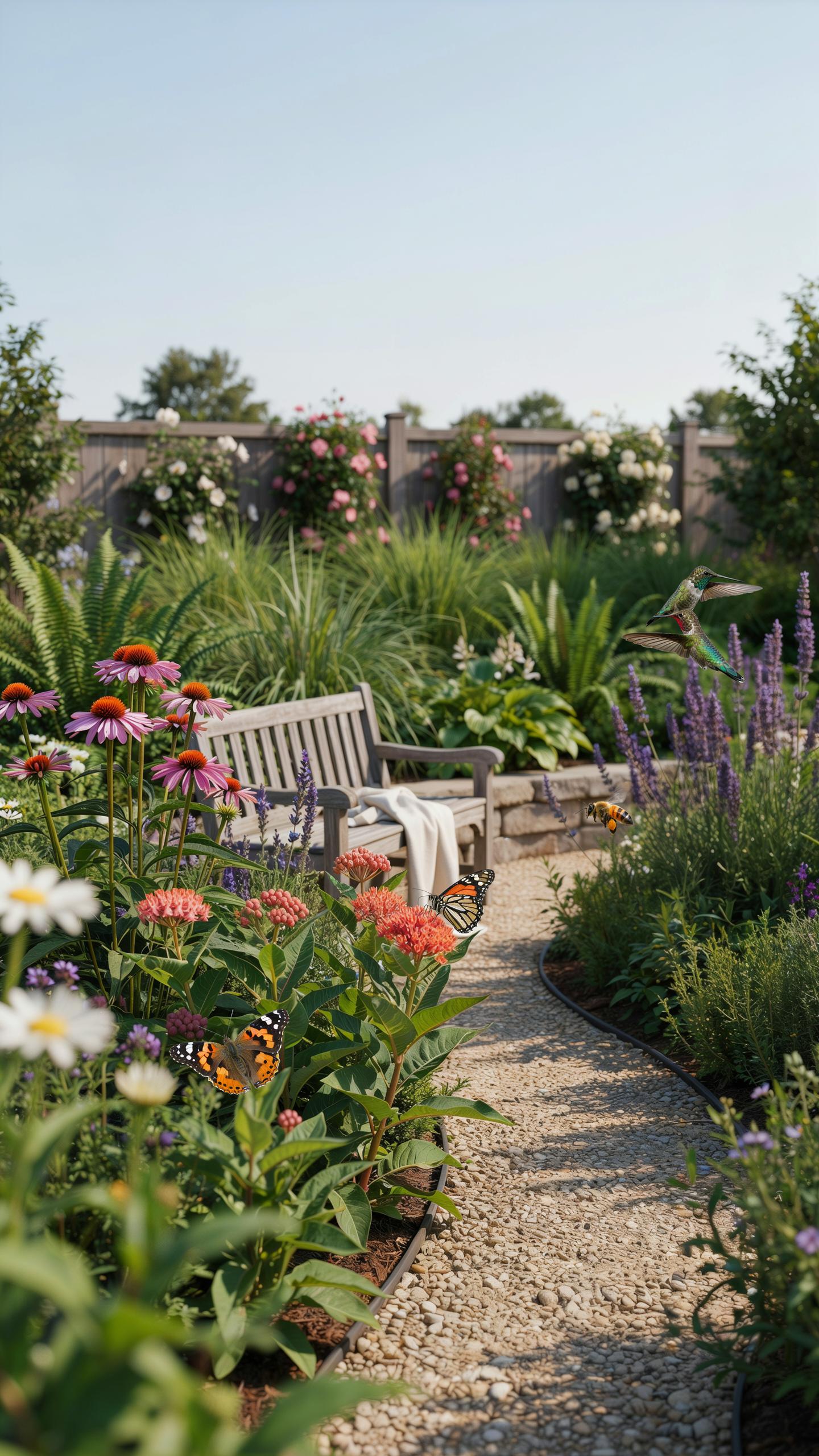
The Mental Health Benefits Of Backyard Biodiversity
Observing pollinator activity reduces measurable stress markers in your body. Research in environmental psychology confirms that watching insects and birds triggers parasympathetic nervous system responses, lowering cortisol production. Spending 20 minutes daily in your garden observing pollinators creates a tangible break from screen time and cognitive load. This practice builds neurological resilience over time.
Your completed garden becomes a focused attention tool. Unlike passive entertainment, active observation of bee behavior, butterfly movement, and bird feeding demands mental presence. This engagement interrupts rumination patterns and anxiety cycles. The combination of soft fascination with living systems creates measurable shifts in mood and mental clarity within weeks of consistent practice.
Establishing A Low Intervention Seasonal Cleaning Routine
Leave dead plant material standing through winter months. Hollow stems provide hibernation sites for native bees and beneficial wasps. Leaf litter protects pupating insects and provides crucial food for overwintering songbirds. Your restraint from autumn cleanup directly increases pollinator and bird survival rates entering spring. This approach eliminates unnecessary labor while amplifying ecological function.
Spring cleanup begins in April when temperatures consistently exceed 50 degrees Fahrenheit. At this point, overwintering insects have emerged and songbirds have shifted feeding focus to new growth. Clear dead material gradually rather than all at once, allowing late-emerging insects escape routes. This measured approach maintains your garden’s productivity while preserving the beneficial organisms that drive your bloom succession system forward.
Frequently Asked Questions

What is bloom succession and why is it important for a pollinator garden?
Bloom succession is the practice of selecting plants that flower at different times throughout the growing season. In a pollinator garden design bloom succession ensures that bees, butterflies, and hummingbirds have a consistent food source from early spring through late autumn. By planning for overlapping flowering periods, you create a reliable sanctuary that supports local ecosystems while maintaining a beautiful, cozy landscape for your home year-round.
How do I plan a planting schedule to ensure continuous flowers all season?
Start by researching native perennials categorized by their peak bloom time. Map out your garden beds by selecting at least three different species for each season: spring, summer, and fall. When refining your pollinator garden design bloom succession, consider staggered heights and textures to keep the visual interest high. Always include “bridge plants” that bloom during the transition periods to prevent any gaps in nectar availability for visiting insects.
Can I create a successful pollinator-friendly landscape on a tight budget?
Absolutely! You can achieve a stunning habitat without a huge investment by starting with seeds rather than mature nursery plants. Focus on hardy native wildflowers and easy-to-grow herbs like lavender or mint. Swapping cuttings with neighbors or attending local plant sales are also great ways to find affordable varieties. Even a small collection of containers on a patio can provide vital resources for pollinators while keeping your costs manageable.