The Asset Reclamation Protocol: Unearthing Hidden Value
Bench Archeology: Assessing True Condition
You’re hoping this bench is salvageable so you don’t have to buy a new one. That’s the real equation here. But most people skip the diagnostic work and paint over problems, which guarantees failure within a season.
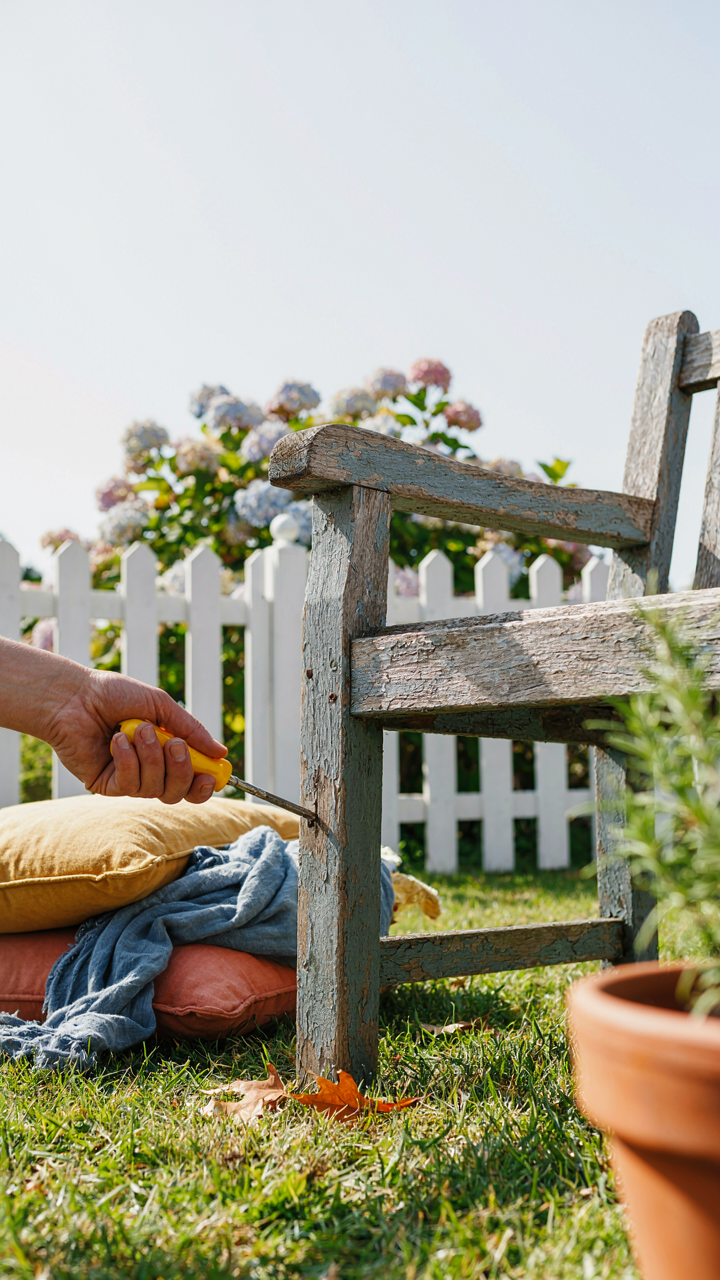
Start by removing all cushions, fabric, and hardware. Look at the frame joints where wood meets wood. Push on each connection point with firm pressure. If wood flexes or moves independently, the joint has failed. Check for soft spots by pressing a screwdriver into the wood grain at the legs and seat base. Soft wood means rot has penetrated deeper than surface treatment can fix. Document what you find before deciding restoration viability.
Beyond Surface: Structural Integrity Scan
Load-bearing capacity, borrowed from structural engineering, determines whether your bench holds weight safely or collapses under use. A wobbly bench isn’t just uncomfortable. It’s a liability problem masquerading as a cosmetic issue.
Sit on the bench with full body weight. Listen for creaking. Feel for lateral movement in the frame. Check the seat bottom for visible cracks running perpendicular to the grain. Examine legs for splitting or splintering at stress points where joints connect. If the frame shifts more than a quarter-inch in any direction, the internal structure requires repair before refinishing. A coat of stain won’t restore load-bearing integrity.
Restoring Vintage Garden Benches: The Anti Disposable Mentality

Why Discard When You Can Resurrect
You’re drawn to this because restoring feels superior to buying new. It signals taste and restraint. Here’s the mechanism: a vintage bench carries sunk cost and history that a mass-produced replacement cannot match, which triggers real attachment instead of consumption guilt. This changes your relationship to the object entirely.

Wood grain, joinery marks, and finish patina are data points about how a bench was made. You cannot replicate these details by ordering online. Restoration forces you to understand construction methods instead of abstracting them away. Learning the bench’s actual structure—mortise joints, wood species, original stain chemistry—makes you competent enough to maintain it for decades instead of replacing it every five years.
Material Truth Over Surface Appearance
The common advice is wrong here: “restore to original condition” assumes the original condition was optimal. It usually wasn’t. Instead, map industrial maintenance principles onto your bench—focus on structural integrity first, aesthetics second. A bench that holds weight safely matters more than a bench that looks untouched.
Authentic restoration means accepting visible repairs. A properly glued joint repair shows as a line where the break was. A competent wood fill sits flush but may look slightly different under sunlight. These marks document what the bench survived. The urge to hide them comes from modern manufacturing’s false promise of perfection. Real durability looks honest, not factory-new.
Cast Iron Bench Makeover: Rust To Resilience
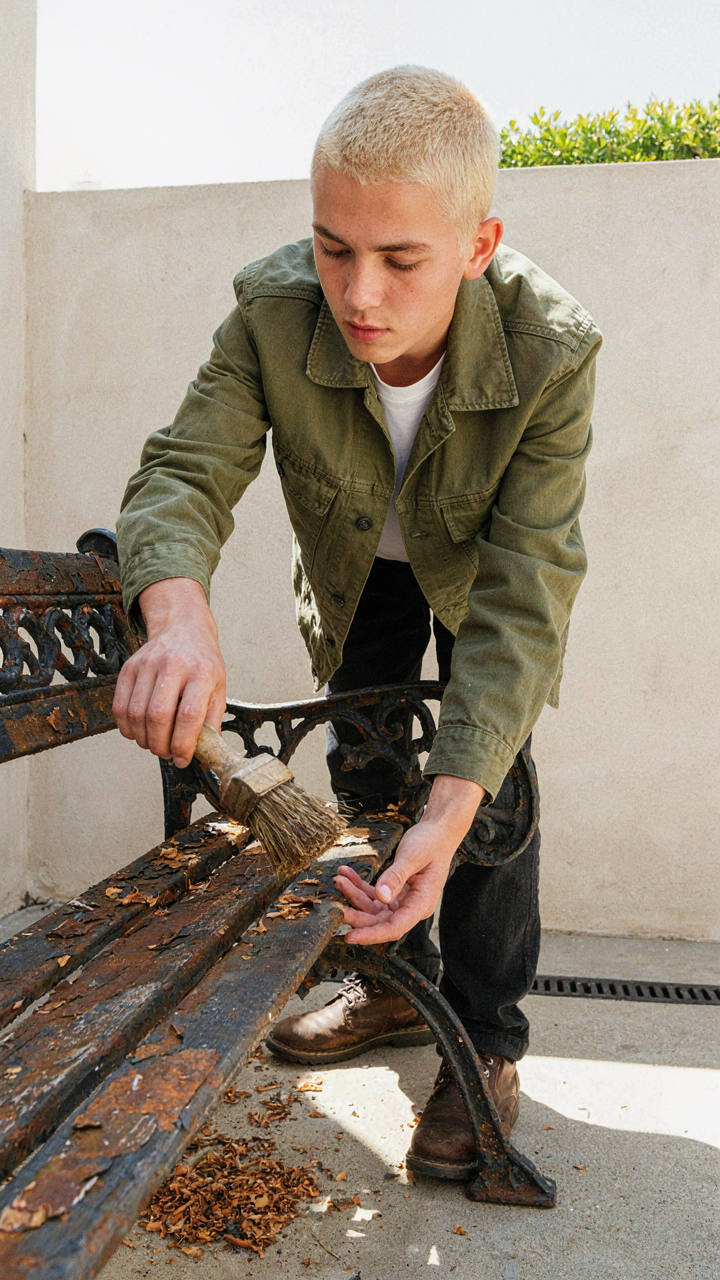
Why Rust Doesn’t Mean Failure
You’re avoiding this project because you think rust means you failed to maintain it. It doesn’t. Rust is just oxidation—a predictable chemical reaction that happens to all exposed iron. The mechanism is simple: iron exposed to oxygen and moisture converts to iron oxide. This is reversible. A cast iron bench isn’t ruined; it’s just in a different state that requires a specific removal and protection protocol.

Cast iron’s real advantage is density and longevity. Unlike thin metal furniture that corrodes through, cast iron corrodes on the surface while the structure underneath stays intact. This means you’re not replacing the bench—you’re cleaning it and sealing it. The goal isn’t perfection; it’s stopping the oxidation cycle before it reaches the core material. Most people sand too aggressively or use the wrong sealant, which restarts rust within months.
The Chemistry Of Permanent Protection
Metallurgy teaches us that protection works through barrier creation, not through fighting the environment. Apply this to cast iron: you cannot stop oxygen and moisture from existing. You can only block their contact with the metal surface. This is why multiple thin coats work better than one thick coat—thin layers cure evenly and adhere properly.
Start with wire brushing or light sanding to remove surface rust and scale. Don’t go to bare metal unless you’re dealing with deep pitting. Once clean, apply a rust converter to any remaining oxidation stains. This chemically transforms residual rust into a stable compound. Then apply oil-based enamel or marine-grade sealant in two coats, allowing full cure time between applications. The protection lasts when you recoat every two to three years, not when you achieve some mythical perfect finish once.
The “Redo Park Bench” Philosophy: Industrial Durability For Domestic Spaces
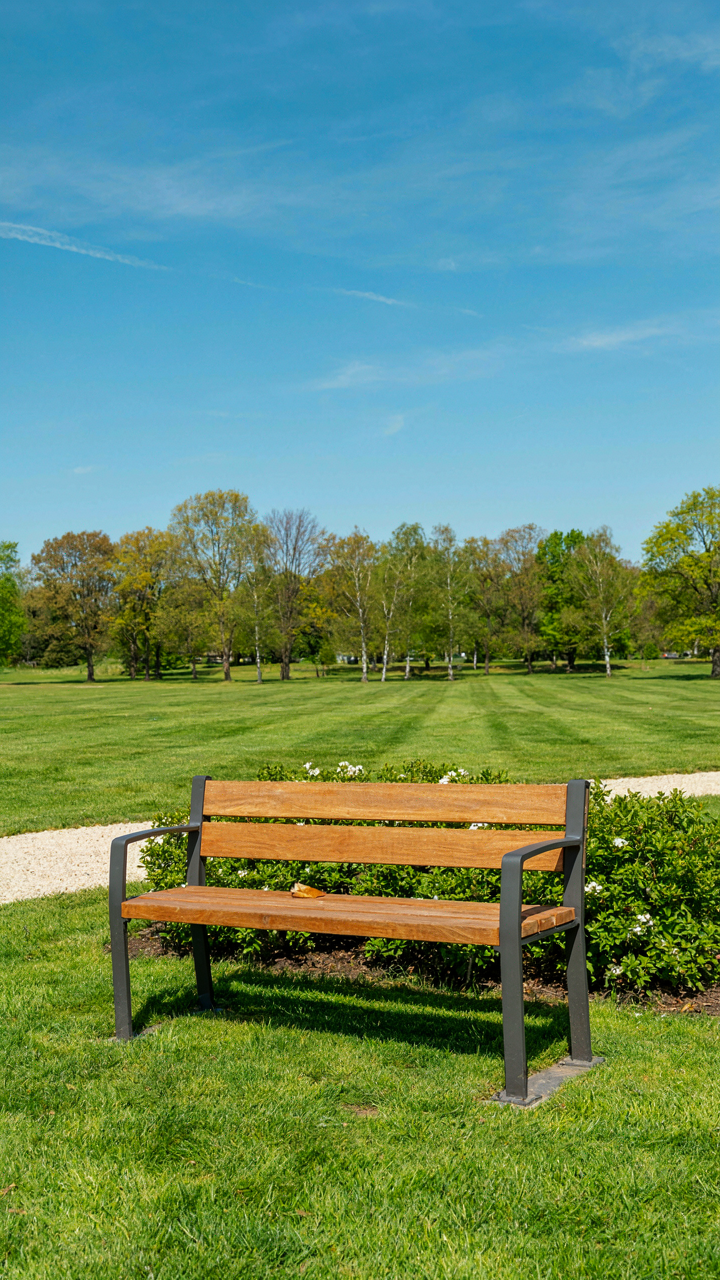
Borrowing Municipal Resilience For Home
You want your bench to survive because you’re tired of replacing things. That’s the real motive here, and it’s rational. The mechanism is material selection borrowed from infrastructure engineering: park benches survive decades of weather and strangers because municipalities specify materials for stress cycles, not aesthetics. Your bench should follow the same protocol.

Municipal benches use pressure-treated lumber, powder-coated steel, or composite decking because these materials absorb repeated temperature swings, moisture penetration, and UV exposure without failure. When you makeover a bench at home, you’re not choosing materials for your own gentle use—you’re choosing them as if strangers will abuse them. This overhead in durability eliminates the rot, splinter, and rust cycles that force replacements every three to five years.
Why Public Park Benches Outlast Yours
The common assumption is that park benches last because they’re “built tough.” That’s incomplete. They last because their materials are specified for cumulative damage, not single-use conditions. Your bench fails faster because you treat material selection as a design choice instead of a stress-load choice.
Park benches use galvanized or hot-dip coated steel frames because this coating system rebuilds itself micro-chemically as corrosion begins, extending the failure timeline by decades. Pressure-treated wood sits on that steel because the treatment penetrates fiber structure and resists fungal breakdown in ways untreated lumber cannot. When you remake your bench, apply the same stress-testing logic: specify materials based on your local humidity, temperature range, and seasonal rainfall, then select one tier above what that environment demands. This single decision removes the maintenance debt that makes people abandon their benches.
Painted Benches Outdoor: The Psychology Of Color & Constraint

Color Theory Beyond Personal Preference
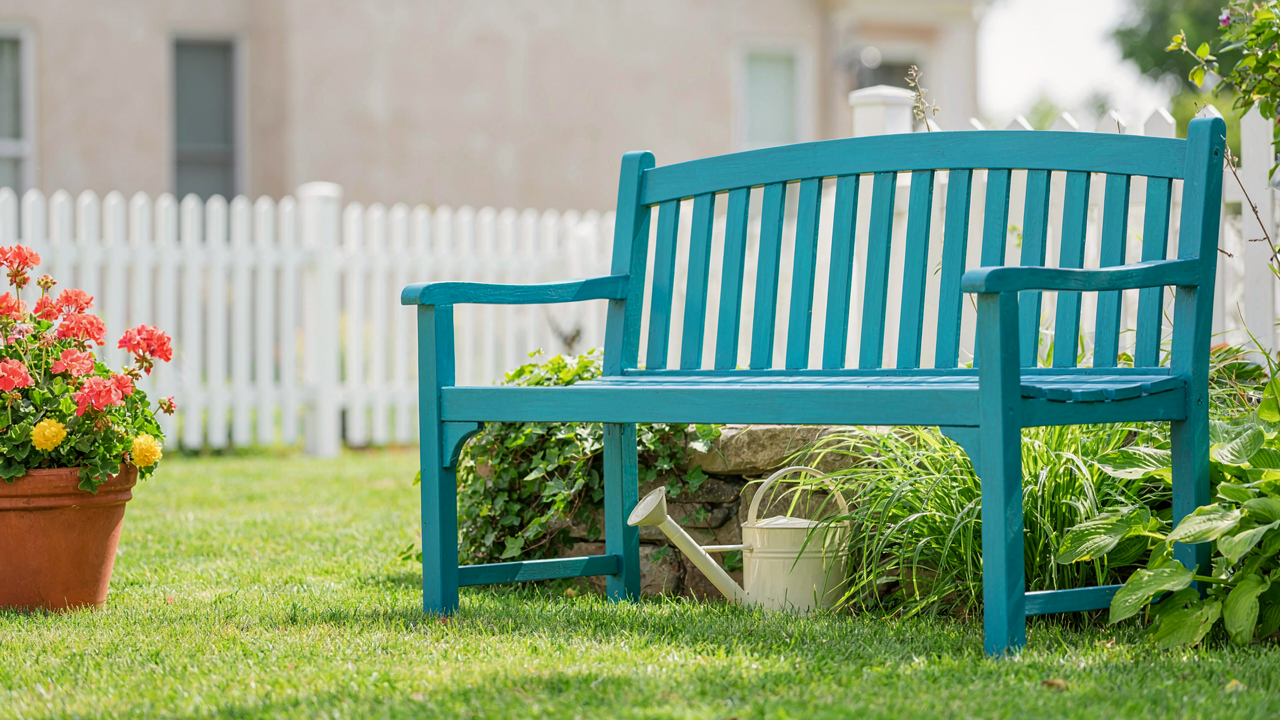
You want your bench to look good because you think it matters to people who see it. What actually matters is that color changes how your brain processes the space itself, independent of social judgment. Psychology and neuroscience have mapped this: certain wavelengths trigger measurable responses in cortisol and serotonin production. Cool colors like blue and green lower perceived temperature and activate calm states. Warm colors like terracotta and sage push the opposite direction. The bench’s color doesn’t decorate the yard. It rewires how you experience sitting in it.

Most advice says “pick what you love.” That’s incomplete. Your preference drifts based on time of day, season, and how much direct sun hits the bench. A deep navy that feels sophisticated in spring photos looks cold and recessive in November shadow. A bright yellow that energizes in morning light becomes aggressive and fatiguing by afternoon. The mechanism: paint color interacts with available light wavelengths in real time. Choose based on the specific hours you’ll actually use the bench, not how it photographs on a vendor’s website.
Environmental Factors Dictating Durability
Durability isn’t about paint quality alone. Materials science shows that paint failure follows predictable patterns based on substrate preparation and exposure variables, not brand reputation. Wood expands and contracts with moisture and temperature shifts. If you skip sanding to bare wood or skip primer on weathered surfaces, the paint film can’t bond to the substrate. Adhesion fails first, then peeling accelerates. This isn’t a defect in premium paint. It’s physics. The paint can’t outperform the foundation it’s applied to.
UV exposure, humidity cycles, and freeze-thaw patterns in your specific region determine how fast any finish degrades. A bench in coastal salt air fails faster than one in dry climates because salt corrodes wood fibers and disrupts paint adhesion. High humidity zones accelerate mildew growth under the paint layer. Your job is matching paint type to exposure before spending money on color. Use acrylic latex for humid regions because it breathes better than oil-based. Use oil-based in arid zones where UV intensity matters more than moisture vapor. Prep the wood surface to bare wood with 120-grit sandpaper, apply a water-resistant primer rated for exterior use, then apply two coats of finish paint. That sequence determines lifespan more than anything else.
The Entropy Reversal Blueprint For Iron Bench Makeover
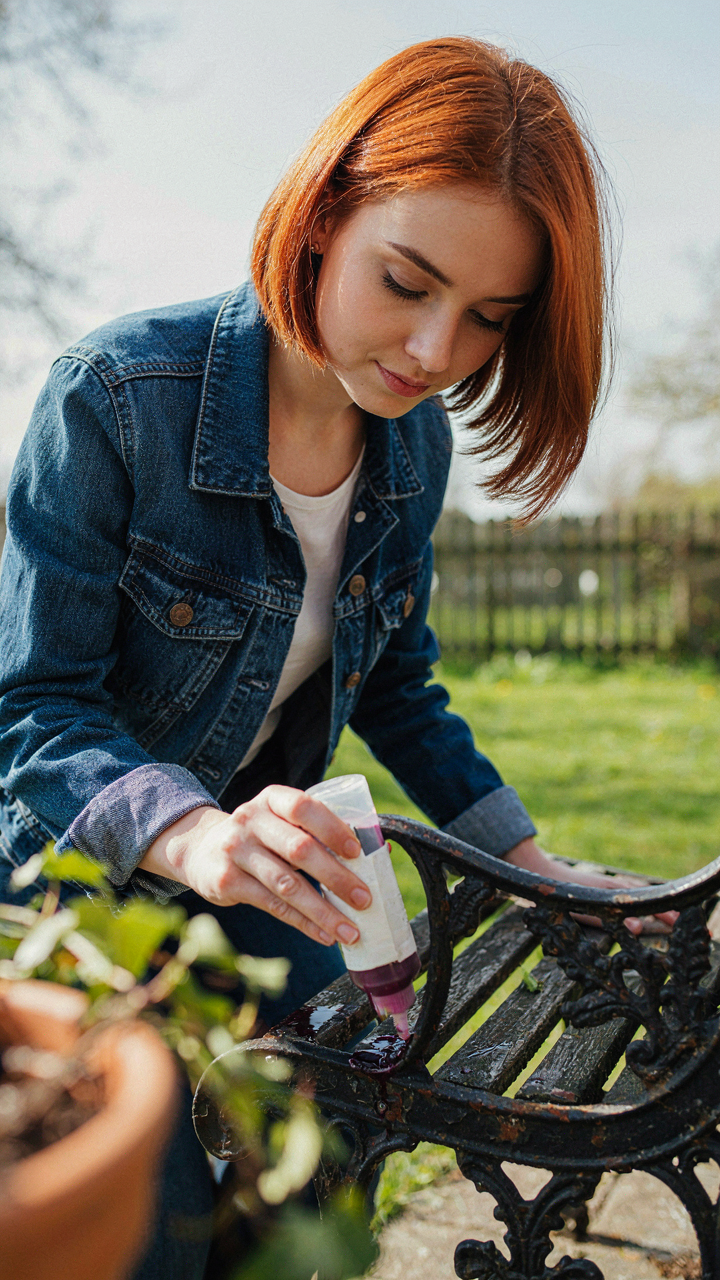
Why Rust Wins Without Intervention
You want your bench to look intentional, not neglected. That distinction matters because rust isn’t a surface problem—it’s a thermodynamic one. Physics teaches entropy: systems move toward disorder. In rust removal, this means oxidation accelerates without active energy input. Iron exposed to oxygen and moisture doesn’t stabilize; it deepens its decay. Wire brushing alone stalls this process temporarily. You need to reverse the chemical state, not just mask it.

Phosphoric acid does the real work here. It converts existing rust into magnetite, a stable compound that resists further oxidation. Apply it after mechanical removal—scraping and wire brushing—to lock in the reversal. The sequence matters because you’re not just cleaning; you’re chemically transforming the surface into something entropy can’t easily reclaim. Neglect this step and your paint job becomes a countdown timer.
Restoring Order To Structural Chaos
Most people sand or prime directly over pitting without addressing what caused it. That’s lazy. Deep rust creates micro-valleys where moisture pools regardless of topcoat quality. You need to flatten the playing field first. Use an angle grinder with a flap disc to feather the edges where rust meets sound metal. This isn’t cosmetic—it eliminates traps where water collects and accelerates corrosion restart.
After flattening, apply a rust converter, then a rust-inhibiting primer rated for metal. The primer doesn’t just look good; it creates a moisture barrier that stops the thermodynamic cycle before it restarts. Paint over that with exterior-grade enamel or polyurethane. The bench survives not because it looks restored, but because you’ve systematically blocked every pathway oxidation uses to restart. That’s the actual mechanism behind a makeover that holds.
Garden Bench DIY: The Self Reliance Imperative
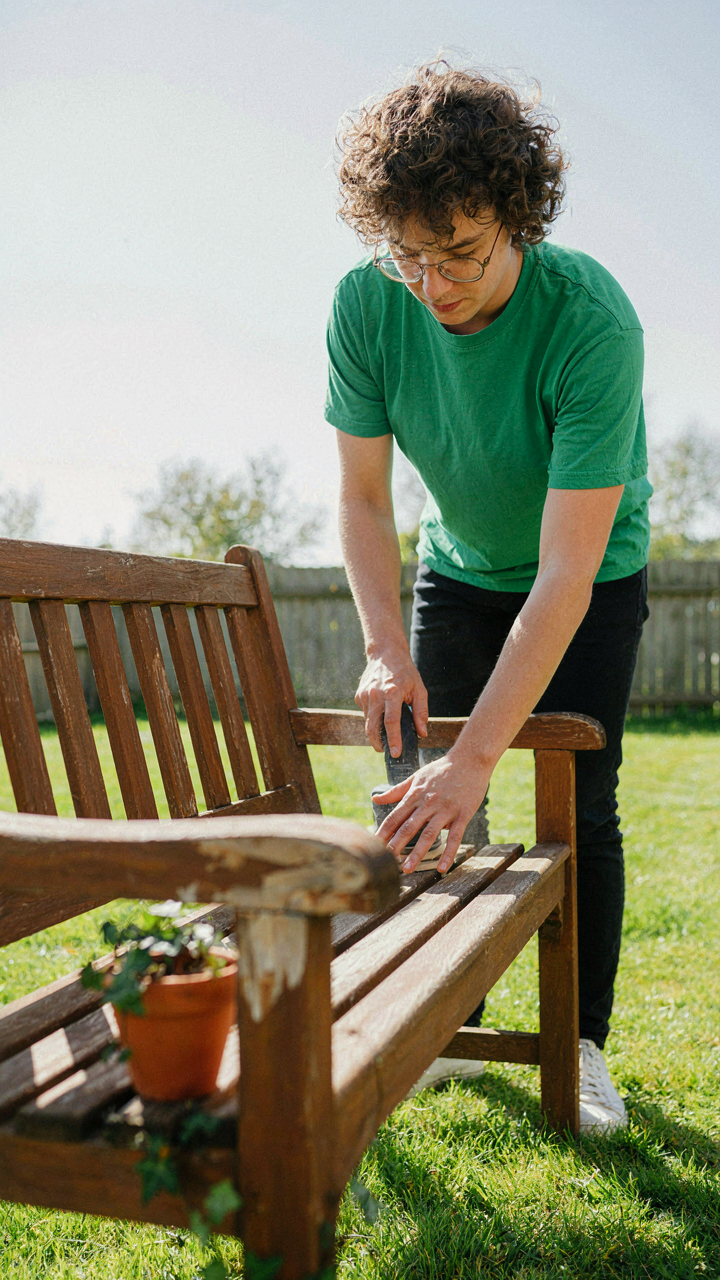
Leverage Over Brute Force
You want to believe the work matters more than the method because that justifies suffering through it. The real mechanism is physics: mechanical advantage beats effort every time. A pry bar moving wood grain costs you ten pounds of pressure instead of two hundred pounds of force. You don’t need to be stronger. You need better leverage.
- Pry bar or flat head: Removes old finish and separates joints without splitting wood fibers. Essential for disassembly without destruction.
- Orbital sander: Covers twice the surface area per stroke as hand sanding. Reduces finishing time from hours to minutes.
- Clamp system: Holds wood steady during work so you use one hand instead of two for the actual task.
- Drill with bits: Pilot holes eliminate splitting when reassembling. Faster than hand screwing and produces better joints.
- Random orbit finishing sander: Blends wood grain direction automatically. Hand sanding leaves visible directional marks that catch light wrong.

Don’t buy tools you’ll use once. Rent or borrow what you need for the specific repair stage. A bench project runs four to six weeks with gaps between finishing steps. Storing expensive equipment costs money and mental space.
Time Investment Versus Outsourced Mediocrity
The contractor will finish faster and charge you for it. What you’re really buying is someone else’s schedule pressure, which means corners cut on surface prep and wood treatment. Most contracted refinishing skips the intermediate grits, jumping from 80 to 150 instead of 80 to 120 to 150. You see this in six months when the stain sits uneven.
DIY takes longer because you’re doing it right. You let primer cure fully. You sand between coats. You inspect grain before staining. A professional on the clock doesn’t. The time you invest now prevents a second refinish in two years. One slow pass beats two rushed ones.
The Unveiling: A Statement Of Intent, Not Just A Seat
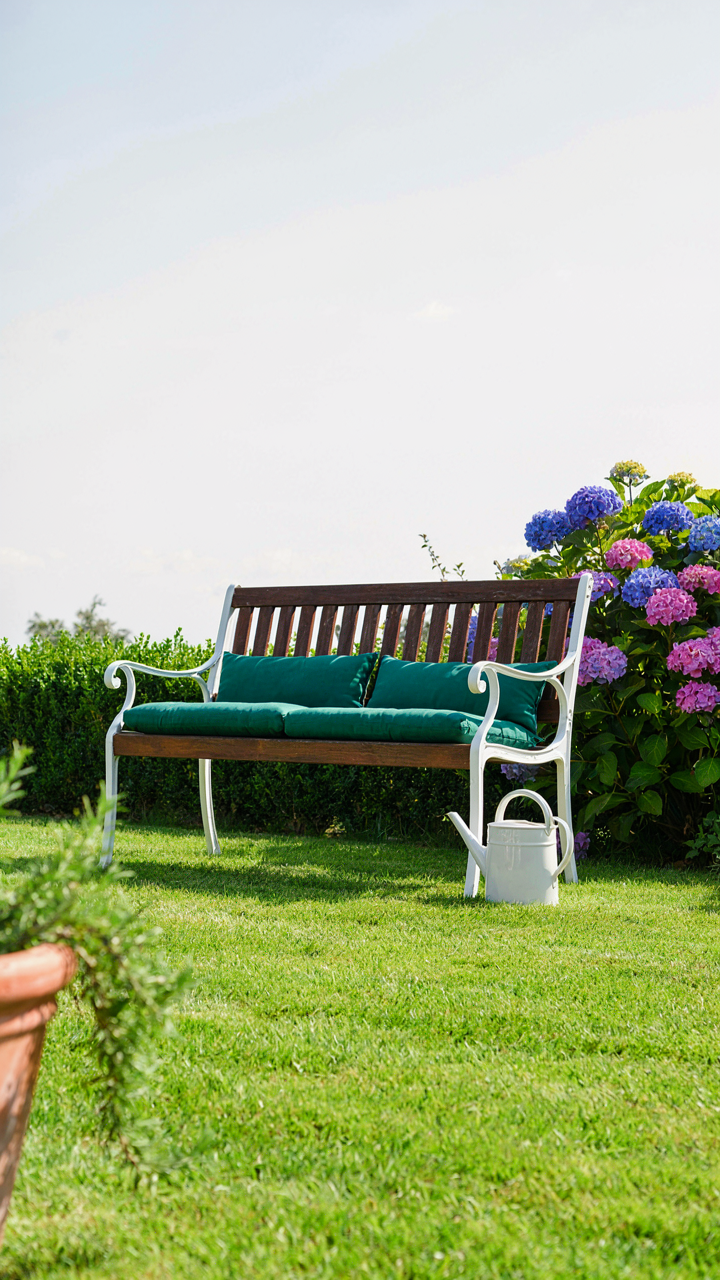
What You Actually Built Here
You want proof that effort matters. That’s the real reason you care about this moment. The finished bench isn’t just furniture—it’s evidence that you followed through on something, that you invested time in your own space instead of scrolling. The mechanism is simple: visible completion triggers a neurological reward. You did the work. Now the work does the talking.

Your bench now occupies physical space in a way it didn’t before the makeover. Every detail you chose—the wood stain, the cushion fabric, the angle of the backrest—reflects a decision you made. That specificity is what separates a bench from your bench. People notice the difference between generic and intentional, even if they can’t name it. The finished piece becomes a small monument to the fact that you cared enough to get it right.
Durability Built Into The Design
Most people focus on how the bench looks and ignore how it will fall apart. That’s backward. Think of engineering: a structure’s longevity depends on stress distribution, not surface treatment. A garden bench faces weather, weight, temperature swings, and foot traffic. A makeover that ignores these forces will crumble faster than the original.
The real work happens in the joints, fasteners, and protective layers you can’t see. Stainless steel bolts won’t rust. Polyurethane finishes resist UV damage better than paint alone. Drainage holes in the seat prevent water pooling that rots wood from the inside out. Test the stability of your bench monthly by applying downward pressure on corners and the backrest. Tighten hardware quarterly. These small protocols extend functional life by years, turning a makeover into an asset that actually compounds over time.
The Real Obstacle Isn’t The Bench’s Rust; It’s Your Assumption That Old Equals Useless

You don’t need permission to transform what you already own. That bench sitting in your yard isn’t waiting for replacement. It’s waiting for you to see it differently. The gap between a forgotten piece of furniture and your favorite backyard spot exists only in your mind. Stop scrolling for the perfect bench. Start painting the one you have. Action beats perfection every single time.