The Unseen Value: Why Your Entryway Bench Matters More Than You Think
Where Function Becomes Invisible
You care about this because a bench that works vanishes from your mind. The one that doesn’t will be the first thing you resent every morning. In retail psychology, this is called “friction tax”—the cumulative cost of small daily obstacles. An entryway bench absorbs that friction by solving a problem before you consciously recognize it exists. It catches keys, bags, and bodies mid-transition. When it works, you stop thinking about it. That’s the mechanism.
Most people buy a bench for looks and tolerate poor function. Wrong priority. A bench serves one job first: creating a deliberate pause point between outside and inside. This pause isn’t comfort. It’s staging. It’s where you shed the world and prepare for what’s next. A thrift bench with chipped paint but solid structure outperforms a decorative piece that can’t handle a jacket and boots. Start with frame integrity and surface durability, not aesthetic.
The First Thing People Judge You On
Your entryway bench broadcasts a message before you open your mouth. Interior designers call this “visual weight”—the psychological impact of what occupies space. A neglected bench signals that you’ve accepted mediocrity in the parts of your home nobody else sees. A maintained one, even a modest thrift find, signals intentionality. You didn’t just default. You chose. First impressions collapse into lasting ones because people rarely revise their initial assessment.
The bench serves as a proxy for how you treat the threshold between public and private. A weathered thrift piece that’s been refinished reads differently than one left to decay. The work matters. When someone enters your home and sees a thoughtfully restored bench, they’re seeing evidence of standards, not just furniture. That evidence shapes how they perceive everything else in the space. Refinishing a thrift bench isn’t optional styling—it’s the foundation for every visual claim you make about your home.
Thrift Store Recon: Hunting For The Unseen Potential
What To Look For Beyond The Surface
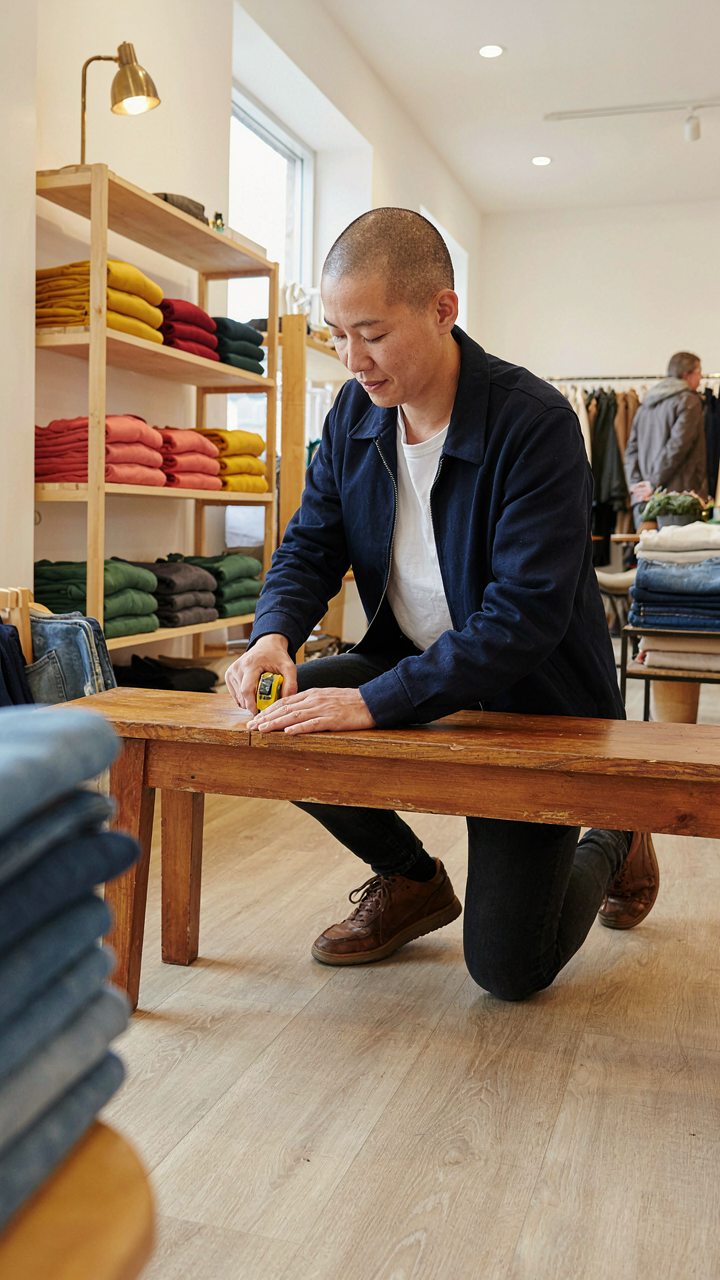
You want to feel like you found a steal because it validates your taste and saves you money. The real mechanism is structural integrity. A thrift bench’s frame determines whether it’s salvageable or a time sink. Check the joints first. Push down on corners and edges. If wood moves independently or creaks differently at each pressure point, the glue has failed and reassembly costs money and patience. Look for solid joinery, not veneered particle board disguised as wood furniture.

The second filter is scale. Most thrift benches either dwarf entryways or disappear into them. Measure your space before shopping. Bring those numbers on your phone. A bench that works sits between 36 and 48 inches wide for standard doorways. Height matters too: 18 inches off the ground lets people sit and remove shoes without strain. Ignore the bench’s current finish entirely. That’s the easiest variable to change. Ignore the color scheme. Focus only on bones, dimensions, and whether the frame will hold weight after refinishing.
The Price Conversation That Actually Works
Most people walk in with no leverage and accept the first asking price. That’s a negotiation failure, not a market reality. Thrift stores price furniture based on aesthetic appeal, not construction value. A beat up solid oak bench priced at thirty dollars has better resale and renovation potential than a pristine particle board bench at forty-five. Learn to separate perceived condition from actual material quality.
The tactical approach: find the bench, identify what makes it work structurally, then talk price based on the work required to finish it. Don’t negotiate the item’s beauty. Negotiate the restoration cost. “This frame is solid but needs stripping and finishing” gives you grounds to lower the price. Most thrift store staff don’t know what they have. They price by appearance and size. You price by what you’ll spend to make it functional and finish it well. Ask for the manager if the initial price seems inflated. Thrift operations often have flexibility that line staff won’t acknowledge.
The Minimalist Makeover: Less Is More With Your Entryway Bench

Stripping Down To Essential Function
You want a bench that looks intentional instead of like you just bought furniture. The mechanism is simple: function determines form, not the other way around. Start by naming what your entryway bench actually does. Storage? Seating? A place to set bags? Most people own benches that attempt three jobs and execute none. A thrift bench with solid structure beats a new one with weak legs every time. Pick one primary function, then design everything else around that single purpose.

The second function becomes optional. If your bench seats people, storage is secondary. If it stores shoes, sitting is a bonus feature. This clarity kills the impulse to overstuff it with decorative pillows, woven baskets, and items that serve no one. Strip the bench down to materials and form that support its primary job. What remains is honest. What remains works. Remove everything else.
Eliminating Visual And Actual Clutter
Most people confuse minimalism with emptiness. They’re not the same. Actual clutter multiplies visually because each object fights for attention. Three similar baskets scattered on a bench create visual noise. One basket placed intentionally creates a focal point. Economics calls this scarcity value: when objects are fewer, each one matters more. Apply that logic to your bench. Limit yourself to items that directly support your bench’s stated function.
A bench holds what you actually use as you leave. Keys, shoes, a bag. That’s it. Everything else migrates to closets or hooks on walls. If you thrifted a wooden bench with open shelving, resist the urge to fill every gap. Empty shelves aren’t wasted space. They’re negative space, and they’re what makes the bench readable at a glance. Place items on your bench using a grid system: designate one spot for each category, then keep only what fits that space.
The Ikea Storage Bench Hack: A Blueprint For Efficiency
Turning Flat Pack Into Custom Pieces
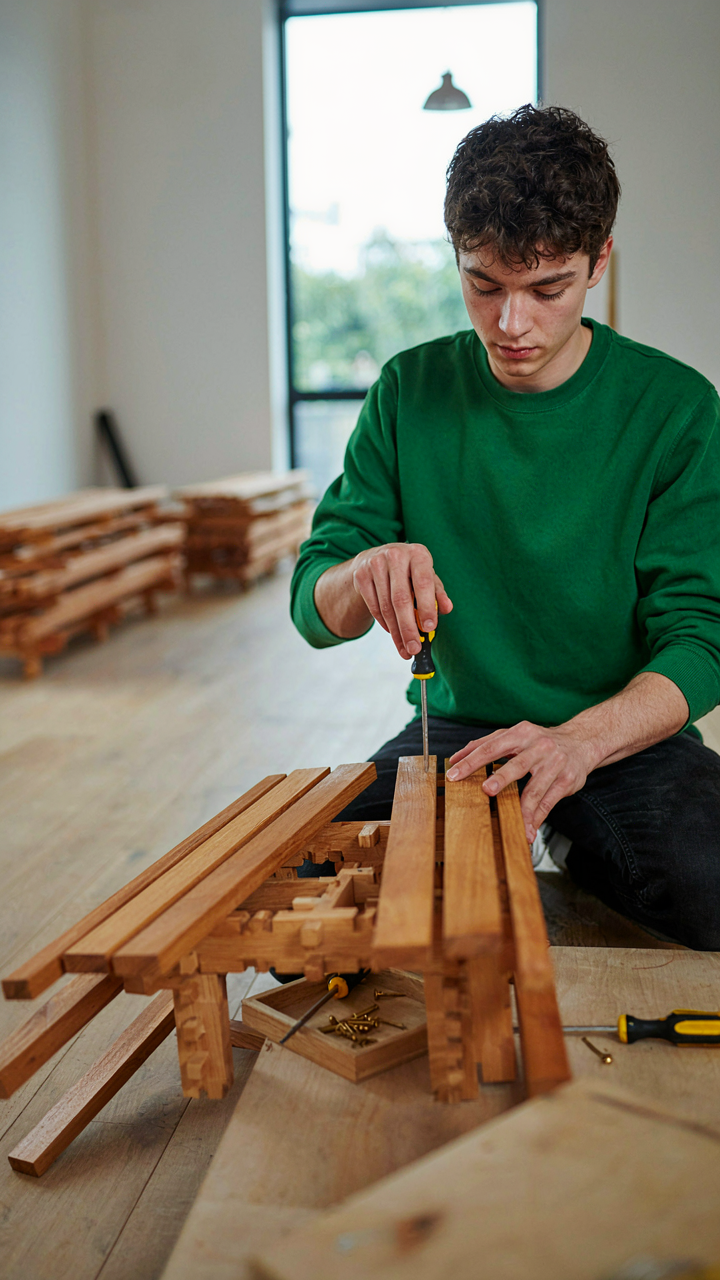
You want this to feel intentional, not like you bought furniture from a catalog and called it design. The mechanism is simple: Ikea benches use modular construction, which means you strip them down to components and rebuild them with custom materials. The frame stays. Everything else changes. Most people treat flat-pack as final product. That’s the mistake.
Start by identifying which Ikea bench frame fits your space. The Pinnig, Mackapär, or Tjusig models all use solid wood construction that accepts modification. Remove the original seat, backrest, and storage baskets. What remains is a structural skeleton you own completely. This is where customization begins, not where it ends.
Building Systems That Adapt
Think in terms of military logistics: you’re designing a supply line, not a static object. The supply line here is your storage system, and its demand changes monthly. A modular bench lets you swap, add, or remove components without replacing the entire unit.
Ikea benches accept aftermarket cushions, drawer inserts, and cabinet doors because they’re built on standard measurements. Measure your bench frame’s interior depth and width. Source replacement baskets, wooden crates, or custom drawer fronts from other suppliers that fit those exact dimensions. The frame becomes your constraint. Everything inside it becomes variable. Swap storage solutions when your needs shift.
Diy Shoe Bench Entryway: Engineering For Daily Friction

Your Body Needs A Predictable Landing Zone
You want a bench that doesn’t make you think. That’s the real problem people won’t admit. Ergonomics is the study of how bodies interact with their environment to minimize wasted energy, and your entryway bench operates as a biomechanical checkpoint. Most people treat it as decoration. It’s actually a friction reducer.

The bench height matters more than aesthetics. Standard seated shoe-changing height sits between 16 to 18 inches off the ground. Your knees should bend at roughly 90 degrees when you sit. Too high and you’re straining to reach your feet. Too low and you’re contorting your spine. Thrift benches often come at random heights. Measure before you commit. Adjust legs or add risers to hit that zone precisely.
The Invisible Tax Of Mental Sorting
Every item your eyes land on demands a decision. Your brain cannot bypass this. People assume organization is about storage capacity. Wrong. Organization reduces the computational load your brain burns just by existing in the space. A bench without clear zones forces you to negotiate where things go every single time you enter.
Create discrete spots before you fill the bench. One section for shoes. One for bags. One for seasonal items. Use dividers, labeled boxes, or even just mental real estate divided by cushion segments. The moment someone enters your entryway and their stuff lands somewhere predictable, the bench works. They stop thinking. Friction drops to zero. That’s when the system actually functions.
The Foyer Function Protocol: Beyond Seating
Do More With Less Space
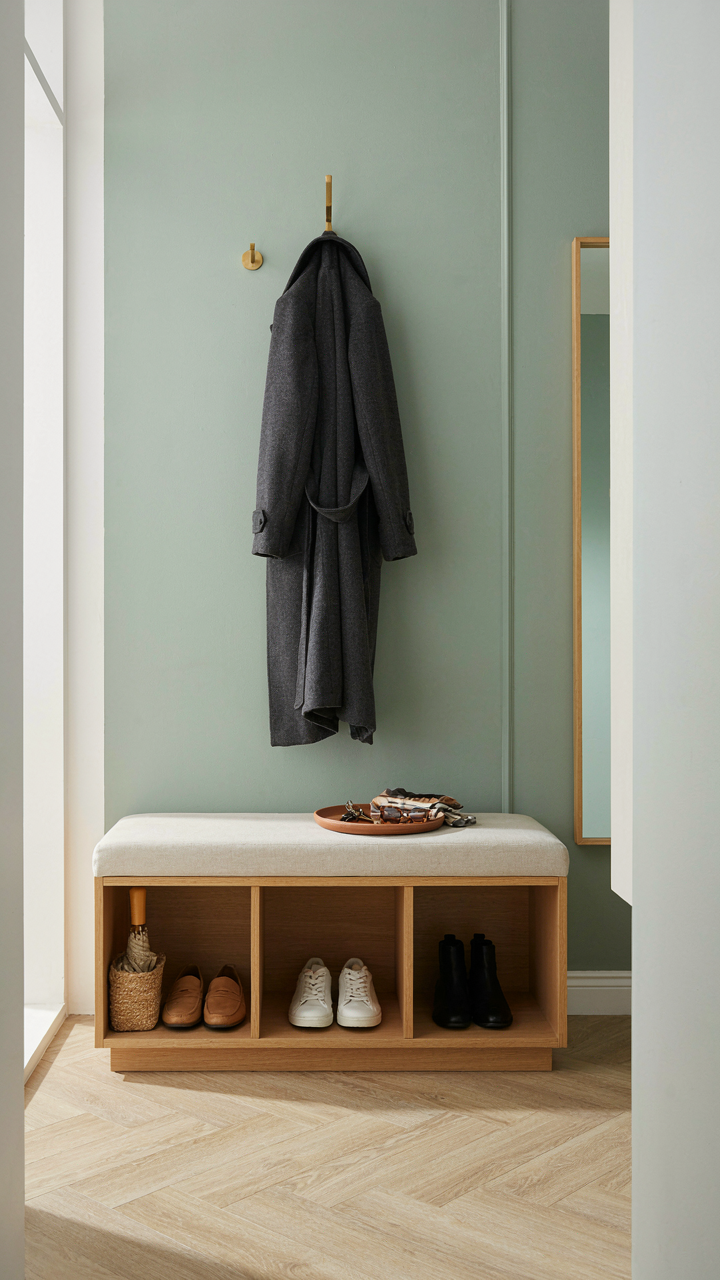
You want your bench to justify its footprint because square footage costs money, whether you own or rent. Apply the concept of load capacity from engineering: every bench has a weight limit, but more importantly, a utility limit. The real measure isn’t how many people sit on it, it’s how many problems it solves in one location. A thrift bench becomes functional architecture when it stores, displays, and serves simultaneously instead of existing as decoration.

The mechanism is stacking functions vertically and horizontally without creating clutter. A bench with built-in storage underneath handles shoes or seasonal gear. A shelf or ledge on top holds a mirror, keys, or mail without requiring additional furniture. The legs themselves can anchor a shoe rack or basket. You’re not adding pieces, you’re weaponizing the single object you already have.
Keys, Coats, And Chaos Control
Most people organize entryways by category, which fails because categories don’t match daily behavior. You grab your keys while sitting down to put on shoes, not before. The real protocol is organizing by sequence of movement, not by item type. This means your bench layout should mirror the exact order you interact with things when entering or leaving the house.
Position hooks at arm’s height on the wall behind or beside the bench for coats and bags. Place a tray or small container on the bench surface for pocket items that leave your hands temporarily. Store footwear directly under the seat where you can reach it without standing. A mail holder or basket on a lower shelf catches papers before they scatter across the surface. The bench becomes a staging ground, not a storage unit.
DIY Bench For Entryway: Mastering The Material
What Actually Holds Up
You want your bench to look intentional, not like you assembled trash. Here’s what matters: material selection determines whether your makeover lasts six months or six years. Most people pick wood because it’s familiar, then wonder why it warps or splits. The mechanism is simple—wood moves with humidity. Thrift benches often come from unknown environments, so you’re inheriting unpredictable wood behavior. Choose materials that resist environmental stress instead of fighting it.

Solid hardwoods like oak and maple handle moisture swings better than pine or particleboard. Metal frames provide structural integrity without the moisture sensitivity. Upholstered surfaces hide flaws and add tactile function. The real play is mixing materials—a wood seat on a metal base eliminates the wood movement problem entirely. Test any thrift find by checking for soft spots, cracks, and visible water damage before committing materials to it.
Tools That Finish What You Start
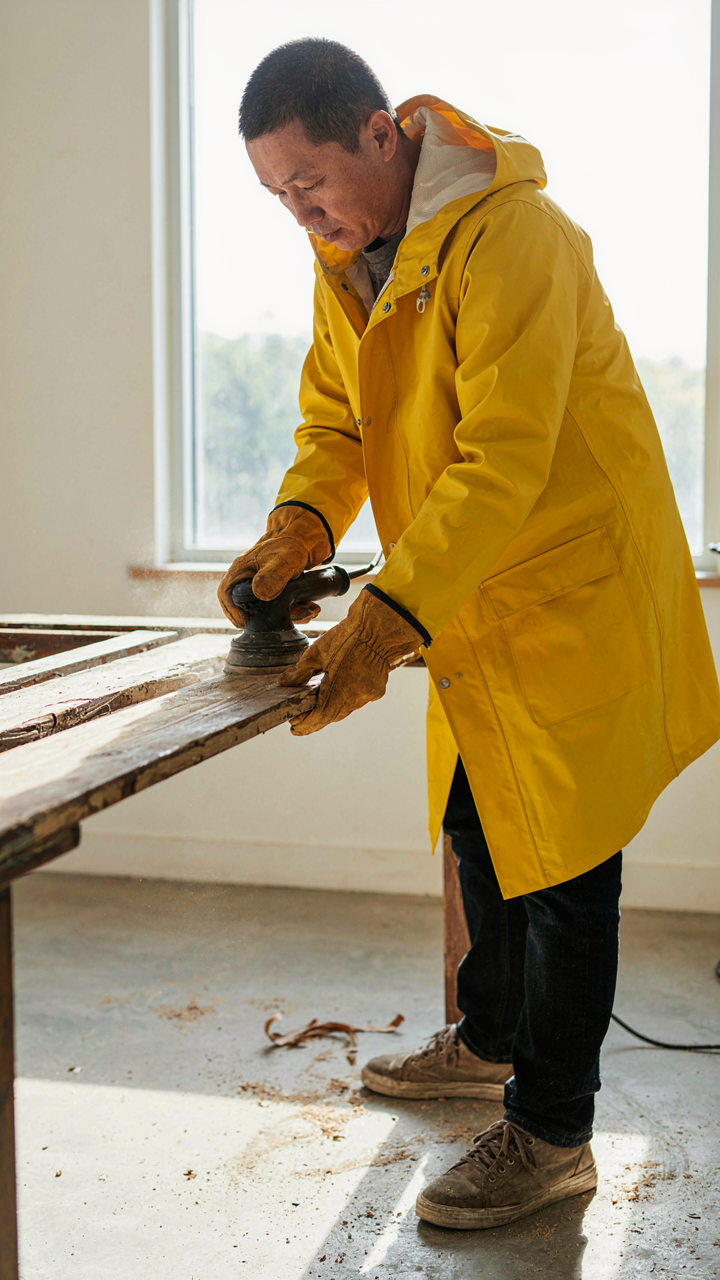
- Random Orbital Sander: Removes old finish and prep surfaces uniformly without gouging. Essential for thrift wood that’s been treated inconsistently. Get 120-grit and 220-grit pads.
- Pneumatic Staple Gun: Secures upholstery faster and more reliably than manual stapling. Creates consistent tension on fabric or leather without hand fatigue.
- Drill Press or Hand Drill: Precise hole placement for new hardware or frame assembly. Prevents splitting in reclaimed wood where grain direction is unpredictable.
- Clamps: Holds joints tight during adhesive cure. Non-negotiable for frame repairs on thrift benches with loose joinery.
- Wire Brush Attachment: Strips rust and old finish from metal frames quickly. Saves hours versus hand scraping and prepares metal for primer application.
Technique beats tool quality every time. Sand with the grain, not against it—cross-grain sanding creates scratches that stain shows. Apply finish in thin, even coats rather than one thick layer that pools and drips. Let adhesive fully cure before loading weight on repaired joints. The protocol is simple: prep surfaces properly, apply finish in sequence, wait the full cure time. Skip any step and your makeover fails.
Ikea Hacks Entryway: Elevating The Everyday
Two Dollar Upgrades That Work
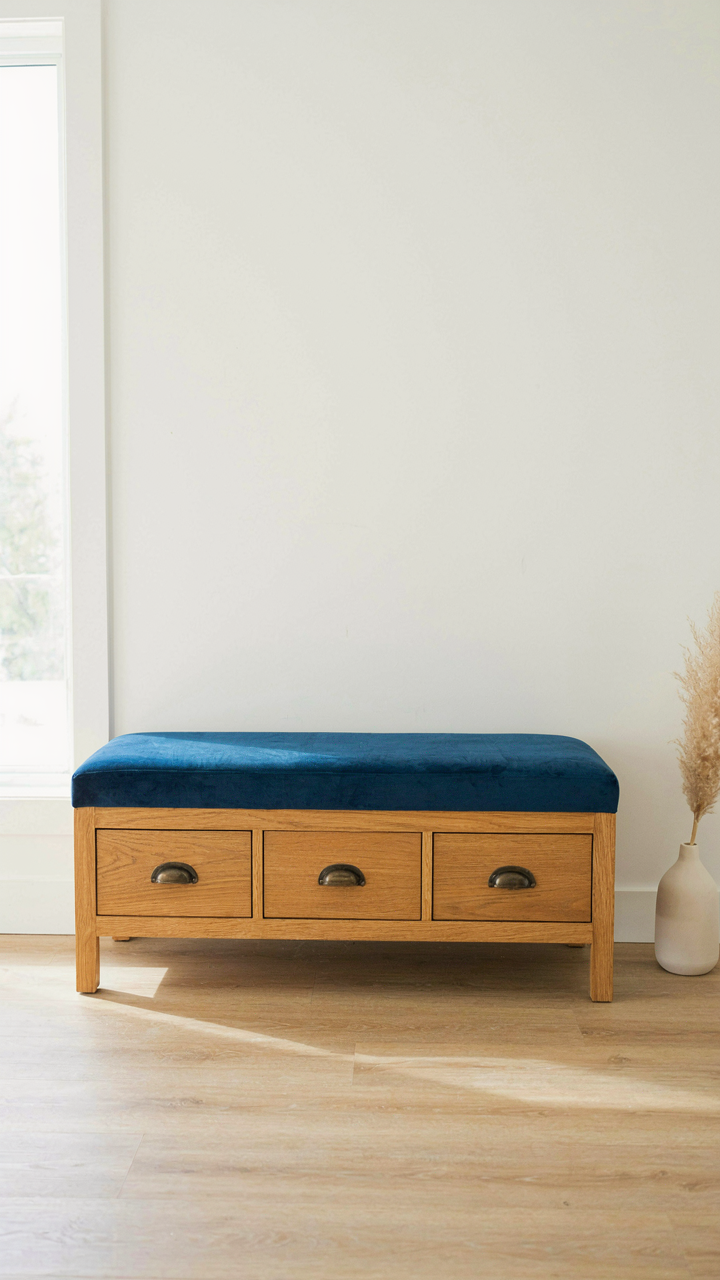
You want to feel like you made something intentional instead of just buying flat pack furniture. Here’s the mechanism: Ikea benches are designed for assembly, not personality. They leave structural gaps you can exploit. A bench from their catalog costs thirty to sixty dollars. Adding hardware, stain, or repositioned legs takes two hours and costs five to fifteen dollars in materials. The gap between cost and perceived value is where the hack lives.
The real move is treating the frame as a skeleton, not a finished product. Replace factory handles with vintage drawer pulls from estate sales. Swap the top with reclaimed wood that matches your floor. Add felt pads under legs to change how the piece sits visually in the space. These aren’t decorative touches. They’re structural replacements that change how the bench functions and reads in your entryway.
Making Mass Production Feel Intentional
Personalization in industrial design means breaking the visual rhythm the manufacturer intended. Ikea uses modularity as a cost strategy, not an aesthetic one. Your job is to disrupt that rhythm deliberately. Paint the frame in a color that contradicts the top. Add upholstery to a bench that shipped with none. Stain legs darker than the seat. The contradiction signals intentionality to anyone who enters.

The protocol is simple: identify one element the manufacturer left neutral, then make it loud. This works because your brain registers the deliberate choice as authorship. You’re not decorating. You’re editing. Start by photographing the bench in its original state, then commit to changing exactly one material or color finish before assembly. Complete that single change before moving to the next step. This prevents the common trap of half-finished modifications that dilute impact.
The Only Wasted Space Is The One You Pretend To Organize
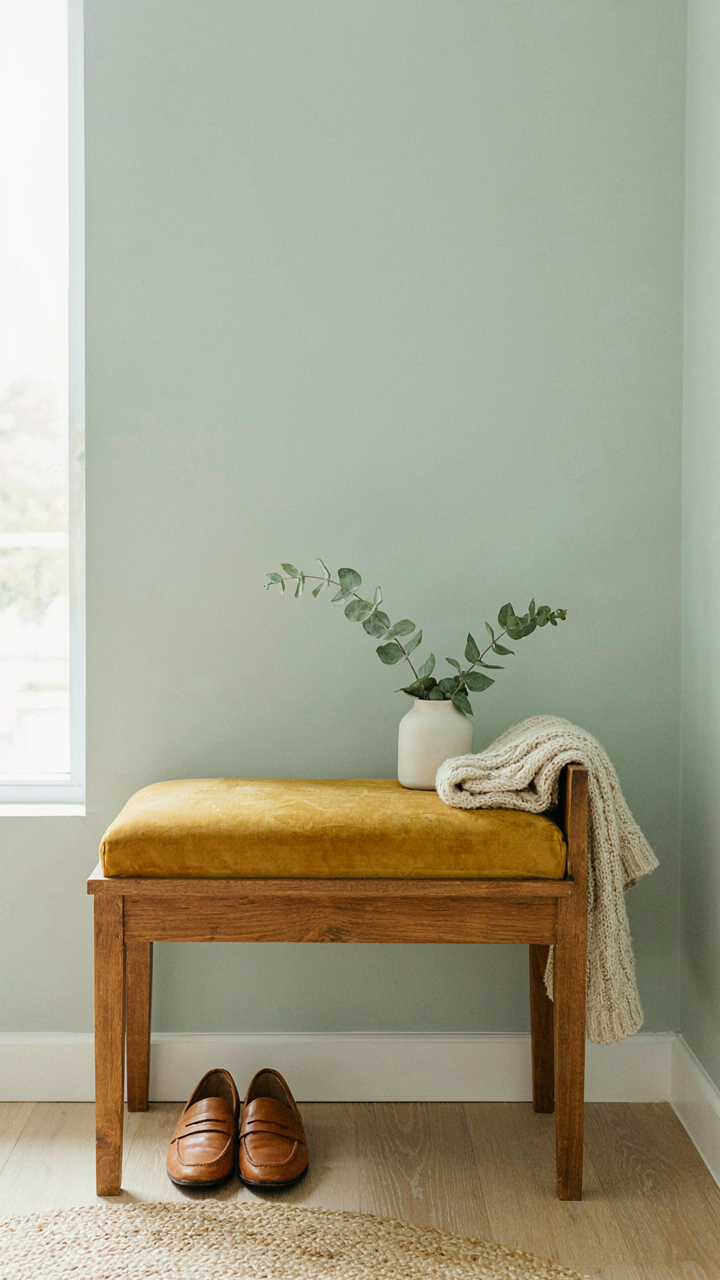
Your entryway doesn’t need Pinterest perfection. It needs you to stop walking past that corner and actually claim it. Buy one thrifted bench this week. Not next month. This week. Measure your space, hit the local shops, and commit to something real instead of scrolling inspiration boards you’ll never act on. The gap between your vision and your reality closes the moment you stop thinking and start moving. Your entryway transforms when you do.