Understanding The Color Wheel Basics For Container Garden Design
How Complementary And Analogous Colors Work In Planting Schemes
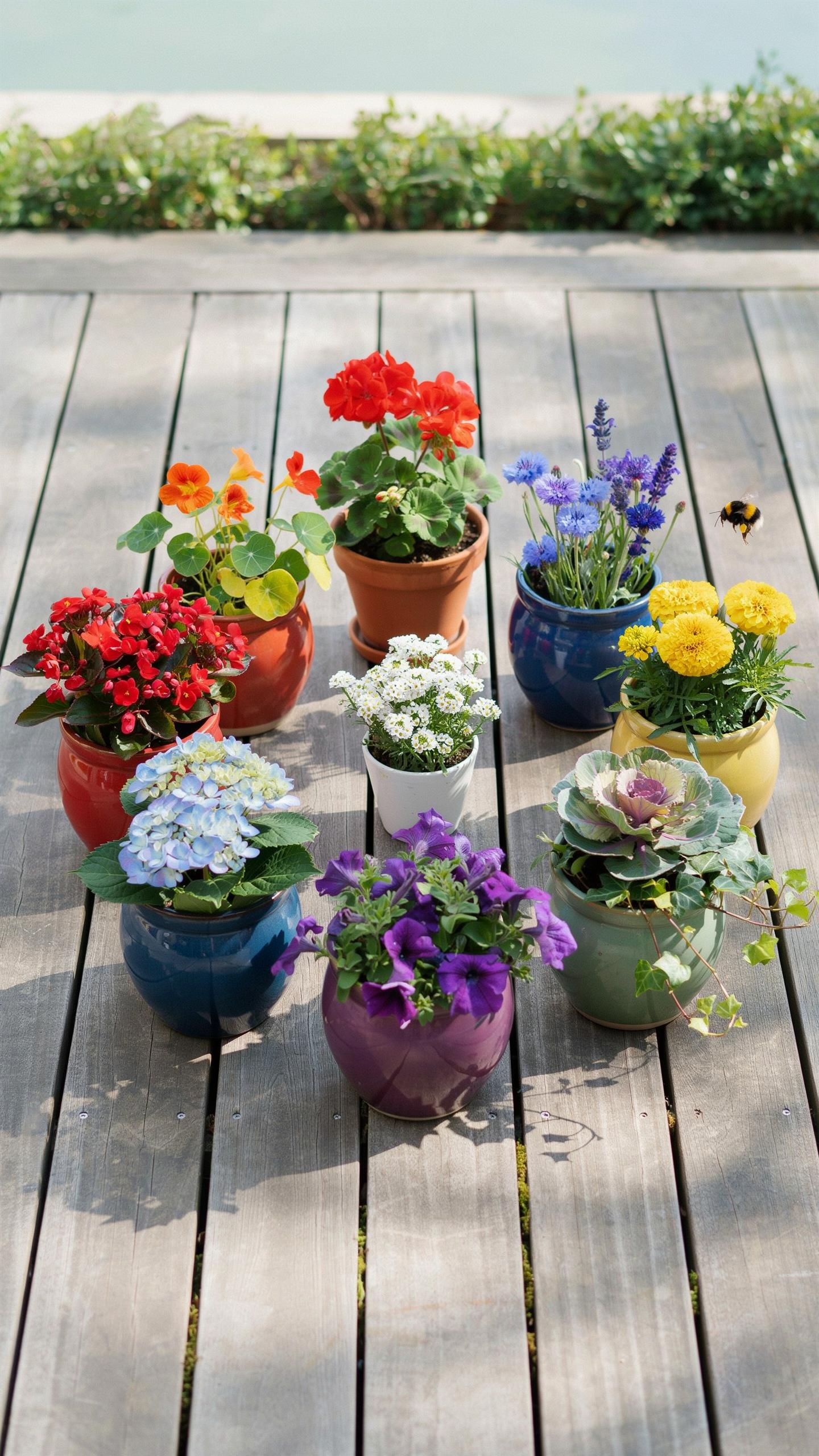
Complementary colors sit opposite each other on the color wheel. Examples include purple and yellow or blue and orange. These pairings create high contrast and visual tension. Choosing these combinations makes your container stand out from a distance. High contrast demands attention and creates a bold focal point. This technique works best in modern landscapes where you need immediate visual impact.
Analogous colors sit next to each other on the wheel. Examples include red, orange, and yellow. These schemes create harmony and a sense of calm. The eye moves easily across the container because the colors share similar base pigments. Most professional designers use this method to create a unified look. It works well in traditional gardens where you want a relaxed atmosphere.
Why Color Temperature Matters When Choosing Container Gardening Flowers
Color temperature divides the wheel into warm and cool segments. Warm colors like red, orange, and yellow appear to move toward the viewer. They make large containers feel closer and more energetic. These shades thrive in bright sunlight because they do not wash out under high light intensity. Use warm tones for areas where you want to increase traffic and excitement.
Cool colors like blue, green, and violet appear to recede from the viewer. They make small spaces feel larger and more open. These tones excel in shaded areas or during the evening hours. Cool colors create a tranquil and soothing environment. They work effectively in seating areas meant for relaxation. Match temperature to the intended use of your patio or balcony space.
The Thriller Filler And Spiller Method For Mixed Flower Pots
Choosing A Thriller Plant That Anchors Your Color Palette
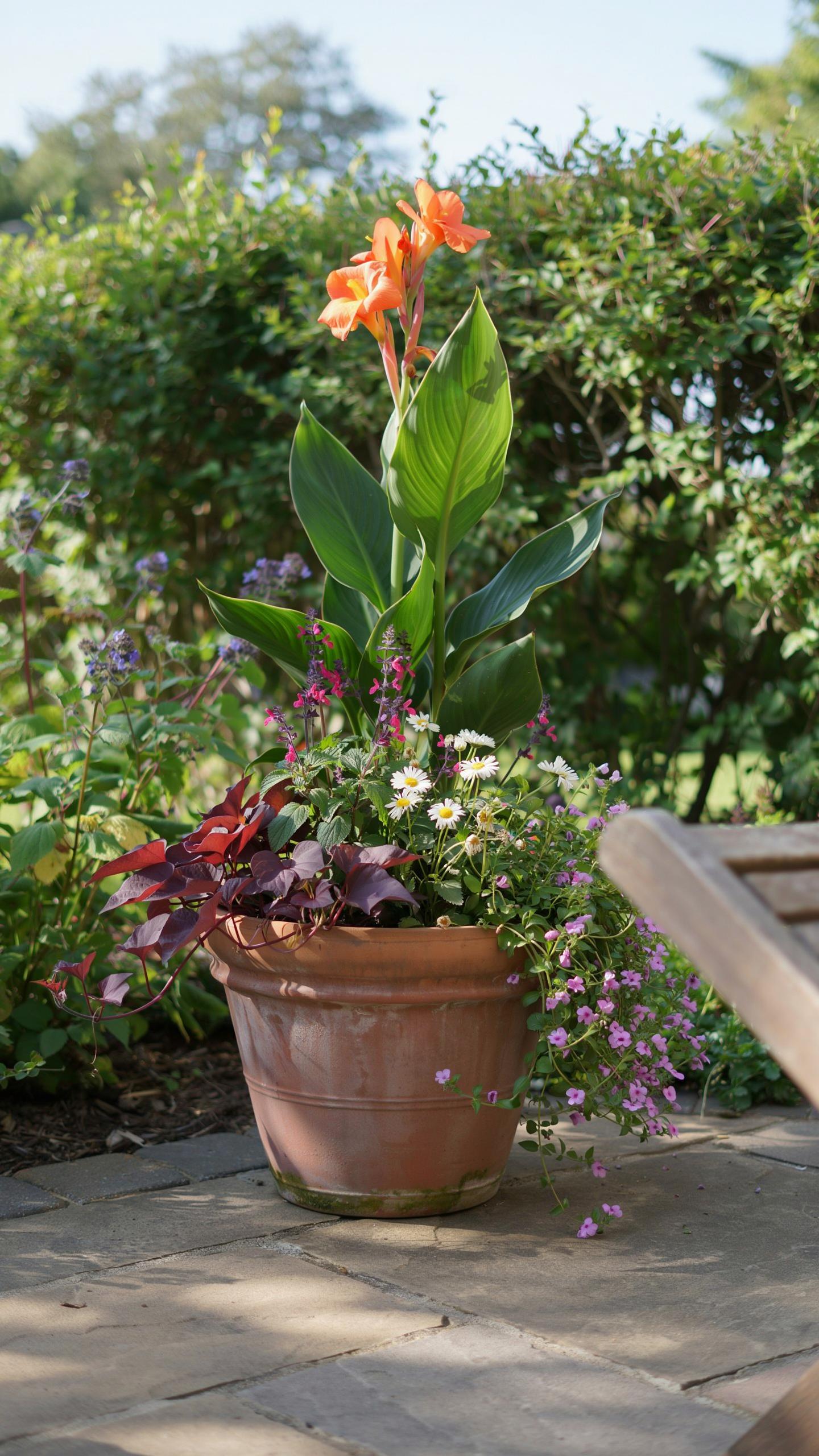
The thriller plant serves as the primary vertical element and the visual foundation for your color scheme. You must select this plant first because it dictates the saturation and temperature of the entire arrangement. This center or rear centerpiece creates the initial height that draws the eye. Its foliage or bloom color acts as the baseline for every other plant selection you make for the container.
Select a thriller with structural integrity and a color that supports your design goal. If you want a high-contrast look, pick a thriller in a bold primary color. For a monochromatic look, choose a thriller with deep shades of your target hue. Ensure the thriller can withstand the specific sunlight levels of your site. This plant is the most important tactical decision in the container garden color combinations process.
How Fillers And Spillers Complete The Color Story In Your Mixed Flower Pots
Fillers add mass and bridge the gap between your thriller and the edge of the pot. These plants should complement the thriller by either matching its color or providing a direct contrast. Use fillers to soften the transition from the tall center to the lower sections. They provide the bulk of the color density in the pot. Choose fillers with mound-forming habits to ensure no soil shows.
Spillers trail over the edge and extend the color palette downward toward the ground. This creates a finished look and adds a third dimension to the color story. Choose a spiller that echoes a secondary color found in the thriller or filler. This repetition makes the design feel intentional and professional. The spiller completes the visual path by leading the eye from the top to the bottom of the display.
Best Plant Combinations For Pots That Beginners Can Rely On
Classic Two Tone Pairings That Are Practically Foolproof For New Gardeners
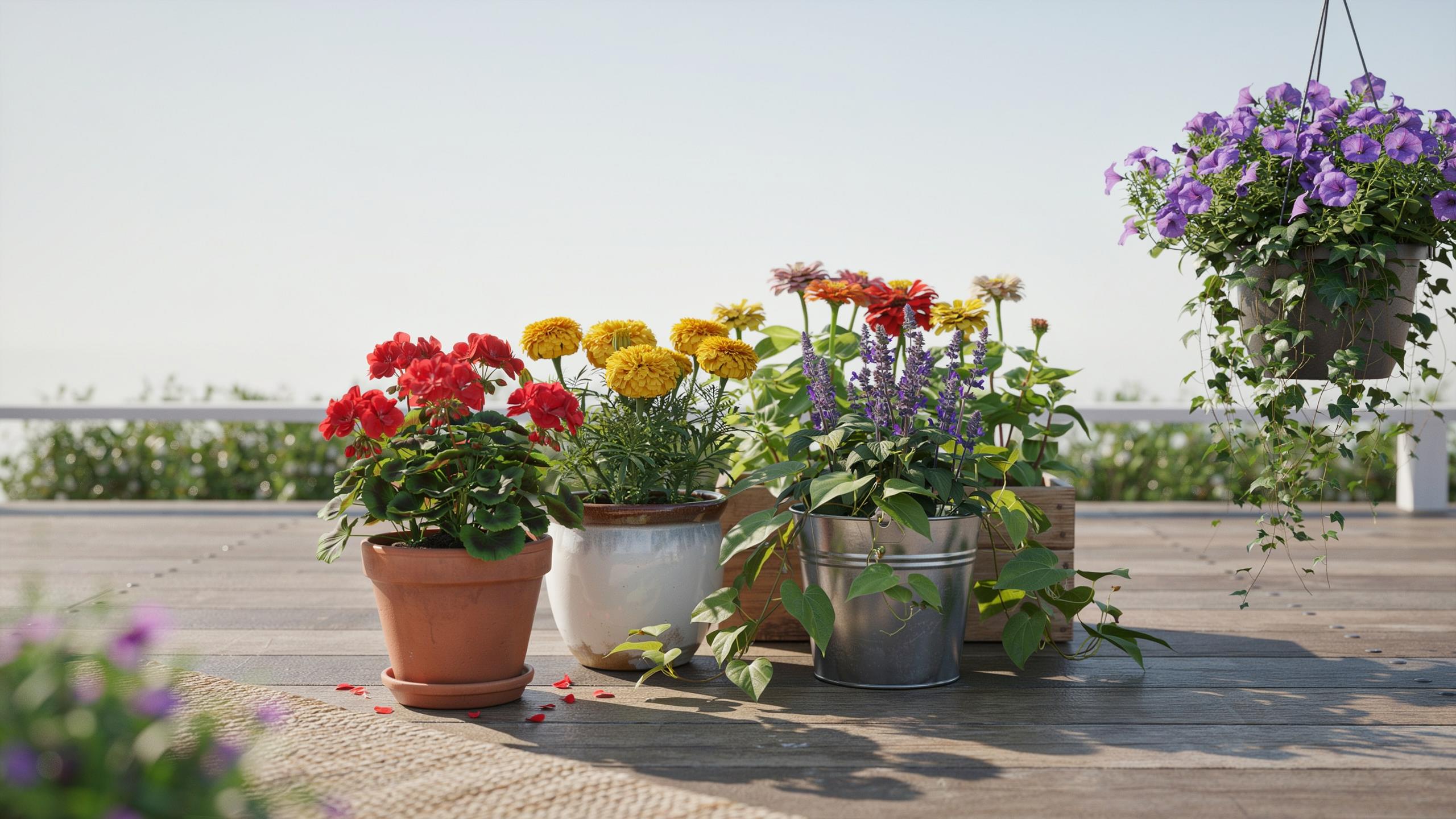
Complementary colors sit opposite each other on the color wheel. This professional design tactic creates high visual impact with minimal effort. Use purple and yellow for immediate contrast. These hues vibrate against each other and draw the eye quickly. Combining deep purple Salvia with bright yellow Marigolds works every time. It offers a clean look that hides beginner mistakes in arrangement or spacing.
Analogous color schemes use colors found next to each other on the wheel. Think blue and violet or red and orange. This method creates a calm and unified appearance. Use silver foliage to bridge the gap between two bold colors. Silver Dusty Miller acts as a neutral ground for red Geraniums and orange Lantana. This strategy ensures your container looks cohesive even if your plant placement is slightly uneven or asymmetrical.
Top Beginner Friendly Plant Combinations For Pots Based On Bloom Time
Succession planting ensures your pots stay productive throughout the entire growing season. Beginners often fail by choosing plants that bloom all at once then die back. Select species with staggered peak times or those with extreme heat tolerance for late summer. This tactical approach prevents empty spots in your design. You must align your species selection with the seasonal light intensity and temperature shifts in your specific local climate.
- Spring Peak Primrose and Pansy: These species thrive in cool temperatures and provide early color when most plants remain dormant. They withstand light frosts and establish roots quickly before the summer heat arrives. This pairing offers immediate results for early season containers.
- Early Summer Petunia and Calibrachoa: These heavy bloomers take over as temperatures rise into the seventies. They provide a dense carpet of color that covers the soil surface. Regular deadheading or using self-cleaning varieties ensures a continuous display of flowers through the mid-season.
- Mid-Summer Zinnia and Lantana: These plants thrive in high heat and direct sun. They require less water than spring varieties once established. They maintain peak bloom when other plants begin to wilt or fade during the hottest months of July and August.
- Late Summer Sedum and Ornamental Pepper: These choices provide structural interest and color as other flowers decline. Sedum blooms late while peppers offer bright fruit that lasts until the first major frost. They bridge the gap between summer displays and fall harvest themes.
- Autumn Chrysanthemum and Flowering Kale: These hardy options tolerate dropping temperatures and shorter daylight hours. The kale provides texture and deep purple or white tones that intensify with cold weather. They maintain the visual integrity of your pots well into late October or November.
Consistent blooming requires high-quality potting soil and regular fertilization. Beginners must feed flowering plants every two weeks with a water-soluble fertilizer to maintain color production. Proper drainage remains critical to avoid root rot over long seasons. Empty the drainage trays after heavy rain to keep the roots oxygenated. Healthy roots are the foundation for consistent and vibrant flower displays across all these seasonal plant combinations.
Choosing The Right Garden Containers To Enhance Your Color Scheme
How Container Color, Material, And Size Influence Your Overall Design
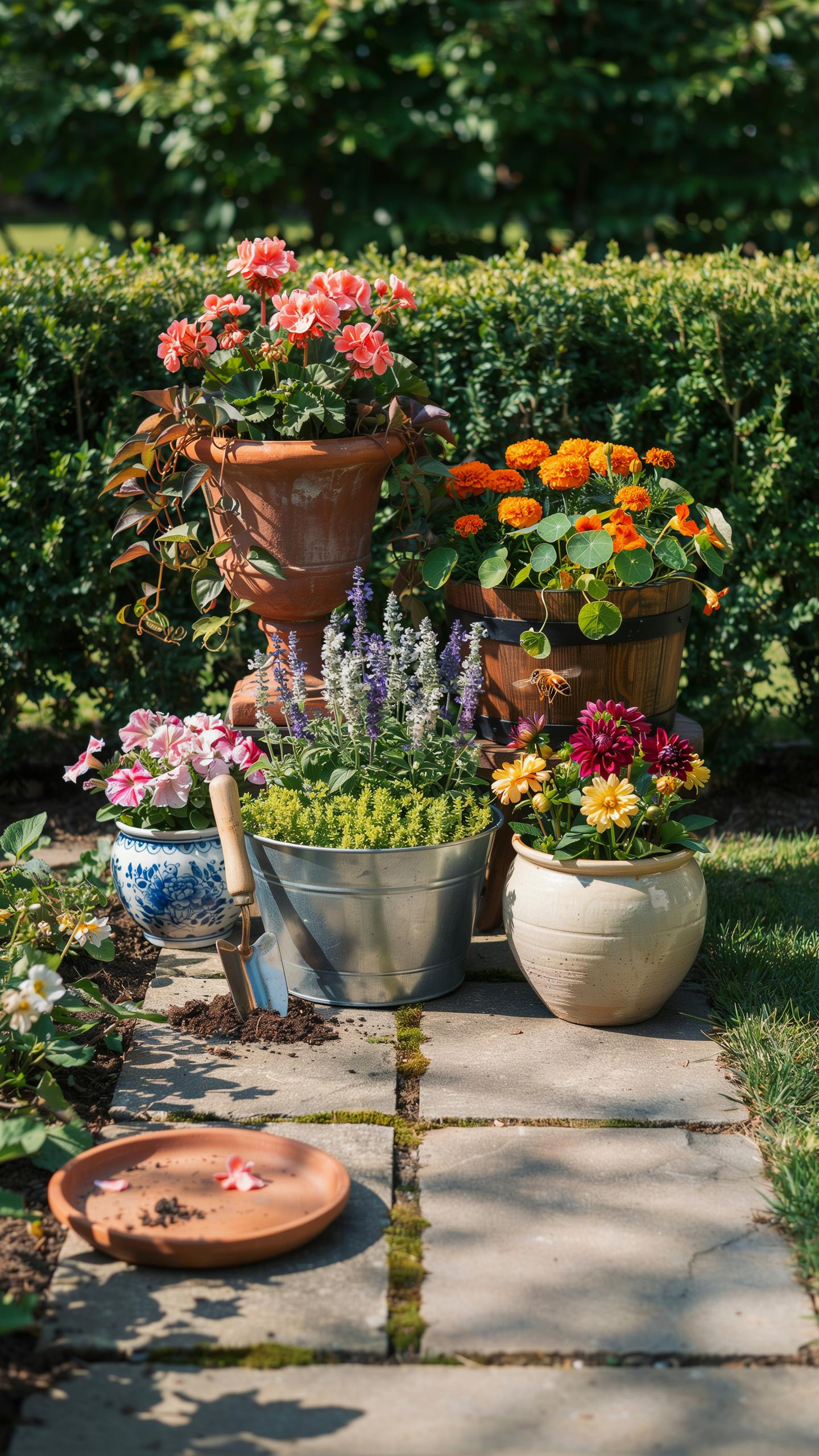
Container color dictates the visual temperature of your display. Neutral tones like gray or charcoal allow vibrant flowers to dominate the viewer’s eye. Bright pots compete with the plants for attention. Select a pot color that exists within your plant palette for a unified look. Use high-contrast pairings like yellow blooms in blue pots to create focal points. Proper color selection prevents visual clutter.
Material choice affects plant health and color longevity. Terracotta breathes but wicks moisture away quickly. This causes salt buildup that leaves white streaks on the surface. Plastic and glazed ceramic retain water but can overheat in direct sun. Large containers provide a bigger thermal mass. This stabilizes soil temperature. Big pots also hold more soil. More soil prevents the rapid nutrient loss common in small vessels.
Matching Garden Containers To Your Outdoor Space And Existing DéCor
Your home’s architecture should guide your container selection. Modern homes suit sleek metal or concrete vessels with sharp lines. Traditional houses benefit from classic stone or clay shapes. Link the container color to your shutters or trim. This creates a cohesive look across the entire property. Do not ignore the floor material. Dark wood decks require lighter pots to avoid blending into the shadows.
Scale determines the success of the arrangement. Small pots on a large patio look like clutter. Group three pots of different heights to create depth and interest. Use repeating container styles to lead the eye along a path. This technique creates a rhythm that feels intentional. Match the weight of the pot to the wind conditions of your site. Heavy stone prevents tipping in exposed areas.
Colorful Potted Plants Outdoor Ideas For Sun And Shade Spots
Best Potted Plants Outdoor For Full Sun Color Combinations
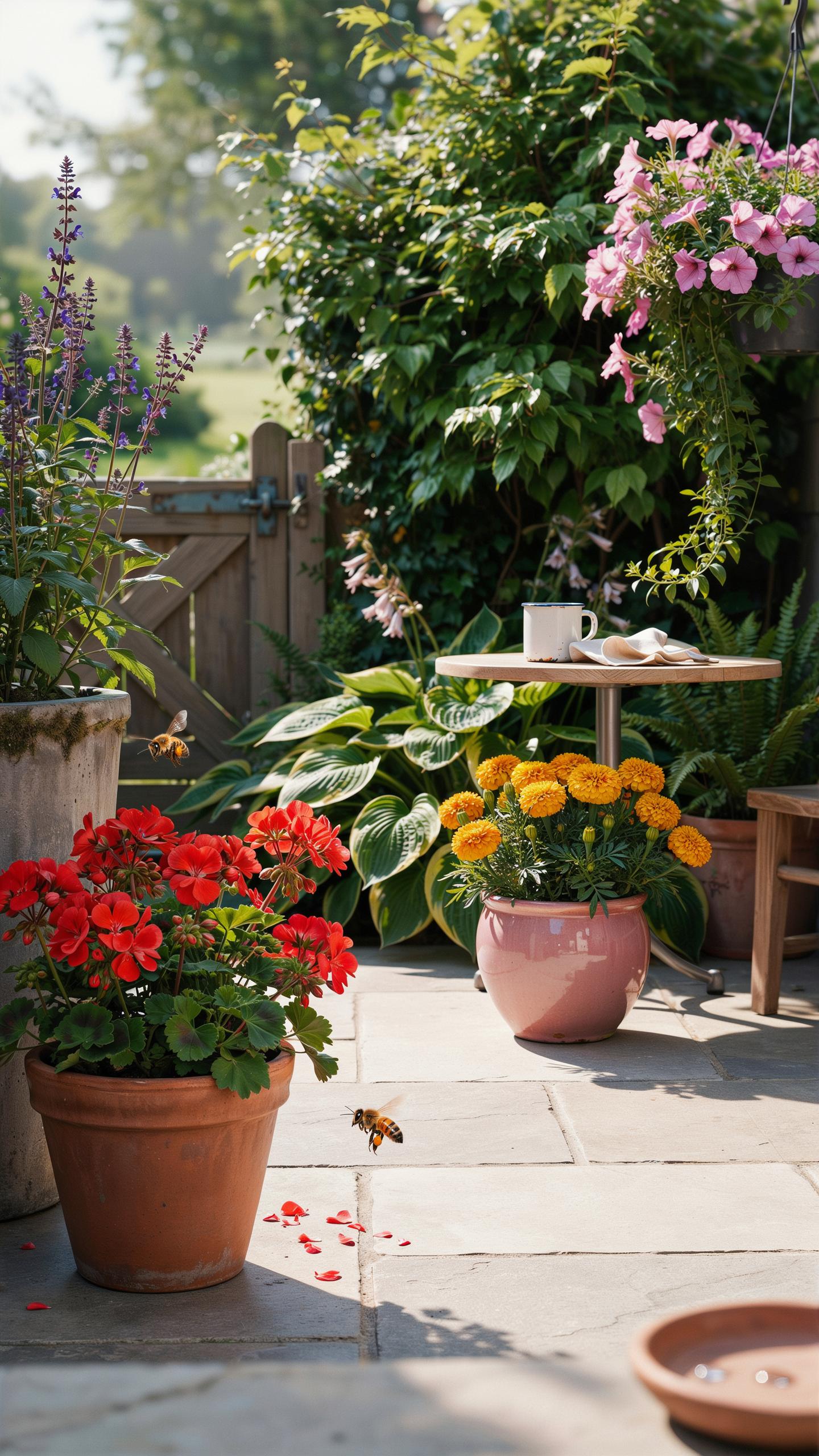
Full sun plants require six or more hours of direct light daily. High light intensity triggers heavy flower production and maintains stem strength. Growers maximize visual impact by combining heat-tolerant species that share similar moisture needs. Focus on primary colors to create high-contrast displays that remain visible in bright light. Proper drainage is mandatory for these containers because sun exposure increases soil evaporation rates significantly.
Successful sun combinations utilize the thriller, filler, and spiller technique. Use tall focal points like Canna Lilies for vertical color. Add mid-sized fillers such as Lantana or Zinnia to provide dense petal coverage. Finish with trailing plants like Sweet Potato Vine to soften edges. This layering ensures no bare soil shows. Grouping plants with similar drought tolerance reduces maintenance and prevents root rot in mixed outdoor container sets.
To plant a garden is to believe in tomorrow, and even the smallest pot of mixed blooms can paint a lifetime of memories.
Vibrant Shade Tolerant Plants That Still Deliver Bold Color On Your Patio
Shade gardening relies on leaf texture and saturated flower tones to combat low light levels. Areas with less than four hours of sun need plants that photosynthesize efficiently in dappled light. Use bright whites and neon greens to lift dark corners. Focus on species with high chlorophyll levels or variegated foliage. These plants often have larger leaves to capture fleeting sunlight. Proper spacing prevents fungal issues in damp shade.
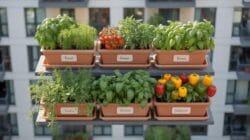
Fuchsia and Begonia provide intense floral color without direct sun exposure. Coleus offers a reliable way to add patterns through foliage rather than temporary blooms. Position these pots near walls or under awnings where light reflects onto the leaves. Use high-quality potting mix that retains moisture but allows air to reach the roots. This prevents the soil from becoming waterlogged in cooler, shaded spots during the growing season.
Patio Container Gardening Color Strategies That Make Small Spaces Pop
Using Repetition And Rhythm With Color Across Multiple Patio Containers
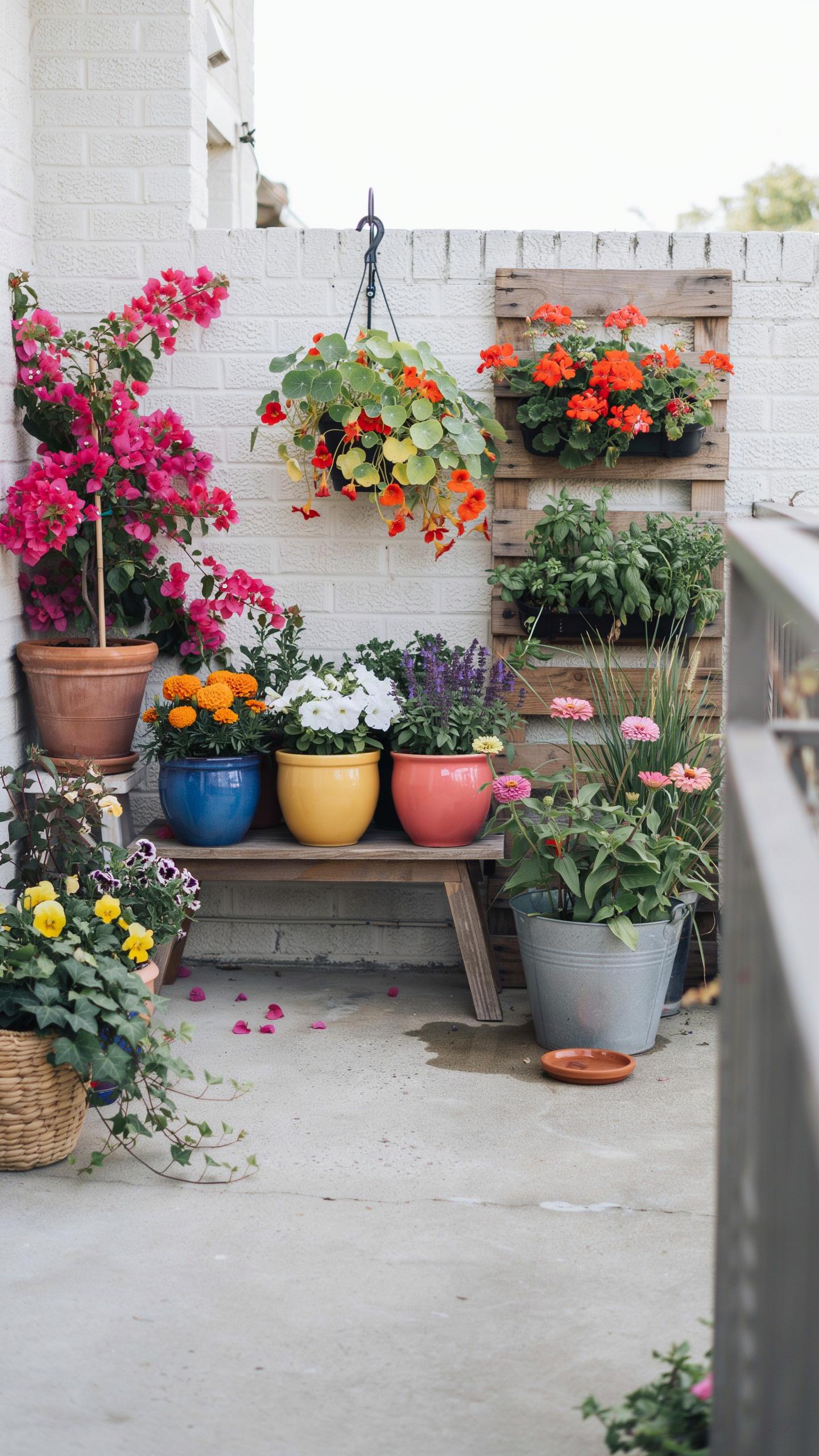
Repetition creates visual order in a small space. Choose one dominant color and feature it in every pot on your patio. This technique acts as a visual thread that ties separate containers together. It prevents the space from looking cluttered or accidental. Using a single hue across different plant species provides a sense of intentional design and professional structure.
Rhythm involves placing these colored containers at regular intervals. Space your pots to lead the eye through the area. Use consistent planters to reinforce this harmony. This strategy uses the Gestalt principle of similarity to make a small patio feel larger. When the eye recognizes a repeating color pattern, it perceives the entire collection as one unified landscape.
How To Layer Heights And Hues For A Professional Patio Container Gardening Look
Professional layering utilizes the Thriller, Filler, and Spiller method to organize vertical space. Place tall plants with bold colors in the center or back to establish height. Surround these with mid-sized plants in complementary hues to bridge the gap. Finally, use trailing plants at the edge to soften the rim. This vertical arrangement maximizes the impact of your color palette.
- Scale and Proportions: Select plants that grow to different heights to create a tiered effect. The tallest plant should not exceed double the height of the container. Use mid-height foliage to hide the stems of larger plants and maintain a lush appearance.
- The Thriller Component: Use a tall plant with an architectural form or bright color as your centerpiece. This serves as the primary focal point for the container. Canna lilies or ornamental grasses work well for adding immediate vertical interest and structural depth to the arrangement.
- The Filler Component: Choose mounding plants that occupy the middle ground of the pot. These plants should feature colors that contrast or harmonize with the thriller. They create a full look and cover the soil surface to help retain moisture while adding bulk to the design.
- The Spiller Component: Install trailing plants that grow over the sides of the pot. These plants bring color down the face of the container. They break up hard lines and extend the visual reach of the garden, making the arrangement feel more expansive and integrated.
- Color Value Gradation: Place darker hues at the base and lighter colors at the top. This mimics natural light patterns and adds visual weight to the bottom of the display. It prevents the container from looking top-heavy and ensures the eye moves naturally from base to peak.
Hues must work with the vertical layers to create depth. Use dark foliage in the middle layer to make bright flowers pop. Lighter colors at the top draw the eye upward and increase the perceived height of the patio. This strategic placement of color values creates a three-dimensional effect. It ensures your small space garden has a sophisticated and polished finish.
Fall Shade Planter Ideas With Rich Seasonal Color Combinations
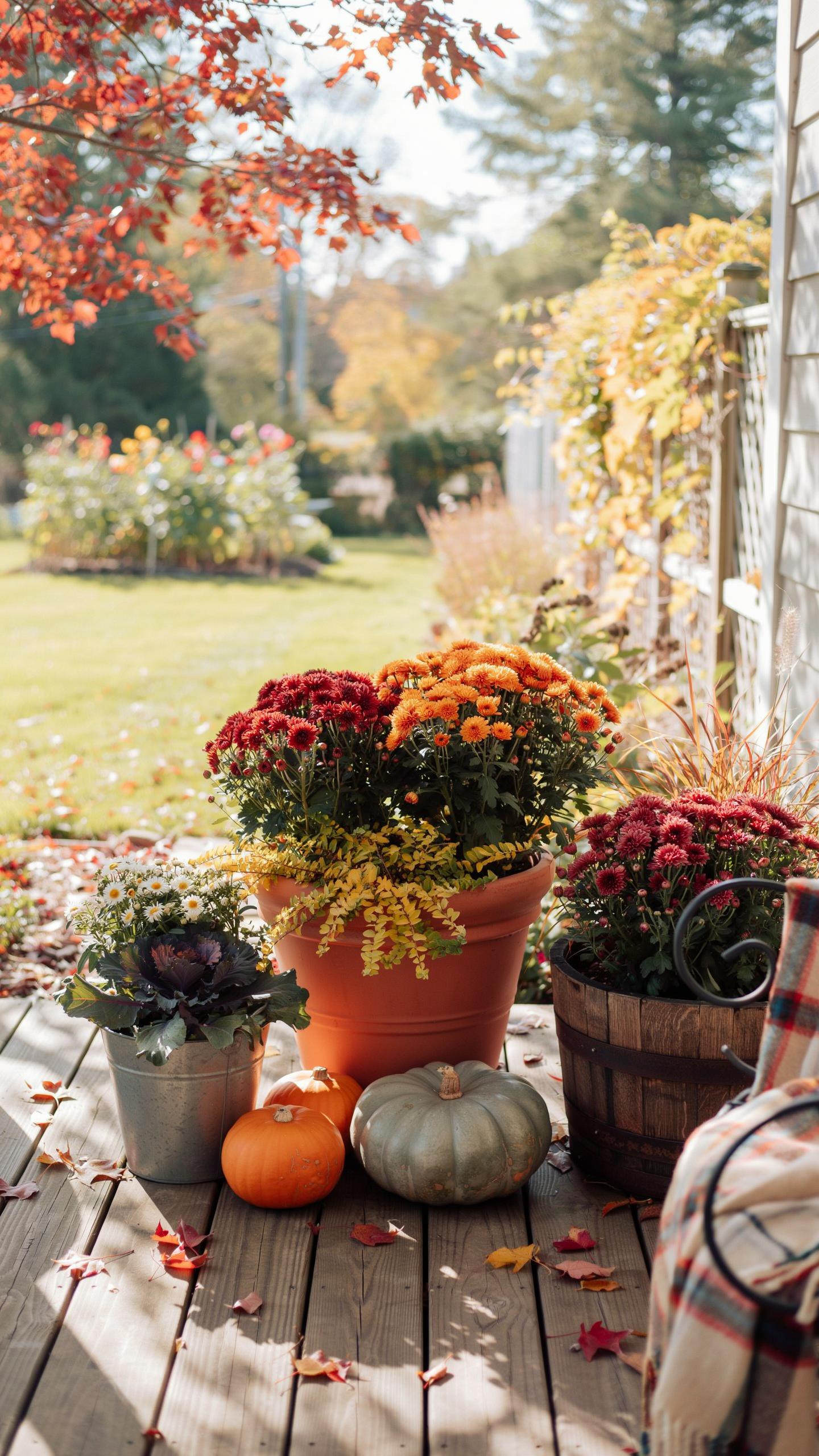
Warm Autumn Tones: The Best Plants For Fall Shade Planter Ideas
Standard fall displays rely on sunlight for chrysanthemums. Shady areas require different species to achieve the same warm aesthetic. Heuchera serves as the primary tactical choice. Varieties like Caramel or Berry Smoothie provide deep oranges and purples without needing direct sun. These perennials tolerate dropping temperatures well. They maintain structural integrity when other soft tissue plants fail during the first light frost.
Integrate Torenia and flowering cabbage for texture. Torenia offers deep blues and yellows that contrast against the bronze foliage of shade-tolerant sedges. Carex Elata Aurea adds a bright gold vertical element to dark corners. These plants thrive in low light and cooler air. Use high-quality potting soil to ensure drainage. Wet soil in cool shade causes root rot. Focus on foliage color rather than short-lived seasonal blooms.
Transitioning Your Summer Containers Into A Fall Color Palette Naturally
Do not dump your entire summer container. Keep structural evergreen plants like ivy or boxwood as your base. Remove tired annuals that show signs of heat stress or powdery mildew. Replace them with cold-hardy substitutes that match the autumn spectrum. Pansies and violas provide immediate color and survive frost. This method saves money and maintains the established height and volume of your existing garden arrangements.
Strategically layer new plants into the gaps. Use mulch or decorative moss to hide bare soil patches. Darker mulch enhances the visual impact of gold and copper leaves. Monitor water needs strictly. Shorter days and cooler nights reduce evaporation significantly. Overwatering is the most common mistake during this transition. Touch the soil before adding moisture. Ensure every new plant has similar water requirements to the original structural plants remaining.
Adding Container Gardening Vegetables Into Your Color Combination Plans
Edible Plants That Double As Colorful Ornamental Features In Your Containers
Vegetables provide distinct textures and colors that rival traditional flowers. Swiss chard remains a top choice for structure. Its stems come in bright red, yellow, and orange. These colors stay vibrant all season. Kale offers deep purples and blues with ruffled edges. These cold-hardy plants provide visual interest when temperatures drop. They act as the focal point in many mixed container designs.
Select edible plants based on leaf shape and pigment. Purple basil adds a dark, moody contrast to lime green foliage. Tricolor sage combines gray, green, and pink on a single leaf. Pepper plants grow compact and produce fruits in glossy reds or deep blacks. These functional plants serve as the filler or thriller in your pot. They provide high visual impact while producing food for your kitchen.
How To Blend Container Gardening Vegetables With Flowers For Beauty And Harvest
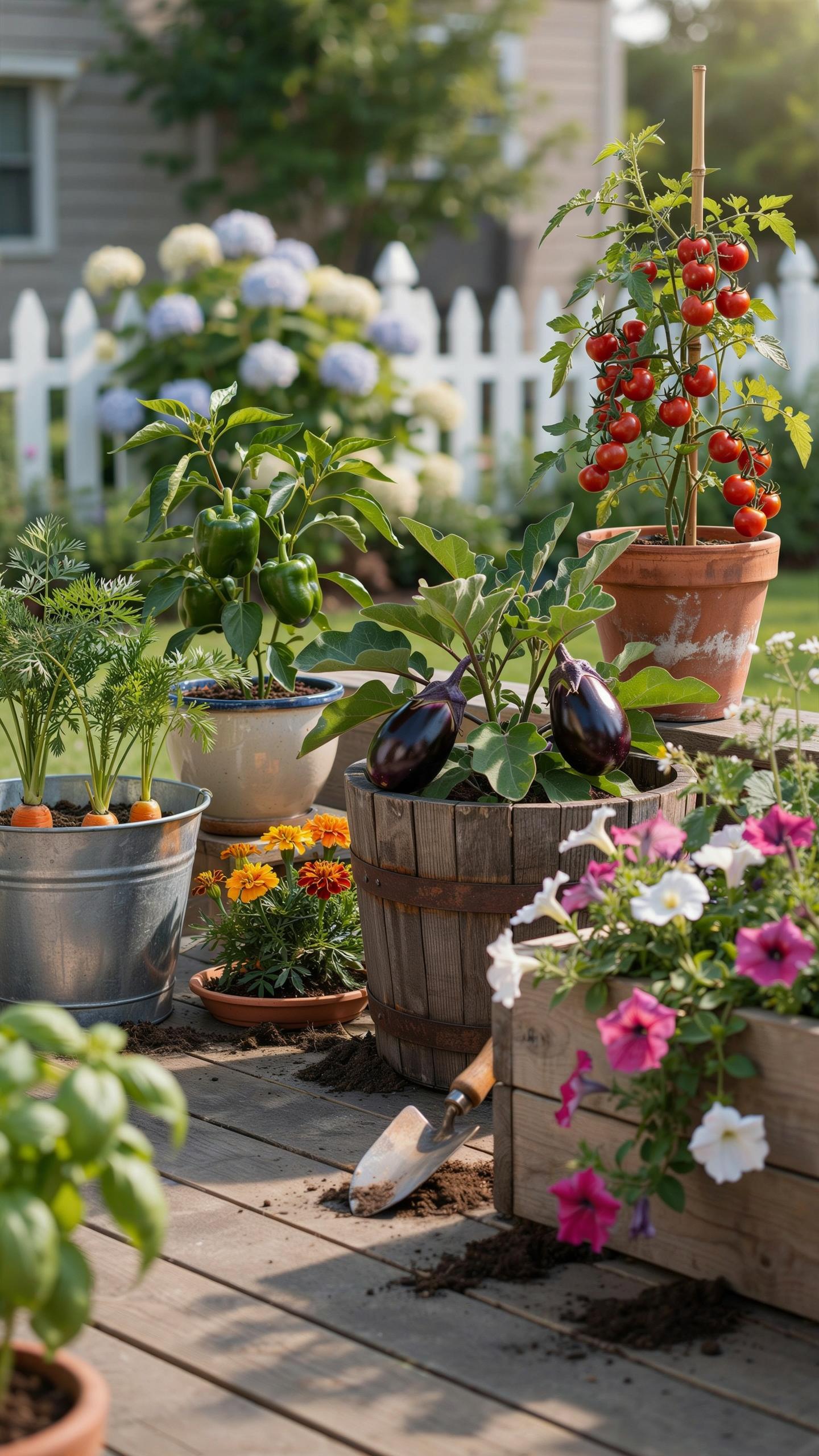
Successful blending requires matching the light and water needs of all plants. Combine warm-season vegetables with heat-loving annuals. Plant marigolds with tomatoes to add yellow and orange pops. Marigolds also work as a traditional companion plant to deter certain pests. Nasturtiums trail over the edges of pots containing tall peppers. Both the flowers and leaves of nasturtiums are edible. This creates a fully functional and beautiful display.
Use the thriller, filler, and spiller method to organize your edible containers. A central eggplant provides large green leaves and purple fruit as the thriller. Surround the base with petunias or alyssum to fill the gaps. Allow sweet potato vines to spill over the sides. These vines come in neon green or dark burgundy. This layering technique maximizes space in small pots. It ensures a dense and professional look for your garden.
Frequently Asked Questions

What are the best container garden color combinations for someone who has never gardened before?
For beginners, sticking to a monochromatic or analogous color scheme is the easiest way to ensure success. Choosing different shades of a single color, like various pinks, creates instant harmony. Alternatively, selecting colors next to each other on the wheel—such as yellow, orange, and red—is foolproof. These simple container garden color combinations allow you to focus on learning plant care while ensuring your patio looks professionally designed from day one.
How do I arrange plants to make my container garden color combinations pop?
To make your colors stand out, use the “Thriller, Filler, Spiller” method. Place a bold, tall plant in the center as your focal point, surround it with medium-height mounding flowers, and add trailing vines at the edge. When selecting your container garden color combinations, use high-contrast pairings like purple and yellow. This visual friction draws the eye and makes even a small pot look vibrant and intentionally styled for maximum curb appeal.
Can I create beautiful color-coordinated containers on a limited budget?
Absolutely! You can achieve high-end looks without overspending by starting with seeds or purchasing small “starter” multi-packs from local nurseries. Focus on buying affordable, high-impact annuals like marigolds, petunias, or zinnias. Selecting just two repeating colors across several inexpensive terracotta pots creates a cohesive, expensive look for less. Focusing on a tight palette keeps your shopping list short while still delivering a lush, professionally curated garden aesthetic.