The Folly Of “Cozy”: Why Generic Warmth Misses The Mark
Comfort Without Substance Fails Fast
You want people to feel something when they enter your room, and you’re betting that reclaimed wood delivers it automatically. It doesn’t. The mechanism at work here is borrowed from architecture and design: contrast creates perception. Without it, reclaimed wood becomes wallpaper. Most advice tells you to slap it on an accent wall and call it done. That’s incomplete. The material only works when it solves a visual problem in the room, not when it simply exists there.
Genuine depth requires you to know what the wood is replacing or emphasizing. Is it the dullest wall in the space? Good. Is it the wall that takes the most light? Better. Is it a wall that frames your actual living activity, like where you sit or work? Perfect. The wood’s texture and grain variations only read as character when they contrast against flat surfaces, clean lines, and neutral tones elsewhere. Without this deliberate opposition, reclaimed wood reads as decorative rather than architectural.
What Instagram Solved And What It Ruined
The algorithm taught people to photograph reclaimed wood in isolation, stripped of context. A single wall glows under perfect lighting. You scroll and feel something. Then you install identical wood in your room under different light with different wall proportions and it lands flat. Instagram solved the problem of making the material look good. It ruined the problem of understanding why it should exist in your specific room. The real question isn’t “does this look warm?” It’s “does this material earn its place by fixing a flaw I actually have?”
Start here instead: identify the visual problem the accent wall solves. Is the room too sterile? Too uniform? Too reflective? Reclaimed wood should be the answer to that specific problem, not a generic upgrade. The installation itself becomes secondary. What matters is that you’ve diagnosed why the wall needs character before you add it. This prevents the most common failure: a beautiful material placed in a room that didn’t need it, creating visual noise instead of visual clarity.
Reclaimed Wood Accent Wall: Authenticity As A Scarce Resource
What Makes Old Wood Worth More
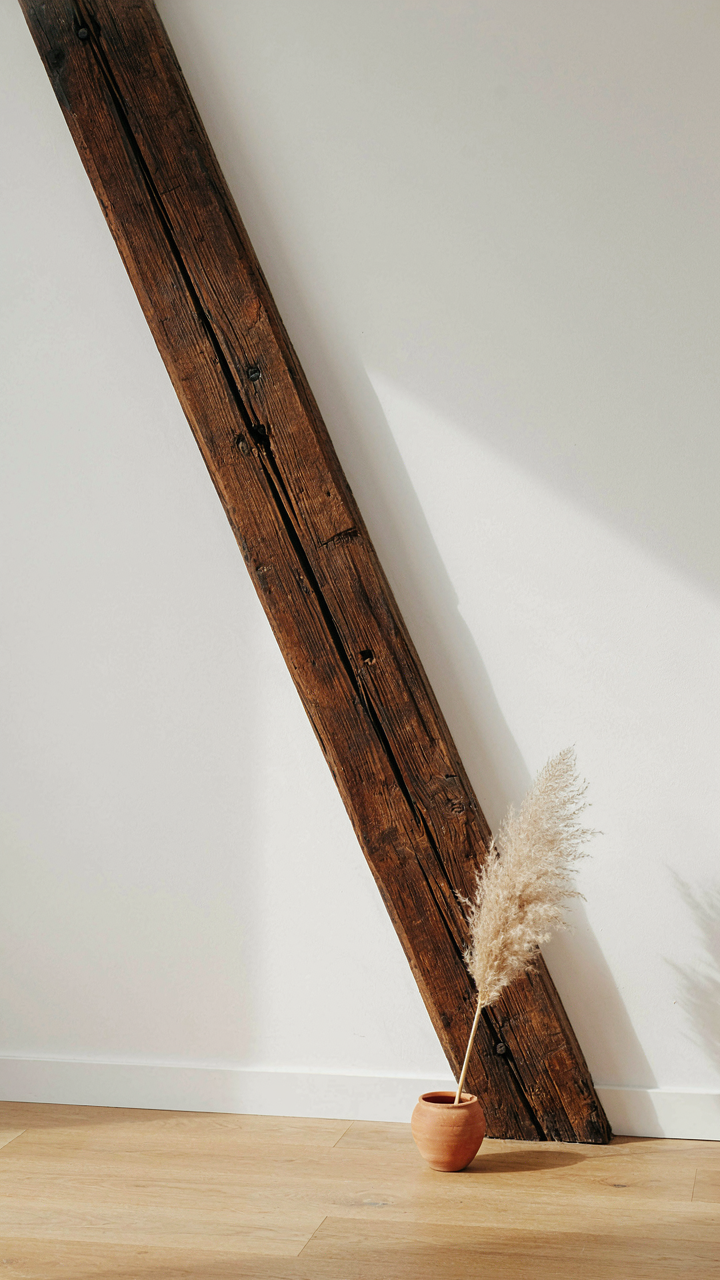
You want people to know your taste costs money without saying so. That’s the real reason reclaimed wood matters to you. The mechanism is scarcity economics: genuine aged wood commands premium pricing because supply is fixed and demand climbs as reproduction methods improve. You can’t manufacture authenticity retroactively. A board salvaged from a 1920s warehouse carries proof of time that new wood never will, regardless of stain color or distressing technique.

Reclaimed wood forces a constraint on your wall that protects you from looking like everyone else. Mass production eliminated constraints. Custom constraints signal deliberate choice. When you source actual old timber, you’re buying into a material that resists replication at scale. The market prices this accordingly because buyers sense the irreproducibility. A reclaimed wood accent wall tells visitors your decisions involved friction, sourcing knowledge, and budget discipline—not a trip to a big-box store.
The Narrative Built Into The Grain
Most design advice treats wood as a neutral backdrop that should complement your décor. Wrong. Wood’s real value lies in the story embedded in its surface—the shrinkage cracks, nail holes, color variation, and patina that document actual use. This is narrative architecture: the field of material semiotics teaches us that objects communicate meaning through visible wear. Your accent wall doesn’t just look textured; it speaks. Every scratch becomes evidence of previous purpose.
The grain pattern and discoloration on reclaimed wood are non-negotiable data, not flaws to mask. A barn beam shows different character than industrial flooring or salvaged beams from a factory. These distinctions matter because they prevent your wall from becoming generic texture. When you install reclaimed wood, you’re anchoring a specific story to your interior space. The wall doesn’t need design help—it needs restraint around it. Your role is removing obstacles so the wood’s history stays legible.
The Provenance Principle: Sourcing Your Wood Accent Wall

Spot Fake Reclaimed Before You Buy
You want the story more than the wood. That’s the real reason this section matters to you. The mechanism at play here is supply economics: genuine reclaimed wood is scarce and expensive, so the market fills the gap with new wood artificially aged, stained, or labeled “reclaimed-style.” You cannot buy your way out of this with money alone. You need a filter.
- Salvage yards and deconstruction companies: Source directly from building demolition operations. They document the origin building, date, and wood species. This creates an actual chain of custody, not a marketing claim.
- Wood species verification: Old growth timber has tight rings and specific grain patterns. Genuine reclaimed Douglas fir, heart pine, or chestnut from 1800s structures looks distinctly different from new wood stained to imitate age.
- Third party certification: Look for FSC or other verifiable documentation. Some dealers provide photos of the original structure or removal process. Demand this before purchase.
- Mill marks and nail holes: Authentic reclaimed wood shows tool marks from hand-planing or circular saws from specific eras. Machine nail holes differ from modern nail patterns. These details are hard to fake convincingly.
- Price reality check: Genuine reclaimed wood costs 3 to 10 times more per board foot than new wood. If the price seems reasonable for new lumber, it is new lumber dressed up.
Fake reclaimed floods the market because the markup is absurd and enforcement is weak. A dealer can sand down new wood, apply stain, and sell it as authentic with no legal consequence in most jurisdictions. Your only defense is to ask for documentation, inspect the wood in person, and verify species against known growth patterns from the claimed time period.
Where The Wood Comes From Shapes Everything
The origin of your wood determines both how the room will look and whether you can defend the choice ethically. Barn wood from rural structures carries different grain and patina than flooring salvaged from urban factories. These differences are permanent and material.
Wood reclaimed from agricultural buildings tends toward lighter, more uniform character because of consistent environmental exposure. Industrial structures like mills or warehouses often yield darker, more heavily marked pieces due to machinery, smoke, and moisture stress. Religious or institutional buildings like churches and schools provide long-grain timber from high ceilings and beams, which translates to longer boards with fewer joints. The aesthetic you get depends on the building type, not on staining or finishing techniques applied later. Choose your source based on the specific visual outcome you need for the room, not based on what feels most authentic or trendy.
Beyond Barnwood: Unconventional Reclaimed Wood Wall Ideas
Industrial Salvage Over Commodity Crates
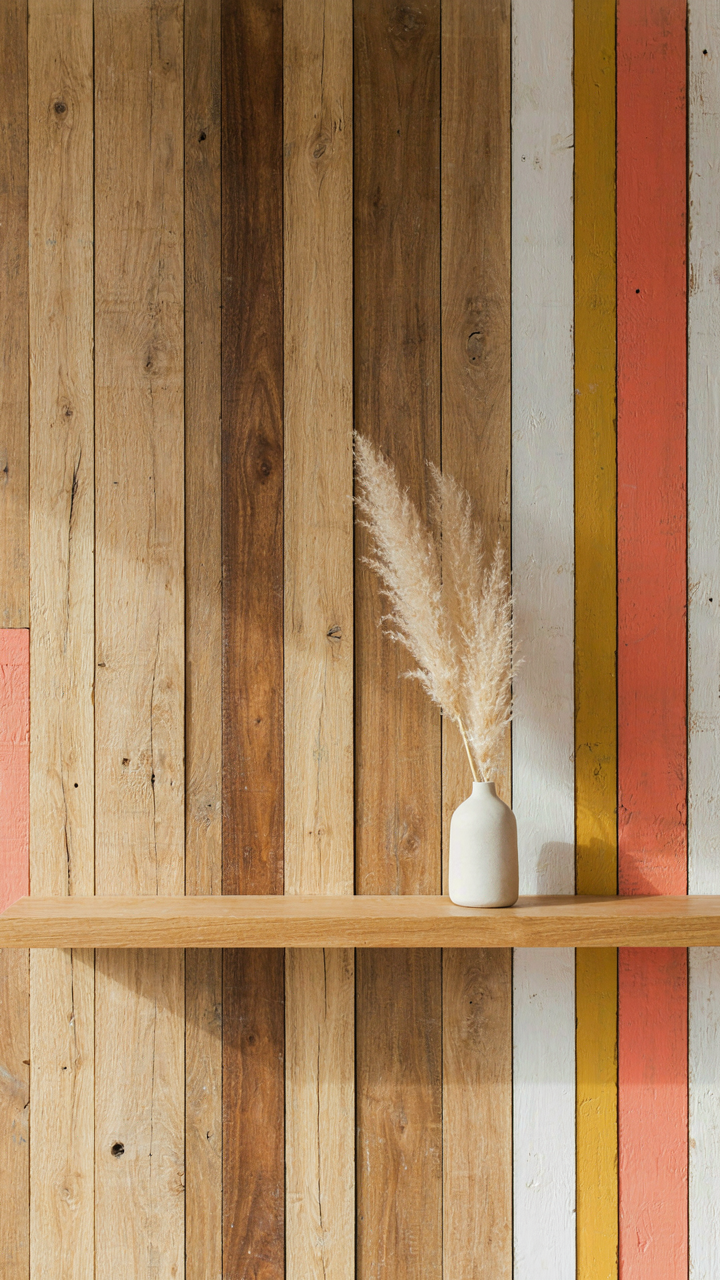
You want to look like you discovered something rare instead of ordering pallets online like everyone else. The real lever here is source specificity. Industrial salvage—flooring from factories, beams from demolished warehouses, siding from old commercial buildings—carries physical evidence of its past. That patina is not cosmetic. It’s the material record of actual use and time, which is why it reads differently than reclaimed-look vinyl or distressed new wood.

The mechanism works through constraint. Genuine salvage pieces vary in thickness, grain, and color because they came from different eras and purposes. You cannot standardize them. This forced inconsistency becomes your design advantage because it eliminates the copycat problem. Your wall looks specific to your space, not catalog-ready.
Mixing Species And Finishes For Depth
Common advice says to stick with one wood species for cohesion. That’s incomplete. Using economics terminology, you’re looking for complementary goods, not substitutes. Two wood species on the same wall function as reinforcements of each other when their tonal values contrast. A dark walnut beam next to lighter chestnut creates visual rhythm that single-species walls cannot achieve.
The finish protocol matters more than people admit. Leave some pieces raw or lightly sealed while applying matte stain to others. This creates actual depth, not just the illusion of it. The variation in light absorption between sealed and unsealed wood makes the wall read three-dimensional from across the room. Install pieces at slightly different depths using shims, so shadows fall inconsistently across the surface. The texture compounds.
The Vertical Barnwood Accent Wall: An Application Of Structural Integrity
Load Bearing Aesthetics Without The Load
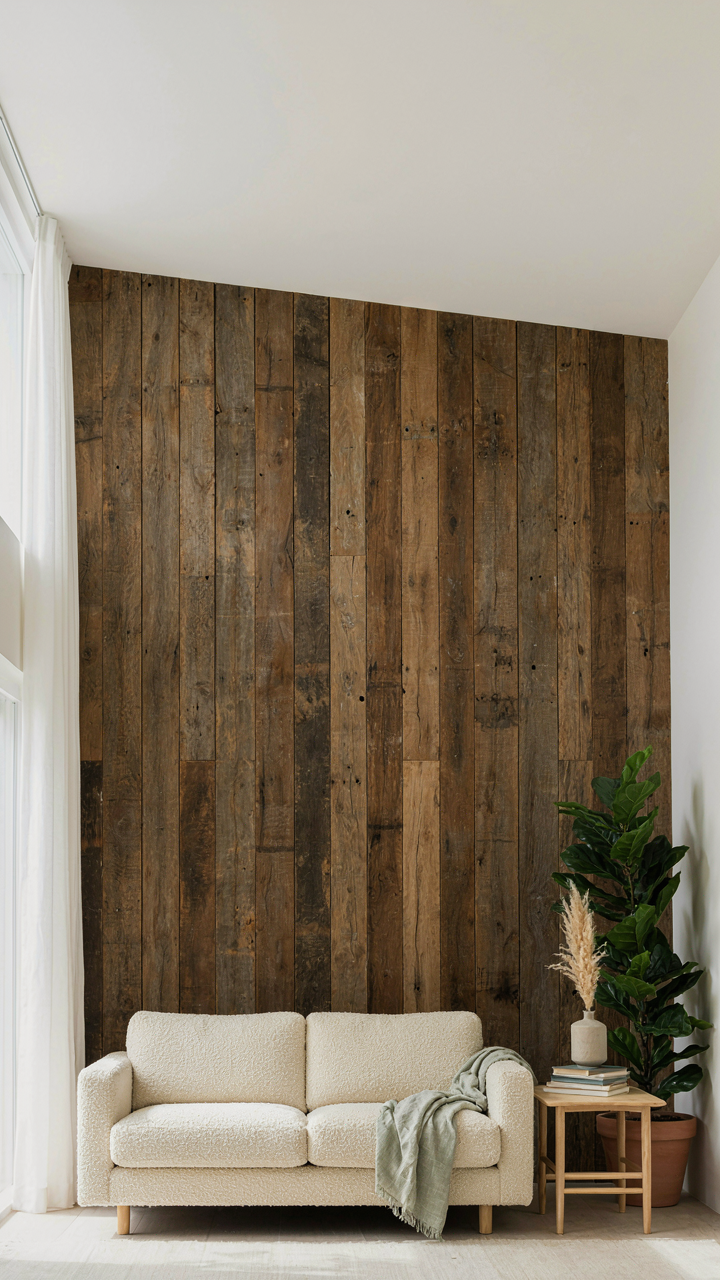
You want people to feel safe in the room without knowing why. That’s the real play here. Borrow from engineering: load-bearing capacity is about distribution of force. A reclaimed wood accent wall doesn’t carry structural weight, but it distributes visual weight. Your brain reads density, grain patterns, and nail holes as stability markers. Old wood signals permanence because it survived. The darker the patina, the more “load” your eye perceives the wall can hold.

This is why a reclaimed wood accent wall feels grounded while drywall with paint feels hollow. The viewer’s nervous system responds to material authenticity. Reclaimed barnwood contains actual stress marks from decades of use. Nail holes, tool marks, and color variation aren’t decorative noise. They’re evidence of load-bearing history. Your wall borrows that credibility through visual association, not through actual function. The mechanism is straightforward: authenticity of material creates perception of structural integrity, which triggers comfort in the occupant.
Vertical Grain Direction Sets The Visual Hierarchy
Orientation of reclaimed wood planks is not a stylistic choice. It’s a signal system. Run planks vertically and you tell the eye to move upward, expanding the room’s perceived height. This matters tactically: vertical orientation makes a space feel less confined. Horizontal orientation does the opposite, grounding the room and suggesting stability. Most generic advice says “choose what looks nice.” Wrong. Choose what solves your room’s psychological problem.
Vertical planks work best on walls you want to feel open or in rooms with low ceilings. Horizontal planks anchor a space that feels too airy or overstimulated. Mixed orientation breaks both signals and confuses the viewer’s sense of scale. Install all planks in one direction to control how your eye moves through the room. The direction you choose becomes the dominant instruction your brain receives the moment you enter.
Deconstructing “Rustic”: The Modern Reclaimed Wood Wall
When Old Wood Meets Empty Space
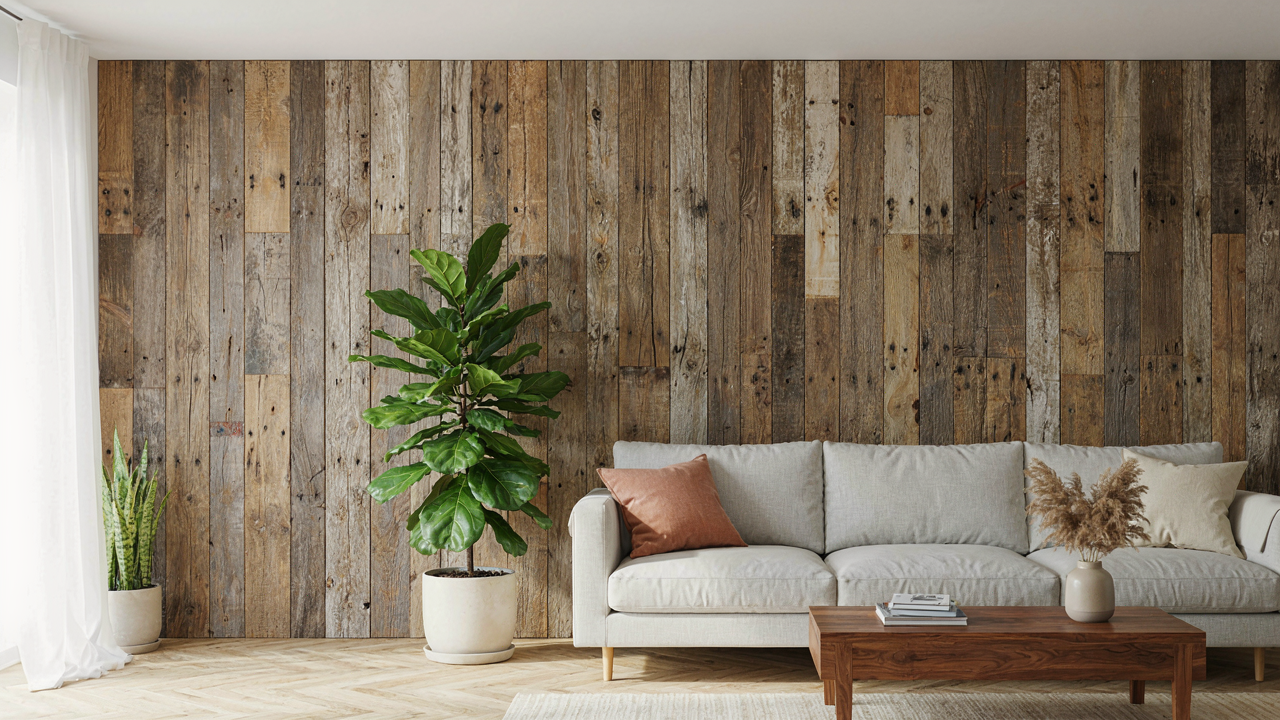
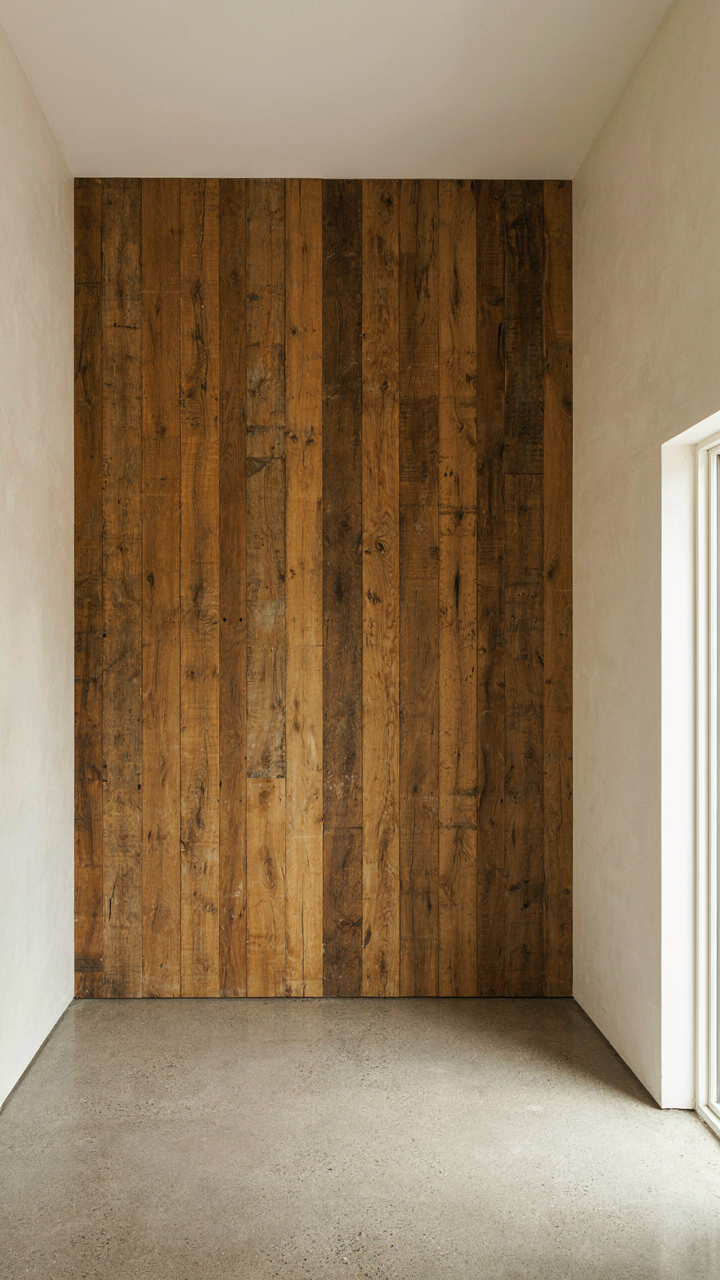
You want permission to buy expensive salvaged wood without feeling like you’re decorating a cabin. Here’s what actually happens: reclaimed wood walls fail in modern homes because people treat them as standalone statements instead of counterweights to what surrounds them. The mechanism is contrast through absence. Minimalist interiors work because they remove visual noise. A reclaimed wood accent wall stops competing for attention when the rest of the room stays disciplined. No competing patterns. No layered textures elsewhere. Just blank walls, simple furniture, and one wall that demands focus because nothing else does.

The practical move is radical subtraction first. Paint surrounding walls in a single matte color, preferably warm white, soft gray, or warm black depending on the wood’s tone. Remove decorative objects from the wall itself and the surfaces nearby. Keep the floor simple: light concrete, polished concrete, or a single neutral rug. The wood becomes architecture instead of decoration. Install it floor to ceiling if possible, or run it to a precise height that aligns with furniture proportions rather than stopping arbitrarily at chair rail height. This constraint forces intentionality and prevents the wall from reading as an afterthought.
Layering Texture Without Collision
This section requires thinking like a material scientist examining friction and surface area. The problem most people solve wrong is adding multiple textures thinking it creates depth. It creates noise. A reclaimed wood wall already offers three layers of texture: grain direction, weathering marks, and joint lines. Adding a textured plaster finish, woven wallpaper, or patterned paint behind it doesn’t amplify sophistication. It deadens the wood’s presence by forcing your eye to compete between two surfaces.
The solution is textural silence everywhere else. Smooth plaster walls. Polished concrete floors. Fabric with tight weaves. Glass. Metal. These materials have surface tension and reflectivity that make the wood appear more dimensional by contrast, not by addition. If you use a second texture, it must be opposite in character: if the wood is rough and light-absorbing, introduce something reflective and smooth like brushed metal shelving or a polished stone shelf. The wood wall does the talking. Everything else listens. Install reclaimed wood at consistent depth so joints cast shadows uniformly. Inconsistent mounting depths fragment the visual plane and dilute the impact you’re after.
The Entropy Maximization Approach To Wooden Planks On Wall
Embracing Natural Wear And Imperfections
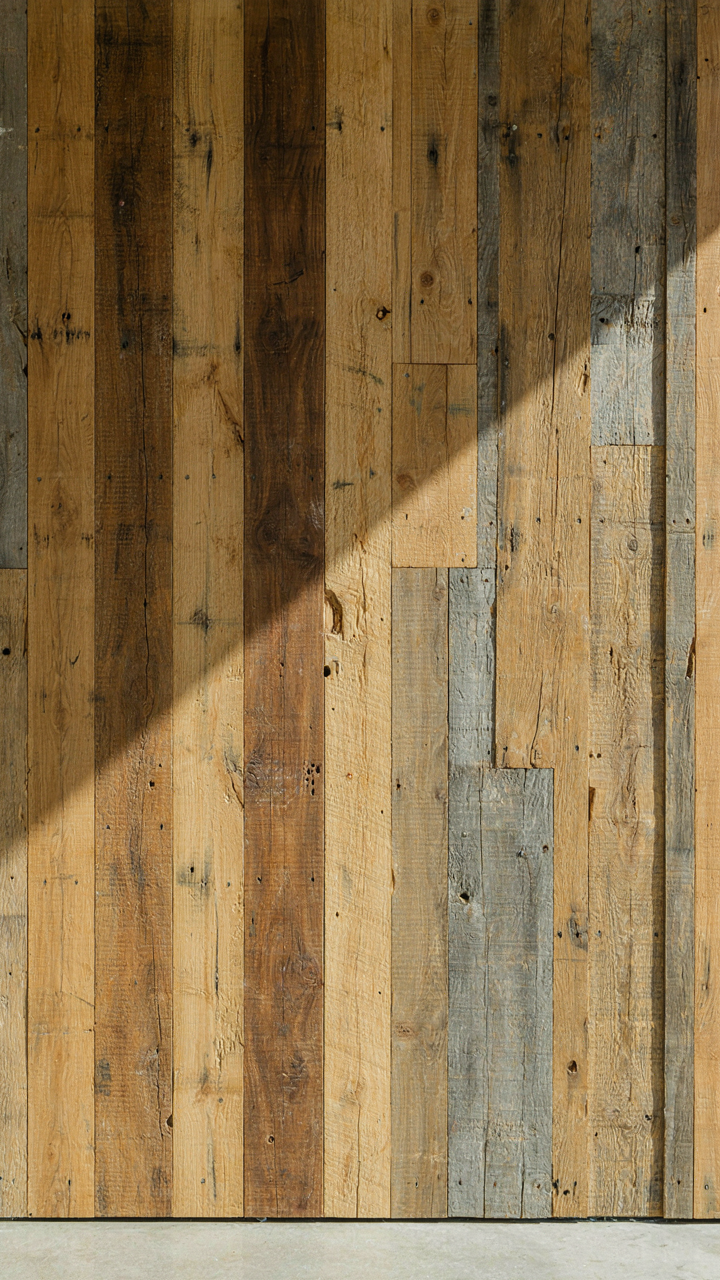
You want permission to stop fighting decay. That’s the real reason you’re reading this. Here’s the mechanism: entropy in thermodynamics describes systems moving toward disorder over time. Reclaimed wood walls work because you’re not resisting that disorder—you’re displaying it. The nail holes, checks, color variation, and surface patina aren’t flaws to hide. They’re proof the material survived use. Your brain reads survival as authenticity.

The common advice says “pick boards that match.” Wrong. Uniformity kills the whole point. Instead, source boards from different salvage batches and eras. A 1920s barn plank looks different from a 1970s factory floor board. Mix them. The visual dissonance is what reads as real. Your eye expects sameness from new construction. When you don’t get it, your nervous system registers the difference as genuine rather than manufactured.
Curating Decay Strategic Placement Of Character
Don’t scatter damaged boards randomly—that’s lazy randomness masquerading as authenticity. Strategy means placing the most weathered, marked pieces where they anchor the eye. This is why a gallery wall works: focal points matter. Put your most visually complex boards at eye level on the wall your seating faces. Reserve cleaner, less-marked pieces for upper sections and corners where the eye lands last.
The installation order determines perceived intentionality. Install from the focal point outward, not left to right. As you build away from center, let the character density decrease slightly. This creates a visual hierarchy that reads as design, not accident. When you finish, step back and photograph the wall. If your brain can’t find where to look first, you’ve spread the decay too thin. Reconfigure until one section commands immediate attention.
Installation: The Unseen Art Of The Reclaimed Wood Accent Wall
Measuring And Alignment First
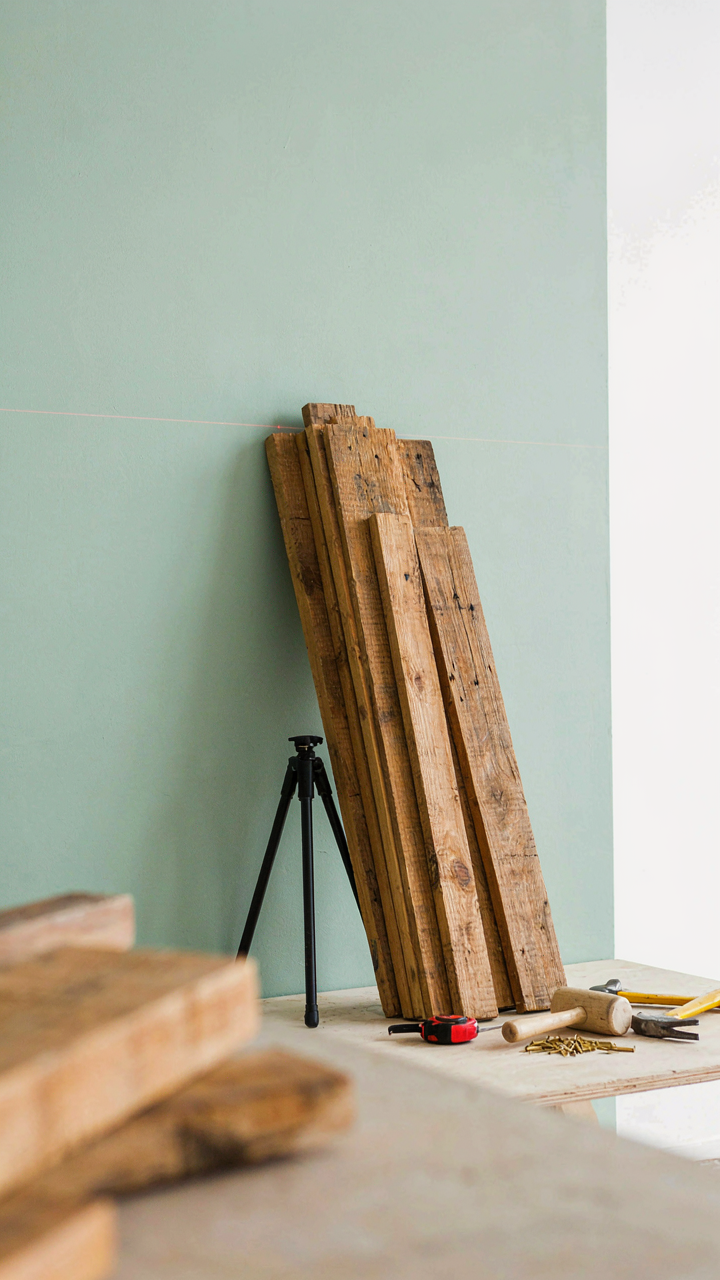
You want this to look like you didn’t overthink it, but the truth is installation precision determines whether your accent wall reads as intentional or accidental. Measurement is load-bearing in carpentry terms: one quarter-inch error compounds across a wall and becomes visibly crooked by the end. Start with a laser level, not a bubble level. Mark your horizontal baseline at the wall’s lowest point, then work upward. Snap chalk lines for every three to four feet of height to keep planks from drifting. Measure twice before fastening anything.

Reclaimed wood varies in thickness and width by plank. You cannot assume uniform spacing. Lay out your boards dry on the floor first, arranging them for visual rhythm before you touch a nail. This lets you redistribute color variation and wood tone so the wall doesn’t look like blocks of matching pieces. Stagger joints so no two planks line up vertically at the same height. Mark studs behind drywall with a stud finder and mark them clearly on your chalk lines. Every fastener must hit wood, not drywall alone.
Avoiding Installation Failures
Most DIY reclaimed wood walls fail not because the wood is damaged, but because the installer treats it like new lumber and skips preparation. Reclaimed wood moves differently than kiln-dried stock, and it requires specific blocking and fastening protocols that generic install guides omit entirely.
- Subfloor And Wall Prep: Install 1/2-inch plywood sheathing over studs before hanging reclaimed boards. This creates a stable base and prevents telegraph of irregularities through the wall. Reclaimed wood requires this buffer.
- Fastener Selection: Use stainless steel or coated fasteners. Regular nails rust inside reclaimed wood and cause dark staining to surface within months. Pneumatic brad nails work for thin boards under 3/4 inch, but face-nail thick boards with screws for holding power against seasonal movement.
- Grain Direction Control: Install boards with grain running horizontal when possible. Vertical grain traps dust and water in end-grain cracks. Horizontal orientation sheds both and ages more predictably over time.
- Edge Sealing: Sand edges lightly and consider a clear matte sealer on all sides before installation. This reduces moisture absorption from humidity shifts that cause wood cups and warps. Skip sealer only if you want the rustic deterioration aesthetic.
- Expansion Gaps: Leave 1/8-inch gaps between board ends and wall corners. Reclaimed wood expands and contracts seasonally. No gap means boards buckle or crack when temperature swings spike.
The install method separates a wall that holds up for years from one that cups, cracks, or gaps within a season. Hire a finish carpenter if you lack experience with wood movement. A professional charges 150 to 300 dollars per wall for installation alone and catches problems before they become permanent.
Maintenance Myths: Preserving Your Reclaimed Wood Wall

Stop Treating It Like Museum Inventory
You’re afraid the wood will degrade if you don’t obsess over it. The real mechanism at work here is that reclaimed wood has already survived decades or centuries of actual use, temperature swings, and moisture fluctuation. It’s weathered. What kills it now is overcorrection, not neglect.

The consensus advice says seal it, treat it, condition it constantly. Wrong. Heavy sealers trap moisture against the wood, causing the swelling and cracking you’re trying to prevent. Harsh chemical cleaners strip the patina that actually protects the grain. The wood doesn’t need rescue. It needs you to stop intervening.
How Wood Actually Stays Stable
Think in terms of chemistry, not care routines. Reclaimed wood stays intact when you control the environment’s relative humidity, not the wood’s finish. A stable room between 30 and 50 percent humidity keeps the material at equilibrium. That’s the lever. Everything else is theater.
Dust the wall monthly with a soft, dry cloth. Once or twice yearly, wipe it down with a barely damp microfiber cloth, then dry it immediately. Never use oil, wax, or polishes marketed for wood. If you must address spills, blot them instantly and let the area air dry. The wood’s existing grain structure and natural oils handle the rest without your interference.
The “Warm Textured Room” Lie: Why Your Wall Is More Than Just An Aesthetic Choice
The Brain Recognizes What’s Real
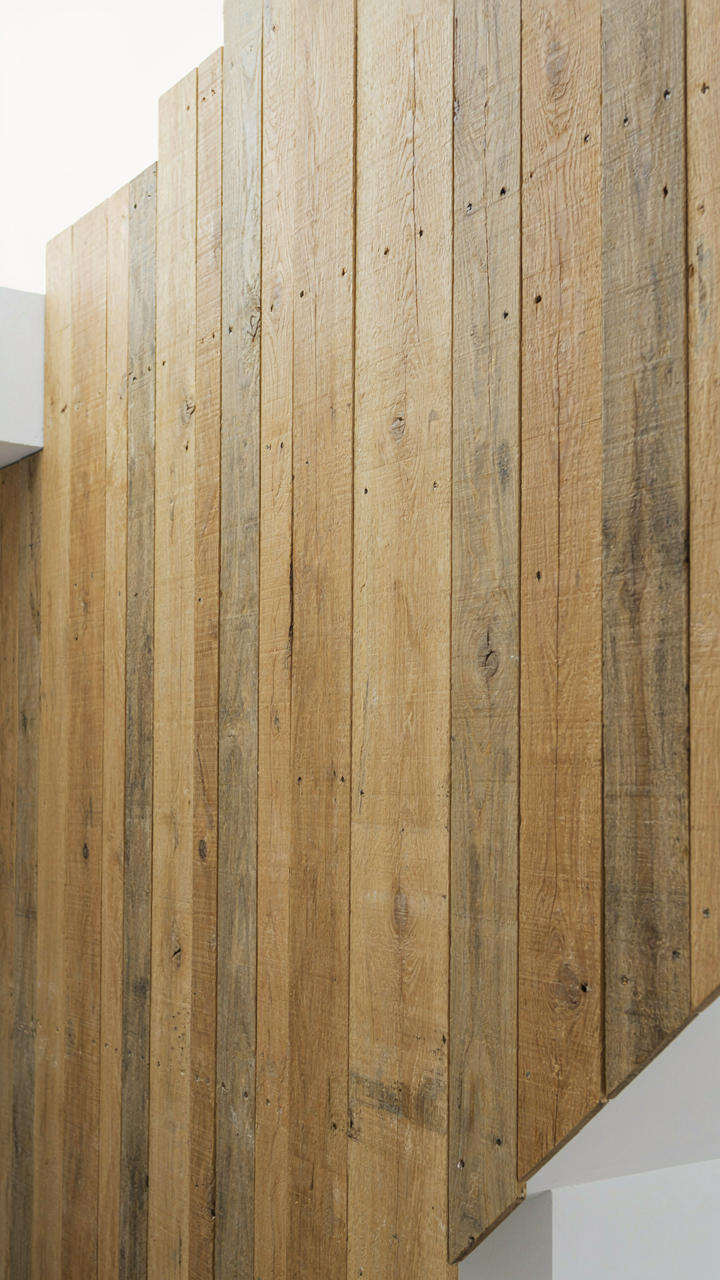
You want people to feel something when they enter your space, and you’re banking on reclaimed wood to do that work for you. Here’s the mechanism: the human nervous system detects authenticity at a subconscious level. Genuine aged wood carries visual inconsistencies—grain variation, color patches, nail holes—that your brain reads as “survived time.” Fake reclaimed or smoothed industrial knockoffs lack these markers. The eye catches the lie instantly, even if conscious thought hasn’t registered why the room feels hollow.
Material authenticity operates like a trust signal in environmental psychology. A reclaimed wood accent wall doesn’t just look old; it proves something lasted. The patina, the surface irregularities, the evidence of use—these aren’t flaws to hide. They’re credentials. Your brain categorizes genuine reclaimed wood differently than new wood stained to approximate age. One reads as honest. The other reads as trying. The wall becomes either a signal of substance or a signal of performance, and the viewer knows the difference within seconds.
The Wall You Choose Stays Or Leaves
A reclaimed wood accent wall makes a commitment that drywall never does. You’re not rotating this out seasonally. You’re not painting over it next year when trends shift. This permanence carries weight because it forces a choice: either this wall reflects actual values, or it reflects a performance you’ll regret maintaining. Most people treat accent walls as temporary styling, but reclaimed wood’s cost and installation complexity flip that equation. You’re betting on the wall being worth keeping.
That friction is the feature. When removal becomes costly, you stop treating the wall as decoration and start treating it as infrastructure. The longer it stays, the more your space adapts around it instead of the wall adapting to trends. This is how genuine material creates enduring rooms instead of dated ones. The commitment mechanism—the friction of permanence—separates reclaimed wood from surface-level design choices. Choose it because the wall will outlast the impulse that drove the choice.
The Warm Textured Room Lie: Why Your Wall Is More Than Just An Aesthetic Choice
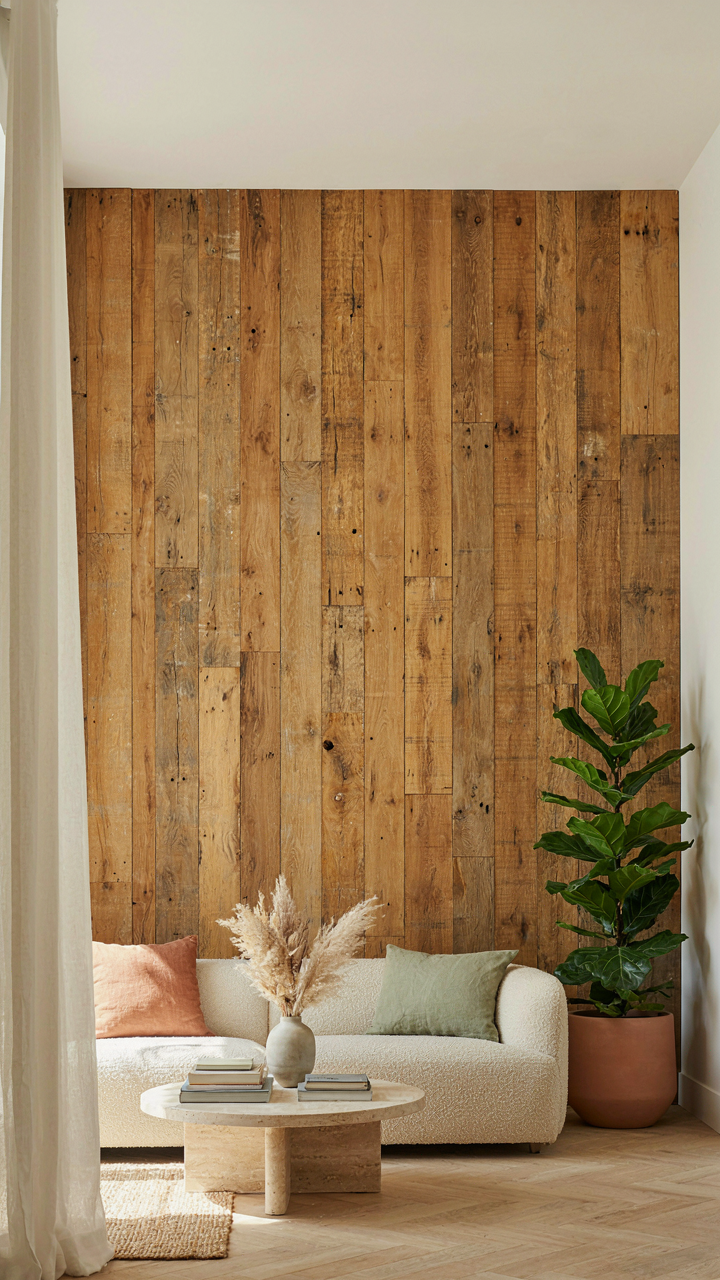
Most people treat a reclaimed wood accent wall like decoration. They’re wrong. It’s an anchor. It signals to your brain that this space matters, that you invested thought into it. That shift alone changes how you work, think, and live in the room. Stop scrolling design pins and pick one wood type today. Order a sample. Let it sit on your wall for three days. Your gut will tell you everything your Pinterest board never could. Your space doesn’t need perfection. It needs you to stop hesitating.