The Repurpose Protocol: Why Old Windows Aren’t Just “Charming”
Reclaiming Function Over Decoration
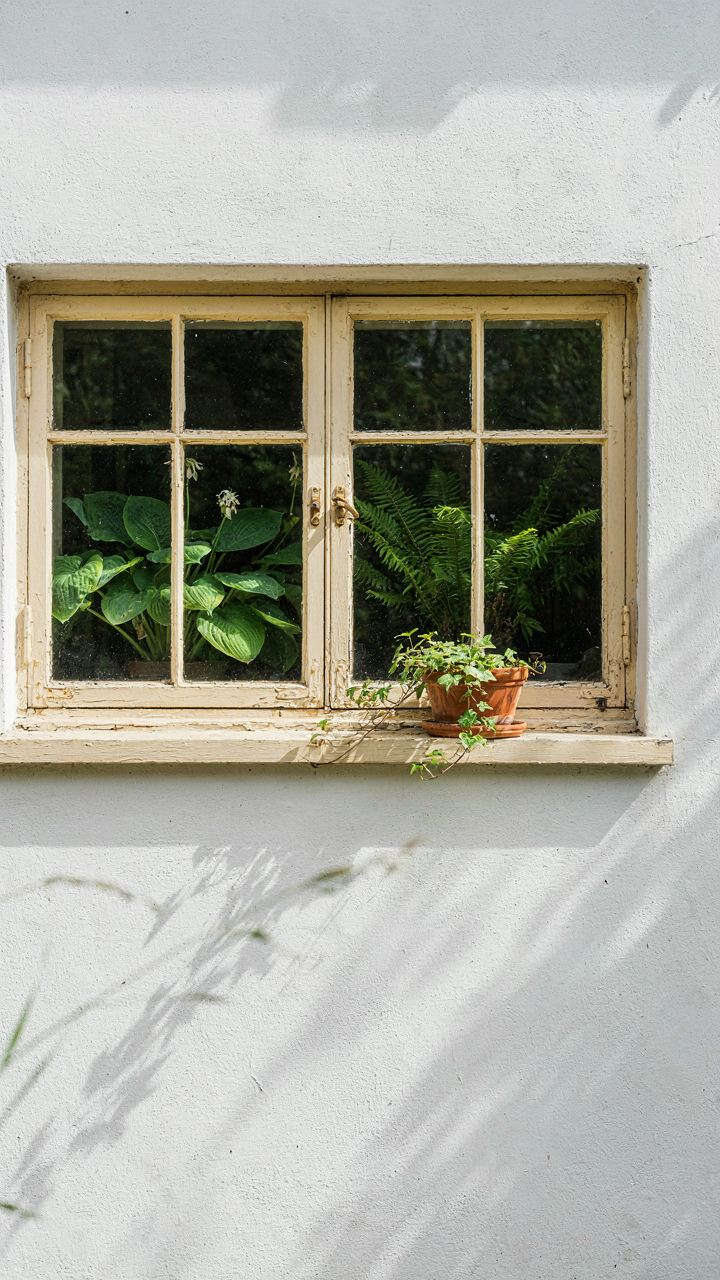
You want to feel like you’ve discovered something nobody else has. That’s the real draw here, not some vague aesthetic quality. Old windows work because they solve a specific problem: they create visual boundaries and depth without the cost or commitment of permanent structures. This is borrowed from architecture’s concept of layering—using multiple planes to build spatial complexity. A salvaged window frame functions as a partition, a focal point, or a light filter. It doesn’t just hang on a wall looking nostalgic. It changes how light moves through a space and how the eye travels across it.
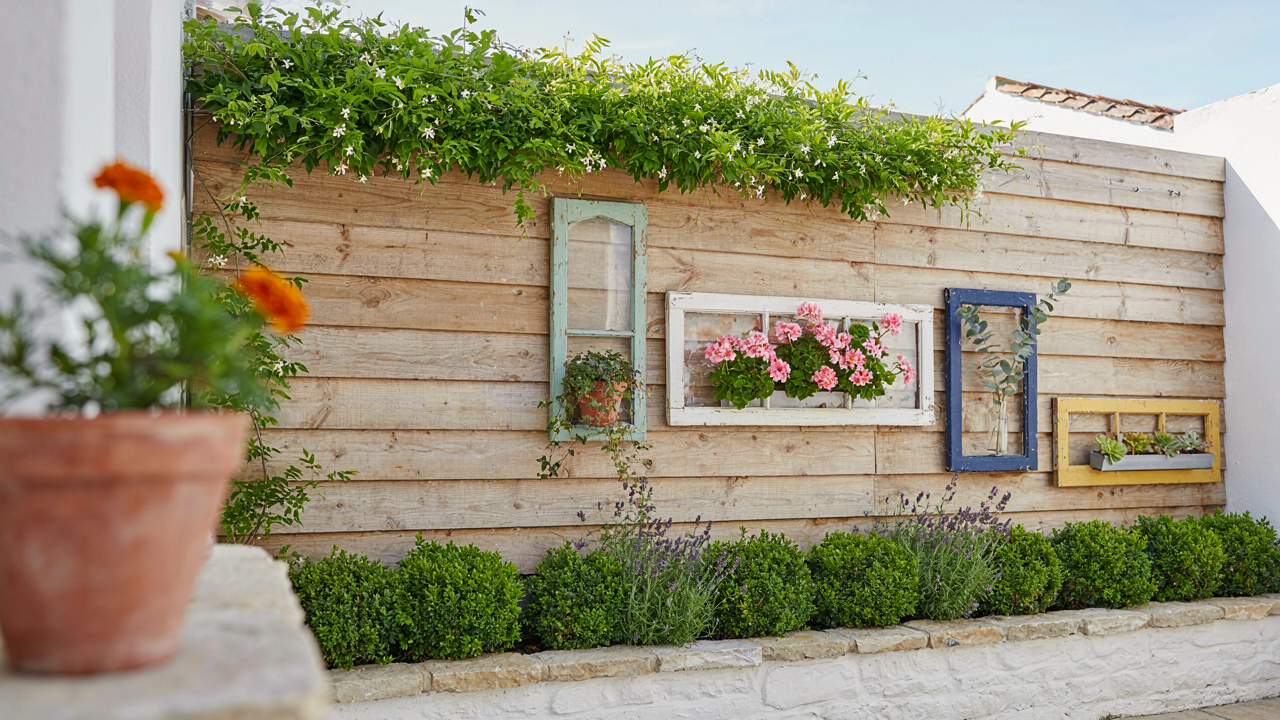
The distinction matters because most people treat old windows as decoration when they’re actually structural storytellers. A 1920s double-hung window installed horizontally on a garden wall doesn’t just reference the past—it reframes what’s behind it, creates shadow patterns, and establishes scale. You’re deploying an object with material history and proven engineering. The window has already solved the problem of framing something worth looking at. Your job is recognizing that mechanism and positioning it where it does actual work, not where it just fills empty wall space.
Building Contrast, Not Copying Pinterest
The common advice says to scatter old windows around for “rustic charm.” That’s lazy. What actually separates a deliberate installation from theme park decoration is constraint and opposition. Old windows gain power when they sit against something completely unlike them—modern brick, minimalist siding, contemporary metal fencing. The friction between periods creates narrative. A Victorian-era frame mounted on a concrete garden wall doesn’t apologize for either material. It makes both more visible.
The mechanism is cognitive: your eye stops when it detects incongruence. Sameness bores you past. Deliberate contrast holds attention because it forces meaning-making. You’re not decorating with windows. You’re creating a visual argument about time and material. Install the frame where it challenges its surroundings, not where it blends. Mount it at an unexpected height. Angle it. Leave it unpainted where other elements are finished. The window becomes a device that makes viewers question what they’re looking at rather than passively accepting what they see.
Deconstructing “Rustic”: The Modern Application Of Old Windows Repurposed
Industrial Fusion: Glass, Metal, And Aged Wood
You want the aesthetic without looking like you’re living in your grandfather’s barn. The real mechanism here is contrast, borrowed straight from industrial design: you’re using salvaged windows as the friction point between two opposing materials. One pulls forward, one recedes. Glass demands attention. Metal frames anchor weight. Aged wood softens aggression. This tension is what reads as intentional rather than neglected.

The common advice stops at “just add an old window to your wall.” That misses the load-bearing element. Pair a steel-framed window with reclaimed barn wood trim and modern concrete or plaster behind the glass. The window becomes a frame within a frame. The viewer’s eye doesn’t land on the weathering. It lands on the geometry and material hierarchy you’ve engineered. Sourcing matters here: cast iron frames hold more visual authority than painted aluminum, and actual aged wood beats stained new lumber every time.
Weathered Texture Against Clean Space
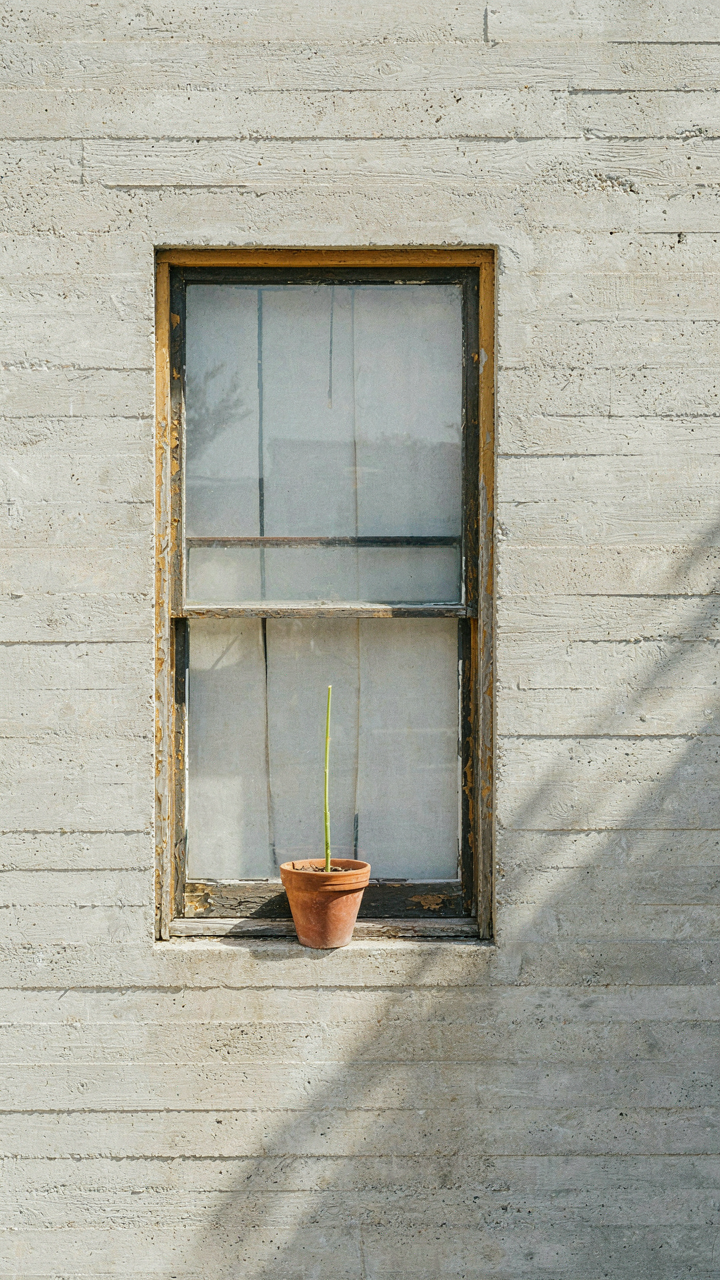
Minimalism demands one focal point with everything else stripped. Old windows accomplish this by being the only textured element in a room of smooth surfaces. The decay isn’t the goal. The discipline is. You’re using visual scarcity as your lever, not abundance.
Install the window against white drywall or light plaster with no other ornament in the frame. Let the patina speak alone. The cracks, the rust spots, the uneven glass—these become legible only because nothing competes. This works on exterior garden walls too. One old window on a clean brick facade reads as a deliberate pause in the composition. Everything else recedes. The window stops the eye. That’s the protocol: clear wall, single window, nothing else within six feet of it.
The Scarcity Advantage: How To Repurpose Old Windows For Unmatched Value
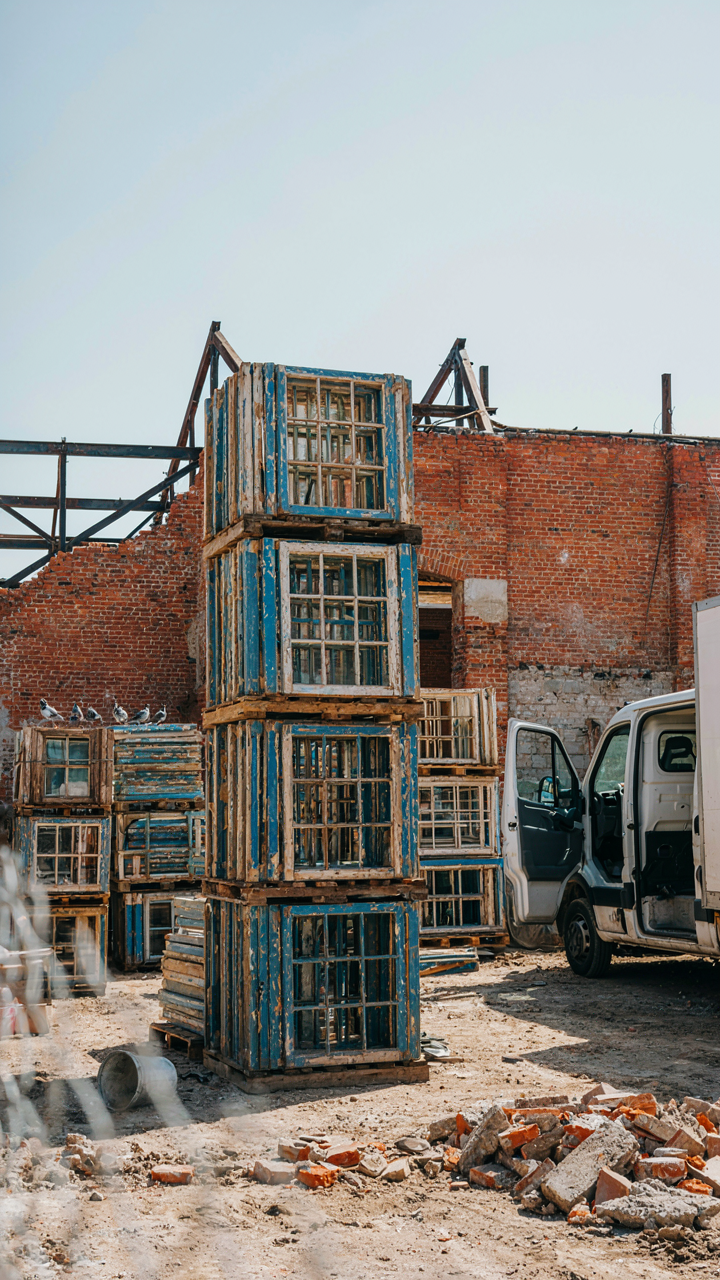
Where To Find Forgotten Architectural Gems
You want this because scarcity creates perceived value, and old windows are genuinely scarce. The mechanism is simple: demolition sites and salvage yards hold inventory nobody else bothers to hunt for. Most people see old windows as waste. You see inventory before demand catches up.
Economics teaches us about supply and demand. Old windows function as supply in a market most decorators ignore. Demolition contractors tear down 1920s to 1970s structures weekly. These windows end up in landfills or salvage yards within hours of removal. You intercept them at the moment they transition from trash to treasure.
- Demolition Sites: Contact local contractors before work begins. Establish relationships with project managers who can set aside period windows before the dumpster arrives. Timing matters more than negotiation.
- Salvage Yards: Search within 50 miles of urban centers. Yards sort inventory by era and frame type. Many owners don’t photograph stock, so early visits yield better selection than online listings.
- Estate Sales and Auctions: Homes from mid-century forward often have original windows. Liquidators prioritize furniture and valuables, leaving windows priced at actual cost, not markup.
- Architectural Reclamation Specialists: These dealers curate inventory by period and quality. Prices run higher, but selection cuts research time significantly. Worth the premium when sourcing for specific eras like Victorian or Art Deco frames.
- Craigslist and Facebook Marketplace: Homeowners replacing windows post batches cheaply. Response time determines access. You need notifications set and cash ready to move within hours of listing.
The real advantage isn’t the low price, though that matters. It’s that you access materials nobody considers valuable yet. Supply stays high because demand stays low. This gap closes when rustic and garden aesthetics trend harder. You source now, install later, benefit twice.
High Impact, Low Financial Outlay
Everyone says old windows are cheap. That misses the point. The actual mechanism is leverage: you spend 30 to 200 dollars per window and generate visual impact worth 500 to 2000 dollars in perceived design value.
A single large vintage window frame, properly positioned as a focal point on a rustic wall, commands attention that costs nearly nothing to acquire but requires thousands in custom carpentry or art to replicate. The labor to install matters more than material cost. You pay for mounting, framing, or integration into garden structures. The window itself functions as high-return asset. Compare this to purchasing new architectural elements: custom frames, mirrors, or metal art pieces cost 300 to 1500 dollars new. Old windows deliver equivalent visual weight for a fraction of the price. The economics work because you’re buying used goods at a moment when most markets haven’t priced them for demand. Position multiple windows as garden screens, wall art, or architectural anchors on budget, then watch the space feel intentional without the intentional price tag.
Beyond The Wall: Repurpose Old Windows DIY For Garden Domination
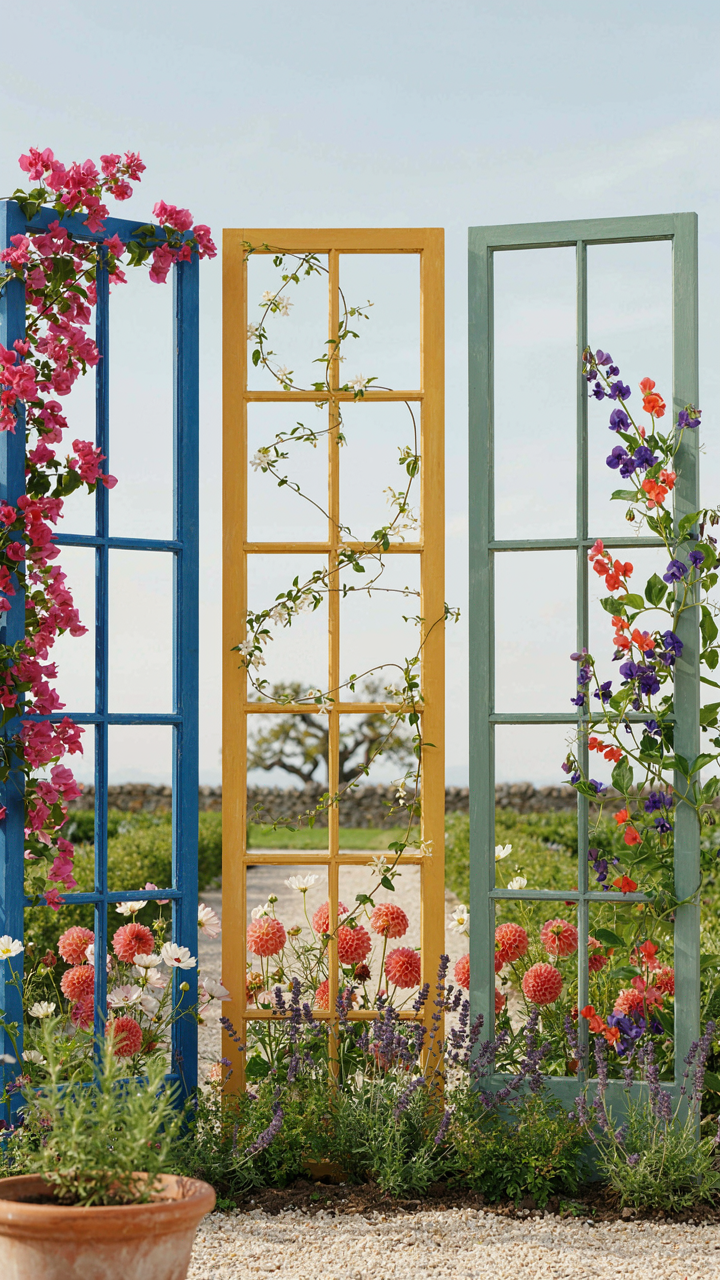
Vertical Frames That Actually Function
You want to look like you have a garden vision, but what you really want is to avoid the grunt work of traditional raised beds and trellises. Here’s the mechanism: old windows become load-bearing vertical structures when you anchor them properly into the ground or against existing walls. A single window frame—especially multi-pane designs from the 1800s through mid-1900s—creates compartmentalized growing zones that direct water, trap heat, and organize plant density without requiring you to build from scratch.

The real play is structural repetition. Stack or arrange windows in a grid pattern, and you’ve created what architects call a modular facade. Each pane functions as a micro-greenhouse section. You secure frames to posts set in concrete footings, then train climbing plants or lean lightweight trellises against them. The wood frame itself ages into the landscape. No paint required. No pretense needed.
Passive Climate Control Through Glass Positioning
Permaculture borrowed from agricultural physics the principle that thermal mass and light interception determine crop survival in marginal zones. Old windows are thermal buffers and light redirectors when positioned strategically. A south-facing window frame captures and holds heat during the day, releasing it to soil or air at night, extending your growing season by weeks. North-facing arrangements block harsh afternoon sun in hot climates while allowing morning light through.
The placement protocol matters more than the windows themselves. Measure your garden’s sun arc—track where direct light hits at 9 AM, noon, and 3 PM across seasons. Position windows to intercept or reflect that light toward tender plants. A single-pane vintage window becomes a functional windbreak when set perpendicular to prevailing winds, slowing air movement that desiccates seedlings. Install windows at a 15-degree angle to maximize winter solar gain and minimize summer heat load.
The Alchemist’s Lens: Old Window Frame Ideas Diy Projects That Transmute Junk
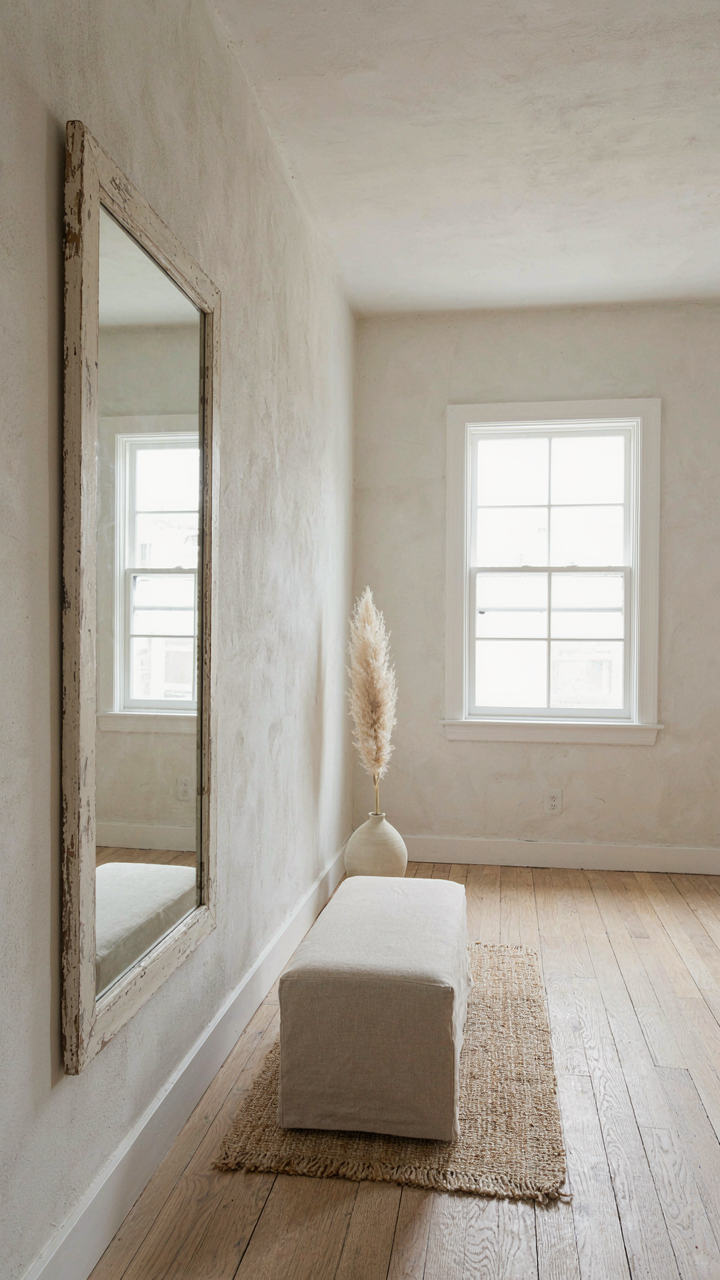
Mirror Installations: Amplifying Light And Space
You want people to think your room is bigger than it is. The mechanism is simple: mirrors don’t create light, they redirect it. In optics, we call this reflection. Old window frames become reflection vessels. A weathered frame around mirror glass doesn’t just hold the mirror. It creates a visual anchor that tricks the eye into believing depth exists where it doesn’t.

Install the mirror opposite your primary light source, not adjacent to it. Mount the frame at eye level or slightly above. The reflected light bounces back into the room’s dead zones, typically corners and alcoves. Secure with heavy-duty brackets rated for the frame’s weight. Test the angle before permanent installation to confirm the reflection hits your target zone, not just a wall.
Framed Botanicals Or Photography
Everyone frames things. Few people frame them in salvaged windows. The real move is using the window’s compartments as natural dividers for a gallery. Old window frames with multiple panes give you a grid system without building it yourself. Each pane becomes a frame within a frame, reducing the visual chaos of random prints.
Print botanicals or black and white photography at consistent sizes that fit your window’s pane dimensions. Mount them with small tabs or museum putty behind the glass rather than adhesive. This preserves both the prints and the window glass. Hang at least two feet from ground level to avoid the visual weight of floor-level art pulling your eye down. The compartmentalization creates order that reads as intentional design, not decoration.
The Entropy Method: How To Upcycle Old Windows Against Decay
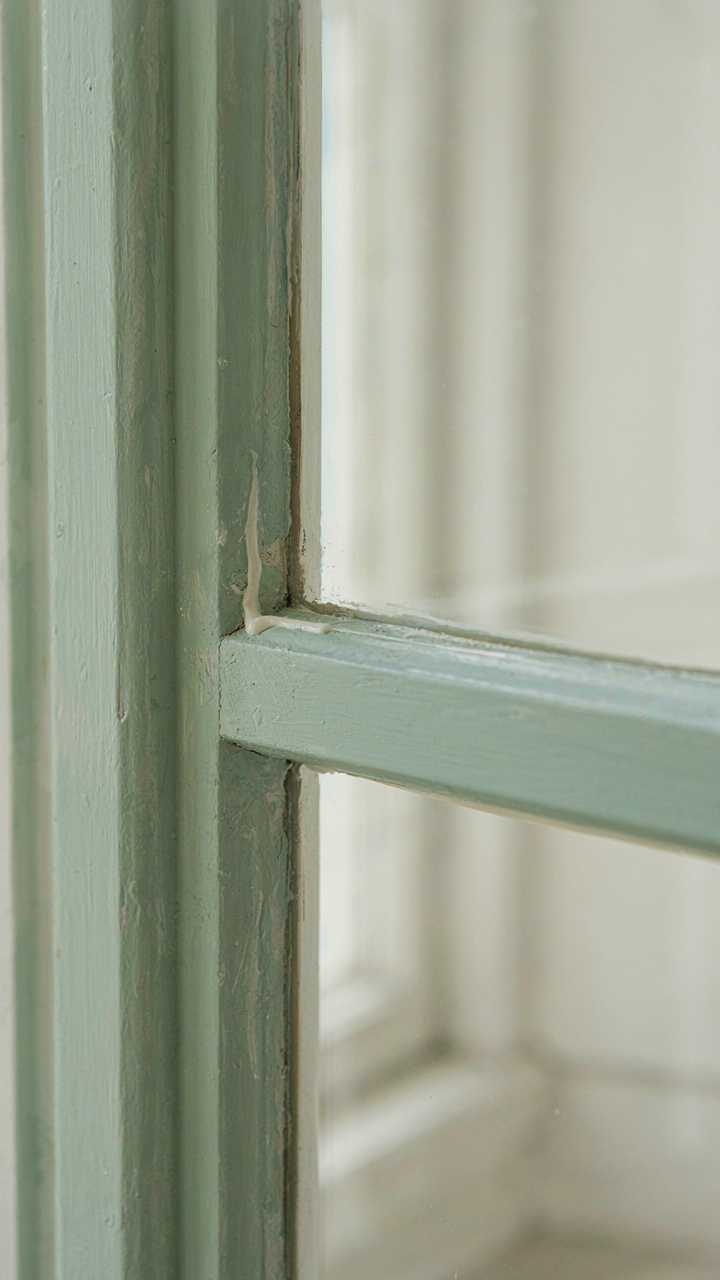
Restoration Vs Preservation: Strategic Material Choices
You want to believe the window will last forever if you just treat it right. It won’t. Entropy is the physics term for disorder increasing in a closed system, and old windows are exactly that: wood frames absorbing moisture, glass losing seal integrity, hardware corroding. You choose restoration or preservation based on what you’re actually willing to lose.

Restoration means rebuilding compromised parts. You replace rotted sills, re-glaze cloudy panes, strip and refinish frames. This works when the original structure still exists underneath the damage. Preservation means stabilizing what remains without replacement. You caulk gaps, apply protective coatings, accept minor imperfections. Pick restoration if the window’s bones are salvageable. Pick preservation if you’re working with a window that’s already in slow decline and you want it to last another decade without major intervention.
Sealing And Finishing: Combating Environmental Degradation
Most people slap polyurethane on old wood and call it done. Wrong. Polyurethane traps moisture underneath. It looks good for two years, then the coating fails and water accelerates the decay you tried to stop.
The real mechanism: old windows fail because water penetrates joints where wood meets glass, or where frame meets wall. Exterior sealant stops water entry at those junction points. Use silicone caulk on exterior joints, not acrylic. Silicone stays flexible through temperature swings. Paint over the caulk immediately to stop UV breakdown. For wood finishes, linseed oil penetrates rather than seals, allowing the wood to breathe while still offering water resistance. Reapply every two to three years on south-facing exposures. The window survives because you’re managing moisture movement, not blocking it entirely.
The Unconventional Canvas: Decor With Old Windows In Unexpected Ways
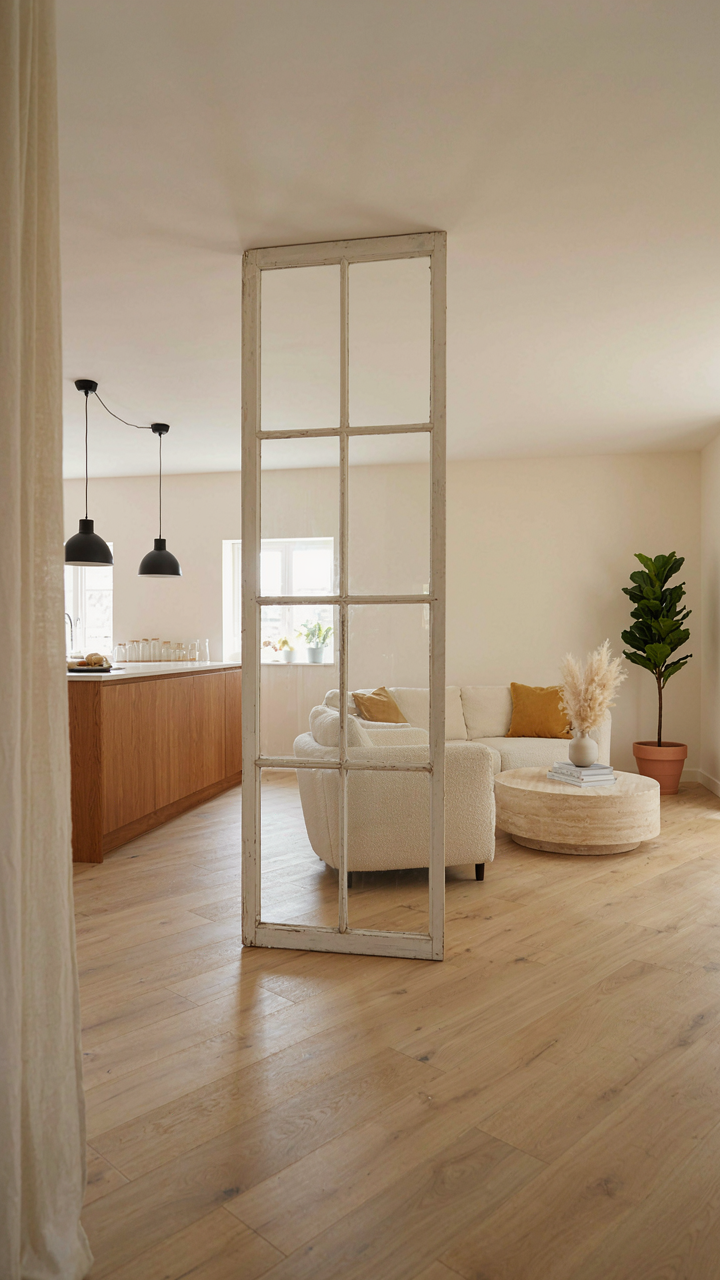
Windows As Room Dividers
You want this to feel intentional, not like you’re stretching a decorative object beyond its purpose. The real mechanism here borrows from architecture: a bearing wall doesn’t just separate space, it defines load paths. An old window frame does the same thing visually—it creates a threshold without blocking sight lines or flow. The frame itself becomes the boundary marker.

Mount old window frames vertically between rooms or within open floor plans. A six-pane or eight-pane frame works better than single-pane because the muntins create visual segmentation before you even add any interior elements. Position it perpendicular to the wall, freestanding or lightly secured to existing studs. This divides space through definition, not obstruction. You get zones without walls.
Overhead Impact Through Vertical Placement
Most people miss this because they think old windows belong on walls. Mounting them on or near ceilings changes the entire spatial feel. In lighting design, you’d call this layering—adding visual information at different heights changes how a room reads. An old window frame mounted horizontally at ceiling height (or just below) creates depth overhead without taking up floor or wall real estate.
Install frames parallel to the ceiling using structural supports rated for the weight. Single-frame pieces work best; multi-pane designs cast actual shadow patterns that shift throughout the day. The practical benefit: you get architectural interest without furniture. You also gain a natural boundary for defining kitchen islands, dining areas, or bedroom zones in open-concept layouts. Mount one above the seating zone to create a defined ceiling plane without a permanent installation.
The Curator’s Eye: Window Projects For Home As Intentional Statements
Narrative Construction With Salvaged Pieces
You want people to see your taste, not your budget. That’s the real reason this matters. The mechanism is simple: a salvaged window only reads as intentional when it answers a specific question about your space. Random old glass on a wall looks like storage. A window from a 1920s farmhouse positioned to frame your garden view looks like a decision.

Build narrative by matching the window’s origin to its new purpose. A reclaimed cottage window works above a potting bench because it echoes the window’s original function. A church window frame becomes a statement when it hangs where light actually streams through it at specific hours. The window itself becomes secondary to the story you’re telling about why it belongs there. Placement and context do the heavy lifting that authenticity alone cannot.
Grouping Disparate Elements Into Cohesion
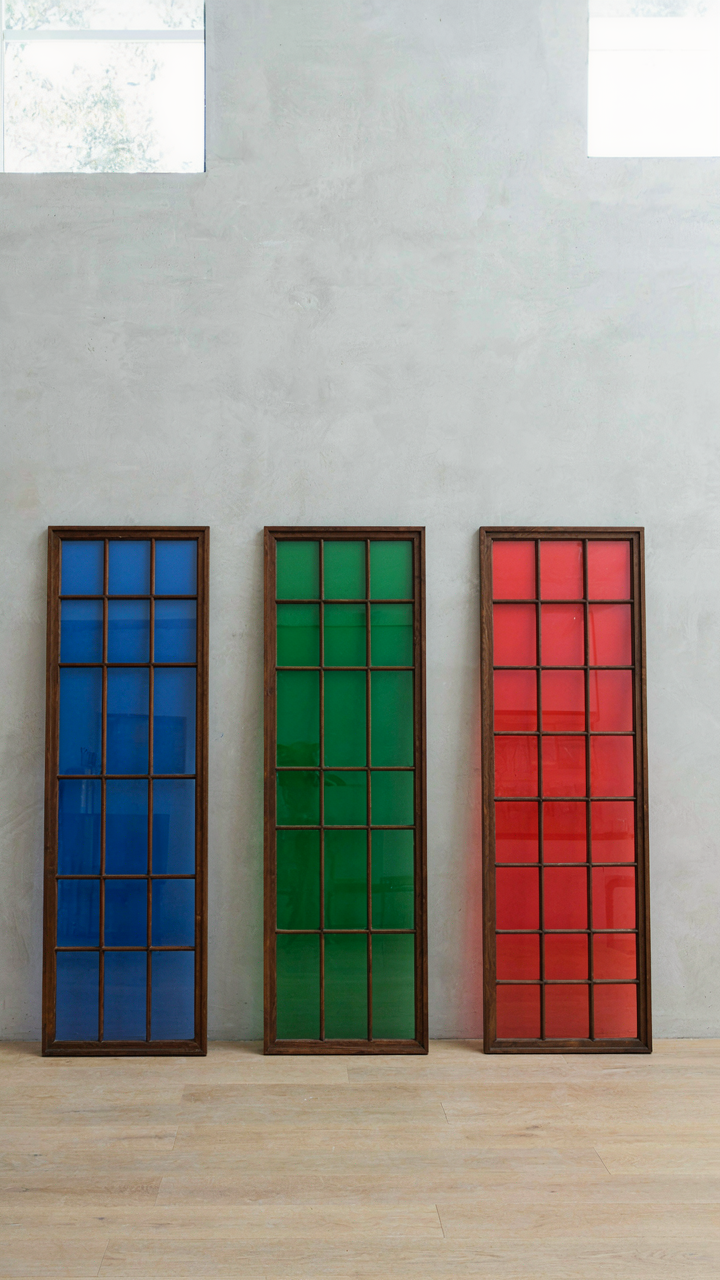
Common advice says to “mix and match” old windows for eclectic charm. That’s lazy. Mixing without logic reads as haphazard, not curated. The principle here borrows from graphic design’s concept of gestalt: humans organize disparate elements into unified wholes when they share a common variable. With windows, that variable can be frame material, glass color, approximate size, or era.
Choose one binding principle and commit to it. Three windows with dark wood frames, all roughly 24 by 36 inches, hung vertically create instant cohesion even if one is Victorian and another is Depression-era. Alternatively, stack five small windows of different periods but unified by clear glass and no ornamentation. The grouping method matters more than the windows themselves. Hang them in a grid, staggered pattern, or single vertical line, then hold that decision constant so the eye perceives intention rather than accident.
Your Fear Of Bland Living Spaces Isn’t Solved By More Shopping, But By Reclaiming Agency Over Your Environment
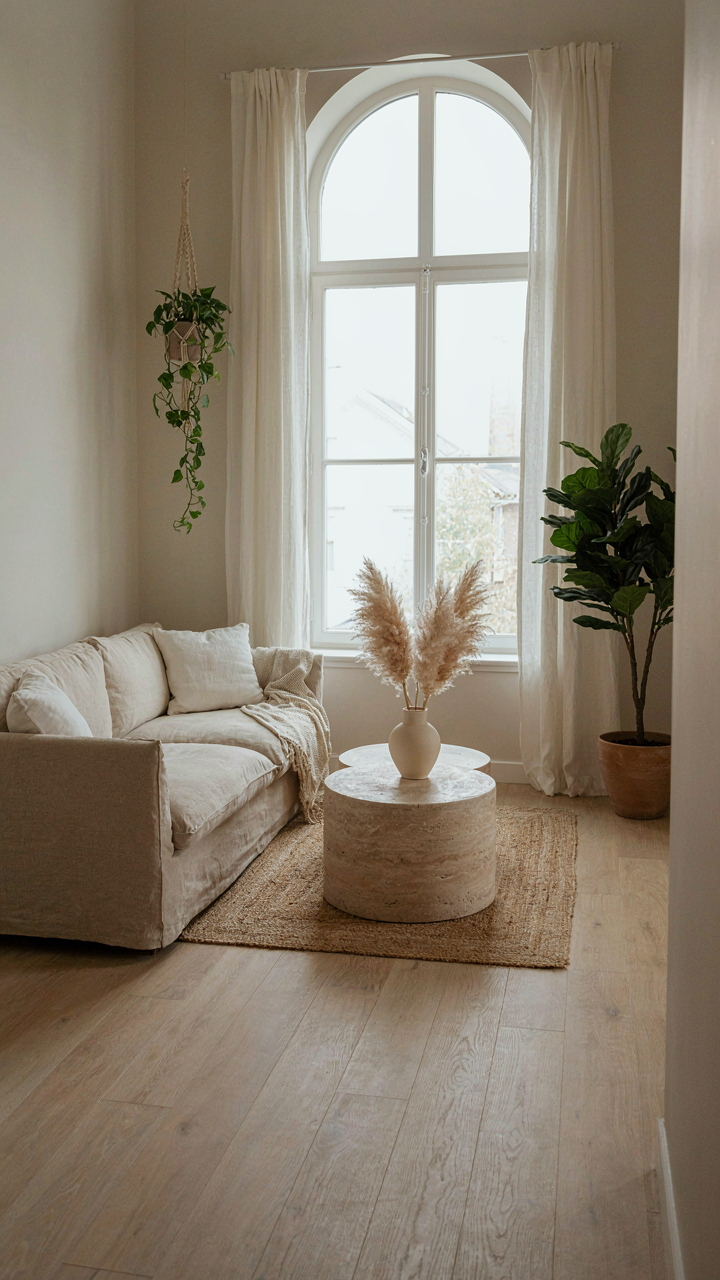
Most people think better decor requires more money. Wrong. It requires intention. Old window frames don’t cost what new furniture does, but they demand you make a choice about what your space means. Stop scrolling design accounts. Walk outside today and find one discarded window. Clean it. Hang it. Watch how a single authentic object does what ten expensive pieces never could. Your environment reflects your willingness to think differently, not your budget.