The Sunlight Fallacy: More Than Just A Window

Brightness Is Not Intensity
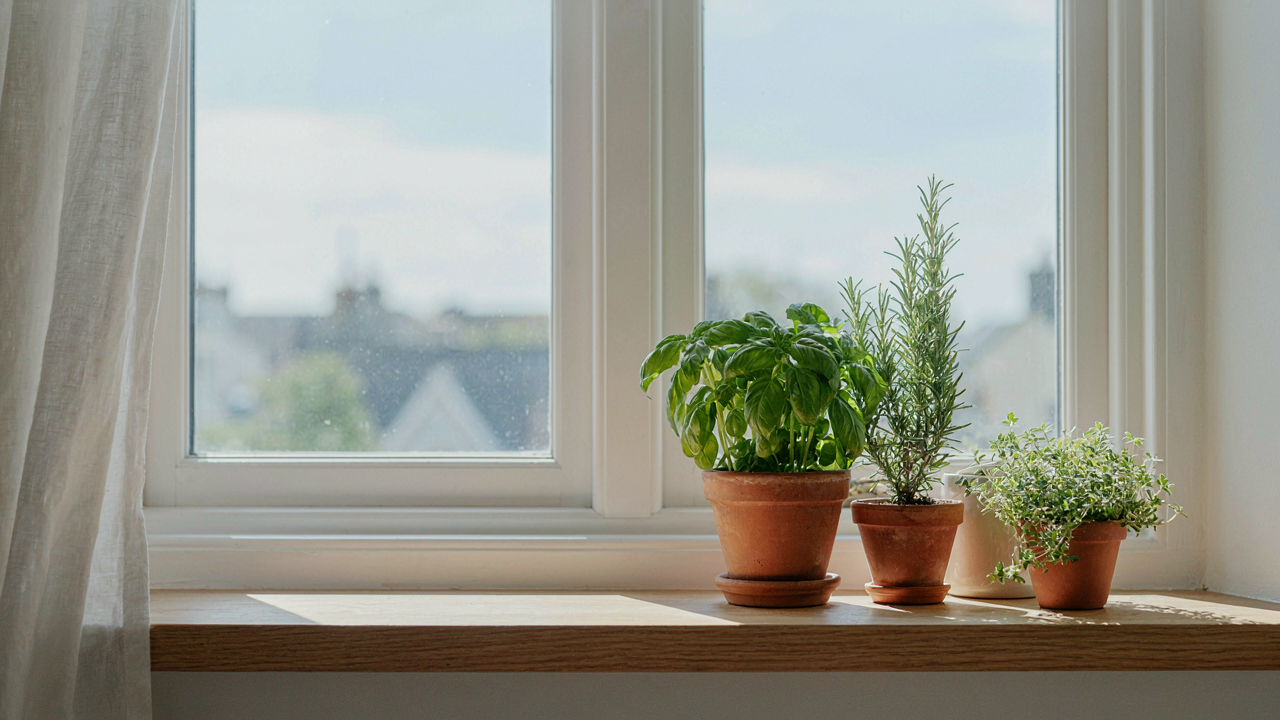
You think a sunny window means your herbs will thrive because you’re avoiding the work of measuring actual light conditions. Here’s the mechanism: your eye perceives brightness as a binary state—bright or dark—but plants measure photosynthetically active radiation in micromoles per square meter per second. A south-facing window at noon delivers 800 to 1200 micromoles. A north-facing window delivers 100 to 300. Both look “bright” to you. Only one works.
The gap between perceived brightness and usable light is where most indoor herb gardens fail. Your windowsill might feel warm and look luminous, but that tells you nothing about whether basil or oregano will photosynthesize fast enough to grow. Glass filters ultraviolet wavelengths and diffuses intensity. Distance from the pane cuts light by roughly half every foot you move back. Most people position their herbs on the sill, feel satisfied, then watch them stretch and weaken because they’re getting 40 percent of what they need.
South And West Windows Win
Window orientation is not preference—it’s physics applied to your home’s geometry. South-facing windows in the Northern Hemisphere receive direct sunlight for six to eight hours during growing season, delivering the consistent radiation herbs require. East-facing windows give you two to four hours of morning sun, which is better than north but insufficient for Mediterranean herbs that evolved under intense Mediterranean light. West-facing windows deliver afternoon heat, which sounds useful but often cooks tender seedlings and herbs like cilantro that bolt under heat stress.
North-facing windows are disqualifying. They receive reflected light only, never direct sun, averaging 50 to 200 micromoles across the day. If your kitchen layout forces north, you need supplemental grow lights—not optional, mandatory. Test your window by placing a phone with a light meter app on the sill at solar noon for three days. If you read below 400 micromoles during peak hours, that window cannot sustain basil, rosemary, or thyme without artificial light. Pick your herb location by measurement, not convenience.
Beyond Soil: The Hydroponic Kitchen Herb Garden Protocol
The Setup That Actually Works For Neglect
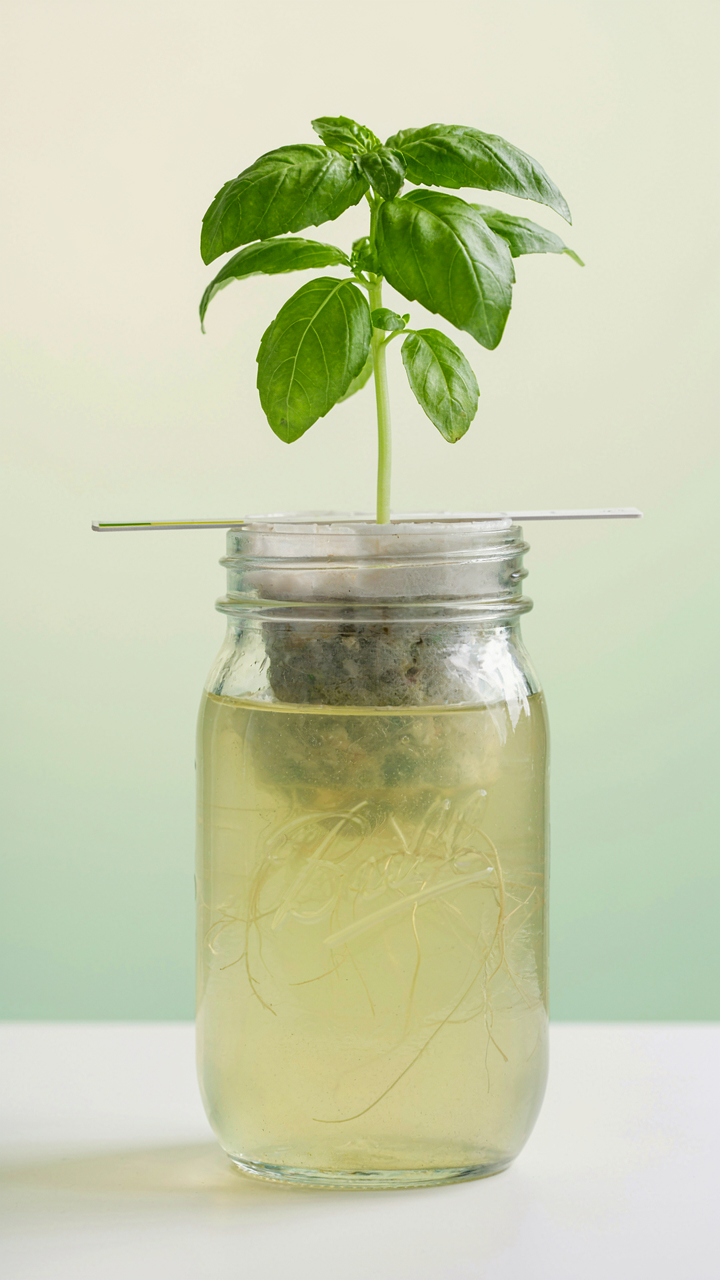
You want hydroponics because you think it sounds advanced, not because you understand why it solves your real problem: you forget to water. Passive hydroponic systems use capillary action, the same force that moves water up a paper towel, to deliver moisture on demand. The plant roots sit in an inert medium and draw water from a reservoir below. No timer needed. No guesswork about soil moisture.

The Kratky method is the simplest passive approach for herbs. A net pot suspends roots into nutrient solution in a mason jar or container. As the plant drinks, the water level drops and air exposure increases around the roots. Basil, mint, and parsley thrive in this setup for 4-6 weeks before harvest cycles slow. You build it once and refill the reservoir every 2-3 weeks depending on herb type and room temperature.
The Chemistry You Cannot Skip
Everyone online talks about “hydroponic nutrients” like they’re magic. They’re not. Hydroponic nutrients are just the minerals plants normally get from soil, now dissolved in water because soil isn’t there. The nitrogen, phosphorus, potassium, and micronutrients must be present in precise ratios or your herbs stall, yellow, or develop deficiencies that soil gardeners never see.
Plain water kills hydroponic herbs fast. You need a balanced nutrient solution formulated for vegetables and herbs, not flowering plants. Most commercial hydroponic solutions target the 5-9 pH range. Basil prefers 5.5-6.5, mint handles 5.5-7.0. Check the label of whatever you buy and mix it at the concentration labeled for leafy greens, then test pH with a cheap strip. Change the entire reservoir every 3-4 weeks to prevent salt buildup that stunts growth.
The Vertical Herb Garden Advantage: Space As Currency
When Wall Real Estate Matters More Than Floor Space
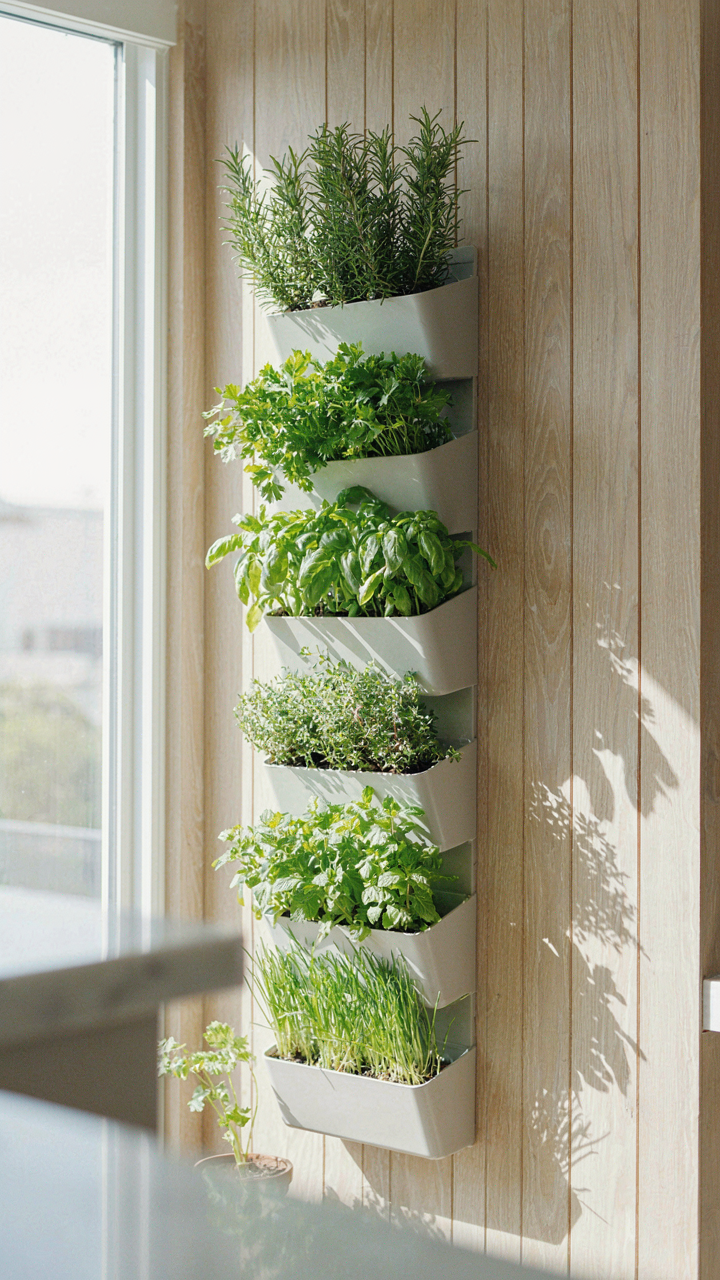
You want vertical because horizontal windowsill space is finite and you know it. But the real mechanism nobody states plainly: vertical gardens work because they’re an application of density economics. You extract more production per square foot of window by layering growing surfaces perpendicular to light. Sunlight hits multiple tiers instead of one flat plane. This isn’t poetic. It’s geometric advantage. A single south-facing window can hold thirty herbs vertically where it holds six horizontally.

Most growers stop at stacking pots and call it done. That’s lazy. Real vertical density requires matching herb height to light intensity at each tier. Top shelf gets sun-demanding rosemary and oregano. Middle tier handles mint and thyme. Bottom gets parsley and chives, which tolerate partial shade. The window becomes a stratified production zone. You’re not just saving space. You’re matching plant physiology to available light across three axes instead of one.
Modular Systems That Scale Without Waste
Modular herb systems fail when people treat them as permanent architecture. They’re not. They’re tactical equipment that should adapt when your cooking patterns change or your kitchen layout shifts. Real modular means you add trays when basil demand spikes, pull them when you’re not cooking Italian, and reorganize the grid without tools.
Wall-mounted track systems beat static shelving because tracks allow vertical repositioning without reinstalling hardware. Herb needs shift seasonally and by meal prep cycle. Modular trays clip and release in under thirty seconds. You move herbs toward the brightest window in winter, pull them back in high summer heat. This flexibility prevents the common failure: plants strangled by inconsistent light as seasons change and you forget to move a static shelf. Build your system assuming you’ll reconfigure it monthly, not once.
Indoor Herb Garden Ideas Diy: Systems, Not Sentiments
What You Actually Need To Build
You want to prove you’re the type of person who grows things. That’s not a judgment. It matters because it shifts your focus from “what looks nice” to “what actually survives.” The mechanism is simple: a DIY herb system needs three non-negotiable inputs—drainage, light consistency, and container volume. Everything else is decoration.

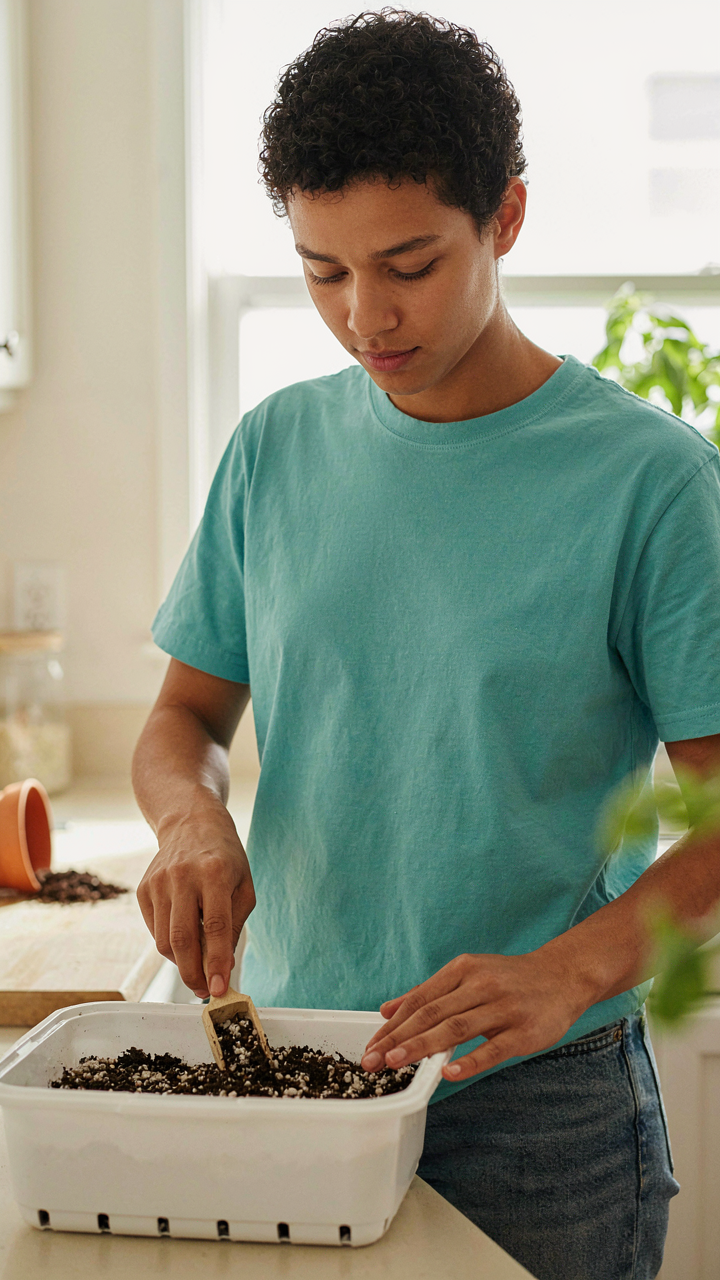
Most people buy cute containers first and soil second. Reverse that order. Your herbs fail not because you lack green thumbs but because containers lack drainage holes or soil compacts after two waterings. Start with materials that work against failure, not materials that work with your Instagram feed.
- Food-grade plastic containers with pre-drilled drainage: Five-inch pots with holes already punched eliminate the step where most people skip drainage entirely. Reusable and cheap.
- Perlite or expanded clay pebbles: Mix these into soil at 20-30 percent by volume. They prevent compaction and maintain air pockets that roots need. Peat moss alone kills herb roots fast.
- Quality potting mix, not garden soil: Garden soil retains too much moisture indoors. Use a mix formulated for containers. Brands matter less than the ingredient list—coconut coir or peat, perlite, and compost only.
- Unglazed terracotta for basil only: Terracotta breathes well but dries fast. Use it only for basil, which prefers drier conditions. Avoid it for parsley, cilantro, and mint—they like moisture consistency.
- Saucers that don’t trap water: A saucer catches drainage, but water pooling under the pot kills roots through rot. Use saucers that let air flow underneath or empty them after watering.
The real constraint is that most windowsill systems fail because people treat them as static setups. You’ll need to rotate containers weekly to prevent one-sided growth. You’ll need to replace soil every spring because it degrades. These aren’t optional maintenance steps—they’re the cost of consistent harvests. Skip them and your system becomes expensive decoration.
How Stress Makes Plants Thrive Or Die
Container gardening borrows from stress engineering in materials science: stress applied gradually builds resilience, but stress applied suddenly causes failure. Your herb system must introduce controlled stress, not random shock.
Inconsistent watering creates the shock. Most indoor gardeners oscillate between drowning herbs and forgetting them entirely. The fix is a watering protocol tied to soil state, not a calendar. Stick your finger two knuckles deep into soil. If it’s dry, water until it drains from the bottom. If it’s moist, wait two days. This removes guesswork and creates the steady stress that keeps herbs healthy rather than panicked. Watering when soil is already wet suffocates roots. Watering on a schedule ignores that humidity and temperature fluctuate daily. Responsive watering—based on actual soil conditions—is the only system that works indoors.
Light consistency matters equally. If your windowsill gets three hours of direct sun one day and eight the next due to seasonal angle changes, herbs slow growth and bolt unpredictably. Most people don’t measure their light. Get a basic light meter app. Basil needs minimum 14 hours of light daily. Parsley tolerates 10-12 hours. Mint grows in 8-10 but stretches toward light. Once you know your actual light hours, you can add supplemental LED if needed or rotate containers to adjust for seasonal shifts. The protocol is specific: measure, document for a week, then decide whether natural light is enough or whether you need a clip lamp.

The Ecosystem Analogy: Building A Resilient Kitchen Garden
Companion Planting Blocks Pests Without Sprays
You want a garden that doesn’t need constant tending because you’re afraid it’ll fail the moment you look away. Here’s the mechanism: biology operates on predator-prey dynamics. In ecology, we call this “niche specialization”—each organism occupies a specific role. Your windowsill garden works the same way. Certain herb combinations repel insects naturally because their volatile compounds trigger avoidance in pest species. This isn’t mystical. It’s chemical signaling.
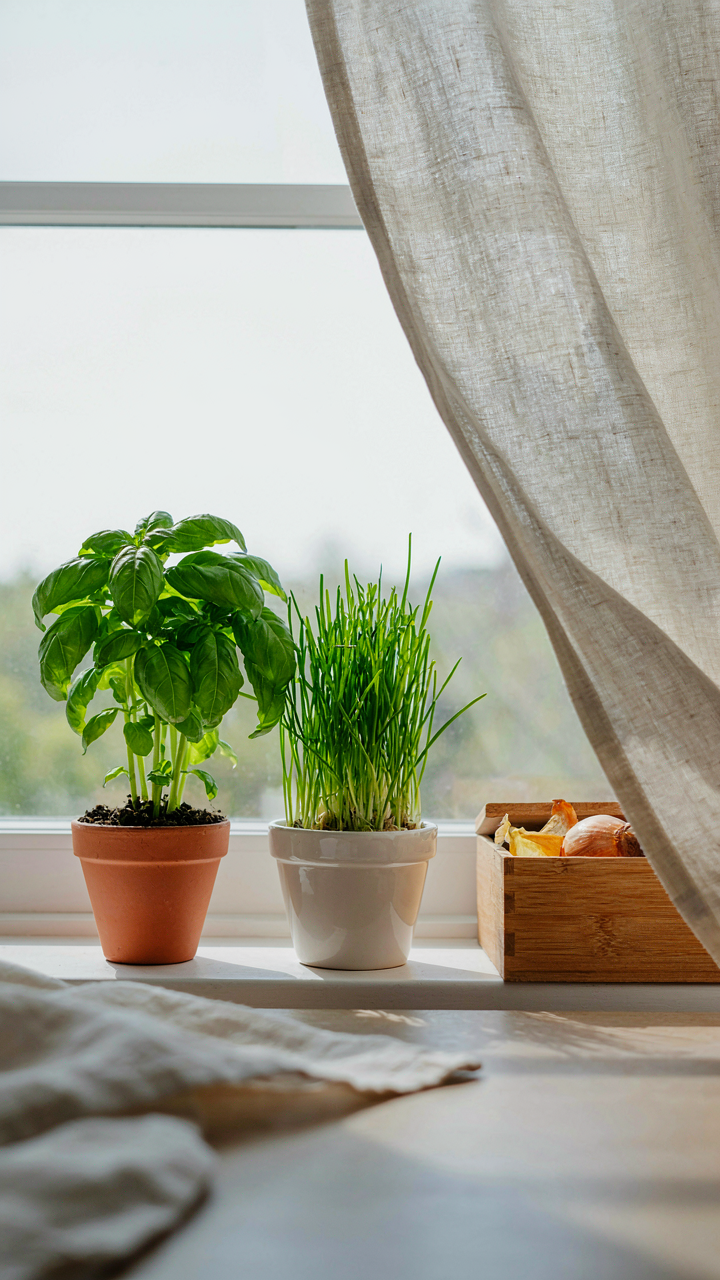
Basil near tomato plants reduces whitefly pressure. Dill attracts beneficial parasitic wasps that hunt aphids preying on other herbs. Chives release sulfur compounds that repel spider mites. The catch: you need density and proximity. A single basil plant in a corner won’t work. Plant them close enough that their chemical signals overlap and compound. Pests encounter multiple deterrent signals simultaneously, making your herbs an unfavorable habitat instead of a food source.
Closed Loop Feeding From Kitchen Scraps
The common advice says compost takes months and requires bins you don’t have space for. That’s incomplete. Cybernetics teaches us feedback loops: inputs fuel outputs, which influence future inputs. Your herb garden needs a tight feedback cycle. Save vegetable scraps, coffee grounds, and eggshell fragments. Layer them directly into the top inch of soil in your containers every two weeks. Microbes break down this waste into available nitrogen and minerals faster than you think in warm, moist potting soil.
The system self-regulates once you establish rhythm. As herbs extract nutrients, new waste replenishes them. You stop buying fertilizer. You stop wasting scraps. Your plants grow faster because they receive consistent, micro-doses of nutrition rather than synthetic bursts. Start by designating a small container near your sink for scraps. When it fills, distribute it across your herb containers. Track the timing—most gardeners see accelerated growth within three weeks.

Choosing Kitchen Herbs: The Culinary ROI
The Herbs You Actually Use
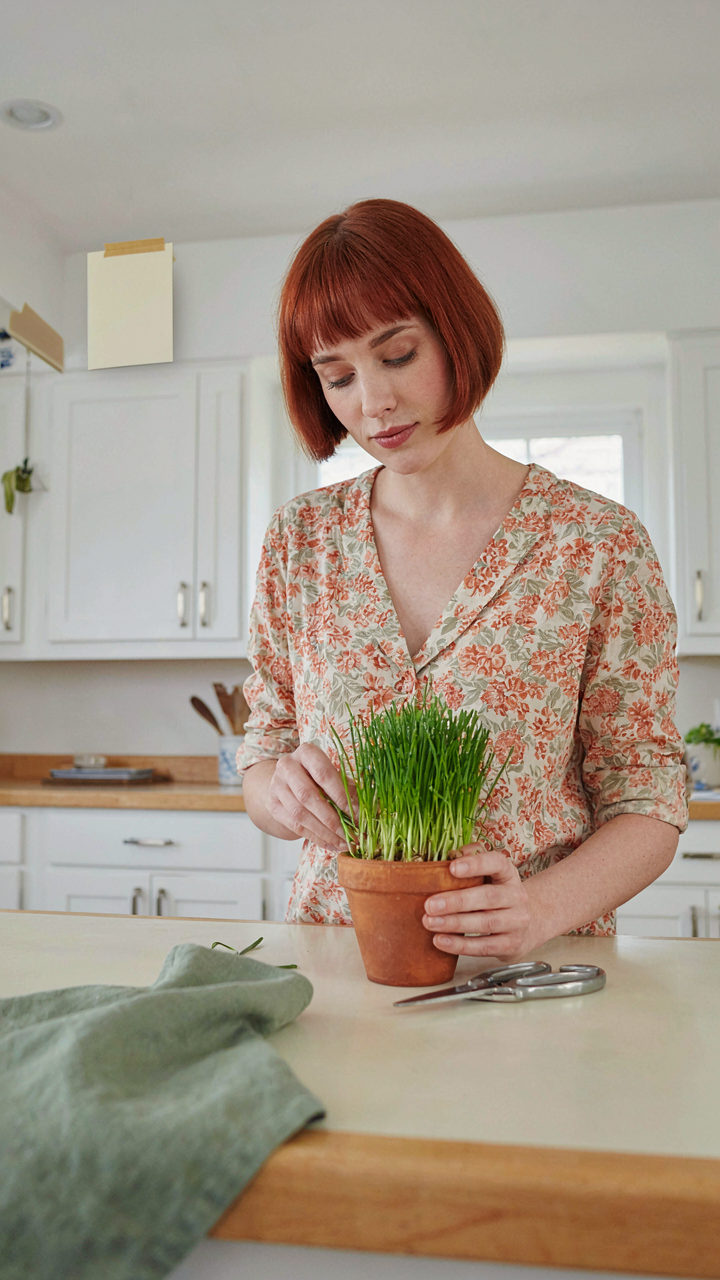
You want to feel like you’re the kind of person who cooks with fresh herbs, but you’re really asking: which ones won’t die while I ignore them? The mechanism here is frequency. Economics teaches us about opportunity cost—in herbs, it’s the cost of dead plants taking up real estate. Basil, parsley, and chives have the shortest gap between harvest and use. You’ll cut them weekly, not monthly. That frequency keeps them productive and alive because you’re actually maintaining them through use.
Most people plant based on what sounds impressive at the garden center, not based on their actual cooking patterns. Plant what you cook with in the last thirty days. Cilantro sits in fridges unused while rosemary dies from overwatering in humid climates. The ROI on a herb is simple: frequency of harvest divided by effort to maintain it. Chives win that math. Thyme and oregano survive neglect. Everything else requires honest assessment before you buy it.
Match Your Cooking, Not Your Fantasy
The real constraint isn’t sun or soil. It’s that you cook the way you actually cook, not the way you imagine cooking. If you don’t make pesto, basil is dead weight. If you don’t grill, rosemary is a prop. Most herb guides ignore this completely, listing everything as equally essential. That’s wrong. Your cooking habits determine which herbs turn into harvestable plants versus which ones become expensive compost.
Audit your last ten meals. Write down every herb you used. That list is your only reliable guide. If cilantro appears twice, grow cilantro. If mint appears zero times, skip it no matter how appealing it sounds. This sounds obvious because it is. The gap between what people plant and what they actually harvest is the difference between a working herb garden and a failed experiment you stop looking at after week four.

Automating Herbs Indoors: The Set And Forget System
Smart Watering Solutions That Work
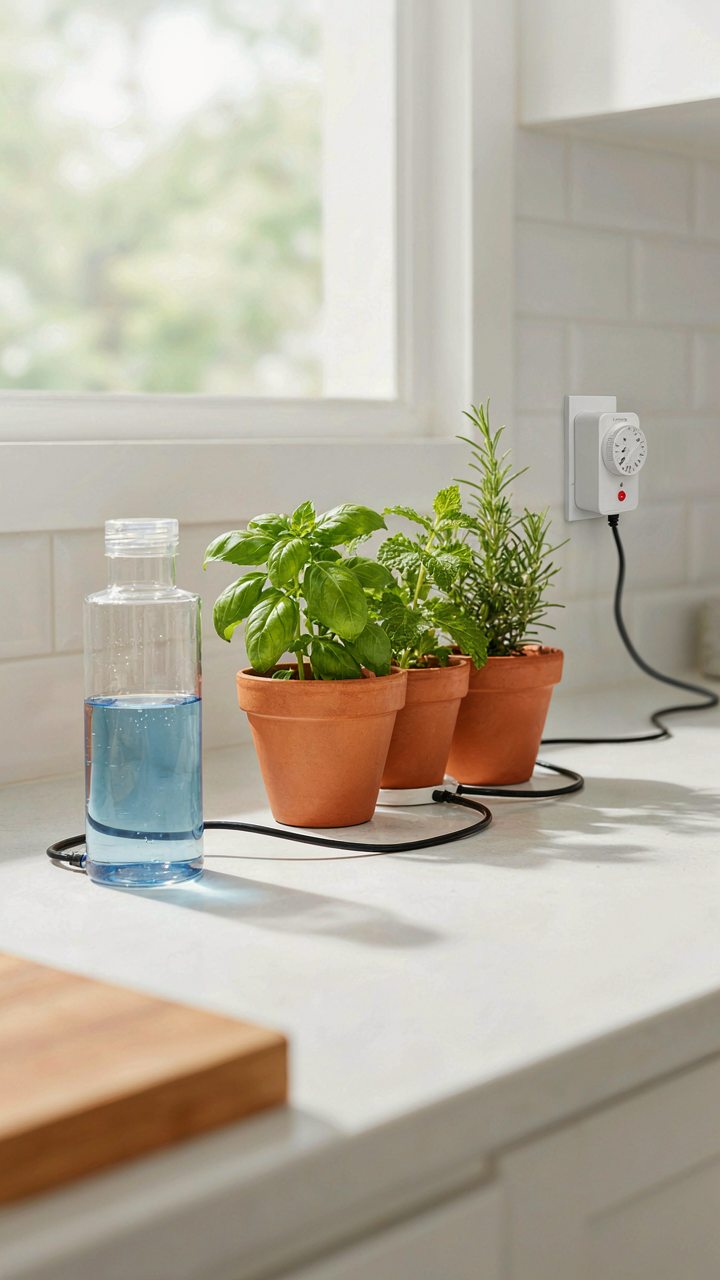
You want automation because you don’t trust yourself to show up consistently—and you’re right not to. The mechanism at play here is soil moisture consistency, which plants respond to like a thermostat responds to temperature. Inconsistency kills herbs faster than neglect does. Drip irrigation systems designed for indoor containers solve this by delivering water on a fixed schedule, removing the guesswork. A basic timer paired with a soaker line or capillary mat keeps soil at the same moisture level daily without you checking anything.
Most people waste money on fancy smart systems that overcomplicate this. What actually works: a mechanical timer (the kind you plug into an outlet), a water reservoir, and gravity-fed tubing. The system needs one rule: water should drench the soil completely, then the timer should shut off before the pot sits waterlogged. For basil, parsley, and mint, soil that stays moist but never soggy produces the best growth. Set your timer to run 15-20 minutes in the morning and you’re done thinking about watering for months.
Light Timers For Consistent Cycles
Photoperiodism comes from horticulture: plants track day length to regulate growth and flowering. Kitchen herbs need stable light cycles, meaning your timer matters as much as your light source does. Without a timer, inconsistent on-off patterns confuse the plant’s biological clock and stall growth. A 24-hour outlet timer controlling your grow light or regular lamp ensures herbs receive the same light window every single day. This removes variables.
Most indoor herb growers underestimate how strictly plants respond to timing. Set your light for 14-16 hours on and 8-10 hours off. This matches what herbs experience outdoors during their prime growing season. Your timer should click on at the same moment each morning and off at the same moment each evening. This consistency accelerates growth and prevents the weak, pale stems that show up when light flickers or changes randomly. Plug your light into a basic mechanical timer, set it once, and stop adjusting it.

Kitchen Counter Herb Garden: Integration, Not Clutter
Where Your Herb Garden Fits Without Looking Like Clutter
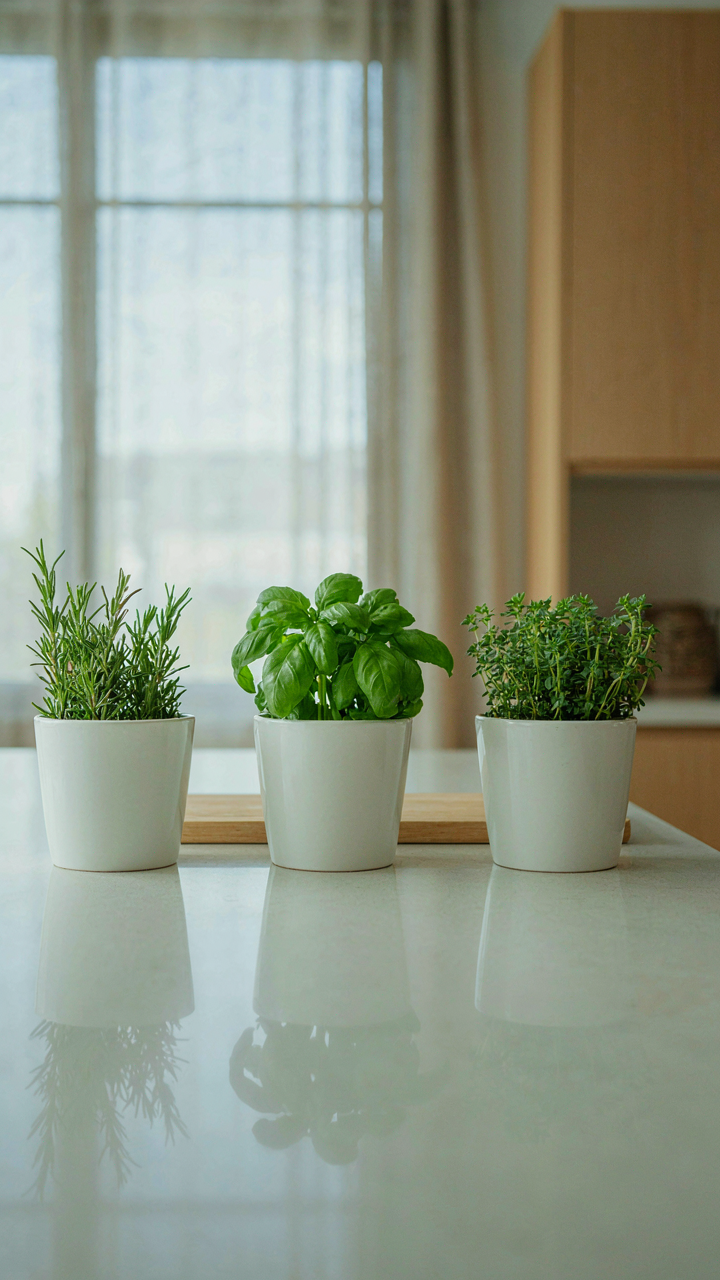
You want your kitchen to look intentional, not like you’re running a plant nursery on your countertop. The real mechanism here is visual real estate allocation. Every object on a counter competes for attention. A herb garden wins that competition only when it occupies a defined zone that complements existing kitchen geometry, not fights it.
Place your herb container in the corner of your windowsill or along the back edge of the counter, not scattered across the front. This creates a visual boundary. Containers matter less than their arrangement. Three matching pots in a line read as a deliberate design choice. Six mismatched pots read as indecision. The counter accepts the garden as part of the kitchen’s infrastructure when the herbs occupy a fixed territory.
The Workflow Problem Nobody Mentions
Kitchen design borrows from assembly line logic: stations for prep, cooking, plating, cleanup. Your herb garden fails if it interrupts this flow. Most people place herbs near the stove for convenience, but that puts them in the collision zone where you grab pans, wipe spills, and move between stations. The garden becomes an obstacle instead of a tool.
Move herbs to the windowsill behind your sink or to a secondary counter edge where prep happens but traffic doesn’t accumulate. You need sightlines from your cutting board or cooking surface without the container blocking your primary hand movements. The garden works when harvesting requires a deliberate step toward it, not a reach that interferes with active cooking. This proximity without intrusion is the actual principle.
Your Fear Isn’t Wilting Plants; It’s Wasted Effort On Systems Designed To Fail
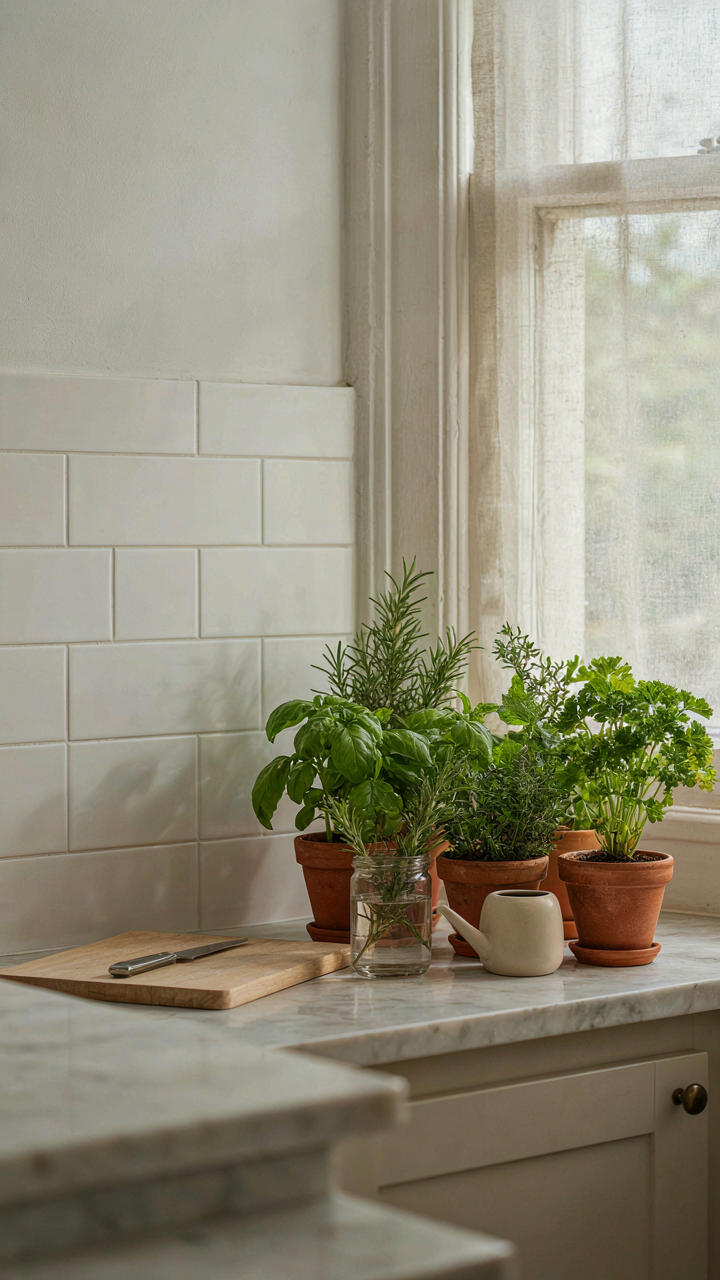
Most people kill their herb gardens because they treat them like decorations instead of tools. You don’t need fancy pots or a perfect routine. You need one sunny windowsill and basil that you actually use. Pick one herb today. Cut a leaf tomorrow. The garden doesn’t fail because you’re careless; it fails because you never built friction into your life to use what you grow.