Introduction To Sustainable Landscaping Low Water Zones
Core Concepts
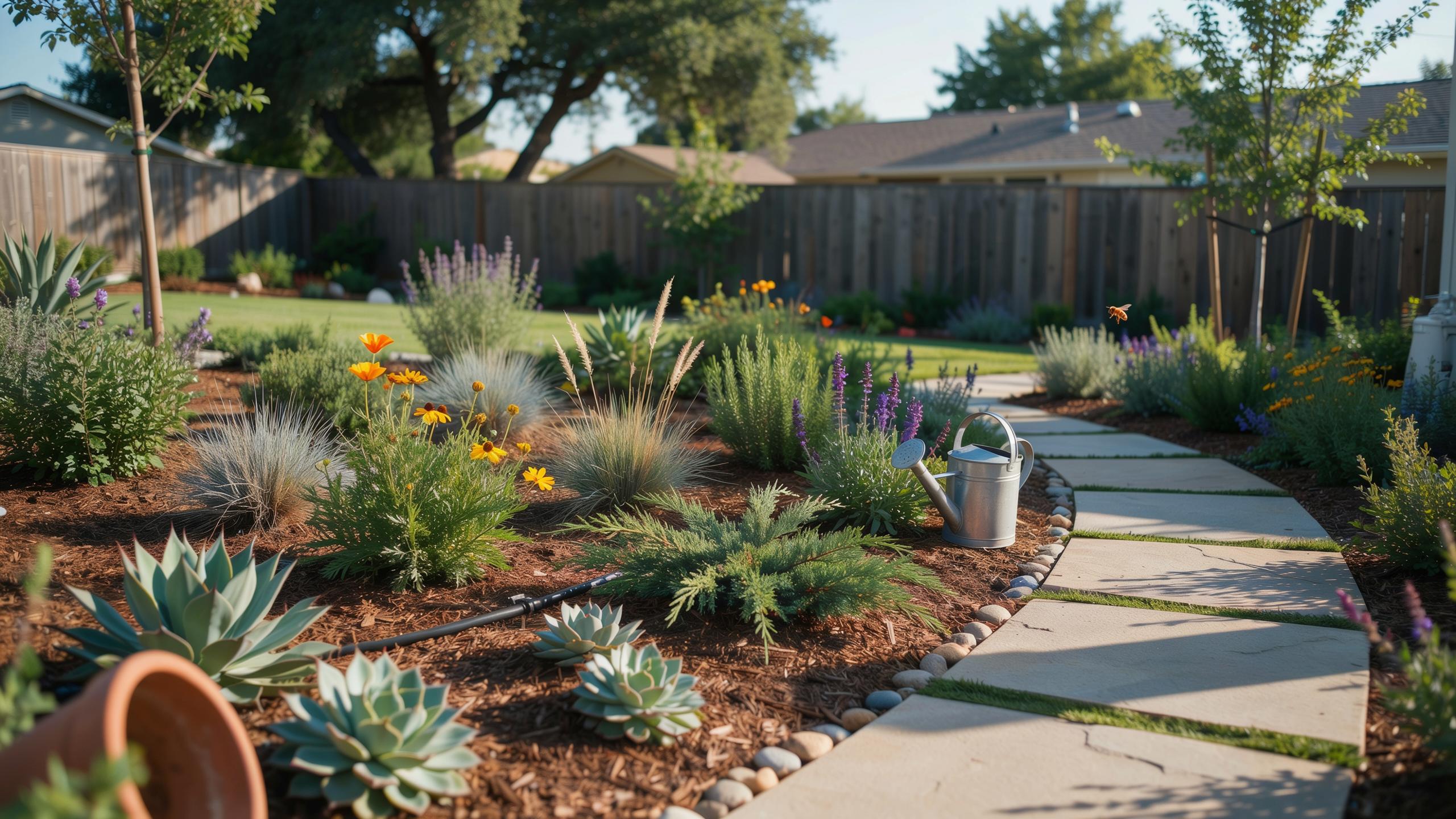
Sustainable landscaping in low water zones centers on matching plants to climate conditions and reducing irrigation demand. This approach treats water as a finite resource and designs landscapes around what naturally grows in arid or semi-arid regions. The strategy replaces turf grass with drought-tolerant species, native plants, and hardscaping elements that require minimal supplemental watering. Success depends on understanding local precipitation patterns, soil composition, and the specific water needs of selected plants.
Low water zone landscaping operates on the principle of hydrozoning, which groups plants by their water requirements. You cluster high-water plants near irrigation sources and position drought-tolerant species away from water infrastructure. Soil preparation matters significantly. Amending soil with organic matter improves water retention in sandy soils while improving drainage in clay-heavy areas. This foundation work reduces the frequency and volume of watering needed throughout the growing season.
Environmental And Financial Benefits Of Low Water Gardening
Low water landscaping directly reduces residential water consumption, which matters in regions facing drought stress or water scarcity. Municipalities in the American Southwest report that landscape irrigation accounts for 40 to 60 percent of residential water use. Switching to drought-tolerant plants cuts this demand substantially. Beyond water savings, these landscapes require less fertilizer because native plants adapted to local conditions need fewer nutrient inputs. Fewer chemicals mean reduced runoff pollution and healthier soil ecosystems.
Financially, property owners see measurable returns through reduced utility bills and lower maintenance costs. Drought-tolerant plants need less frequent mowing, pruning, and fertilizing than conventional landscapes. Water bill reductions typically range from 20 to 50 percent depending on how extensively you transition existing landscaping. Lower maintenance also means less equipment wear and fewer hours spent on yard work. These savings compound year after year, making the initial investment in plant selection and soil preparation economically rational.

Planning Your Drought Tolerant Landscape Front Yard
Sun Exposure Analysis
Map your yard’s sun patterns over a full day. Mark areas receiving six or more hours of direct sun, partial shade between three and six hours, and full shade under three hours. Soil type determines water retention. Clay holds moisture longer but drains poorly. Sandy soil drains fast and requires frequent watering. Loam balances drainage and retention. Test your soil by squeezing wet samples to identify composition before selecting plants.
Different zones in your front yard demand different plant strategies based on light and soil conditions. South and west-facing areas receive intense afternoon heat and need heat-tolerant species. North-facing sections stay cooler and shadier, limiting your plant options. East-facing areas get morning sun with afternoon protection. Document soil depth in each zone because shallow soils over bedrock or hardpan reduce your plant choices and water storage capacity.
The garden should be a place where we live in harmony with the land, not a struggle against it. By choosing plants that belong to the earth beneath our feet, we create a timeless landscape that thrives with gentle care.
Curb Appeal Design Principles For Water Saving Yards
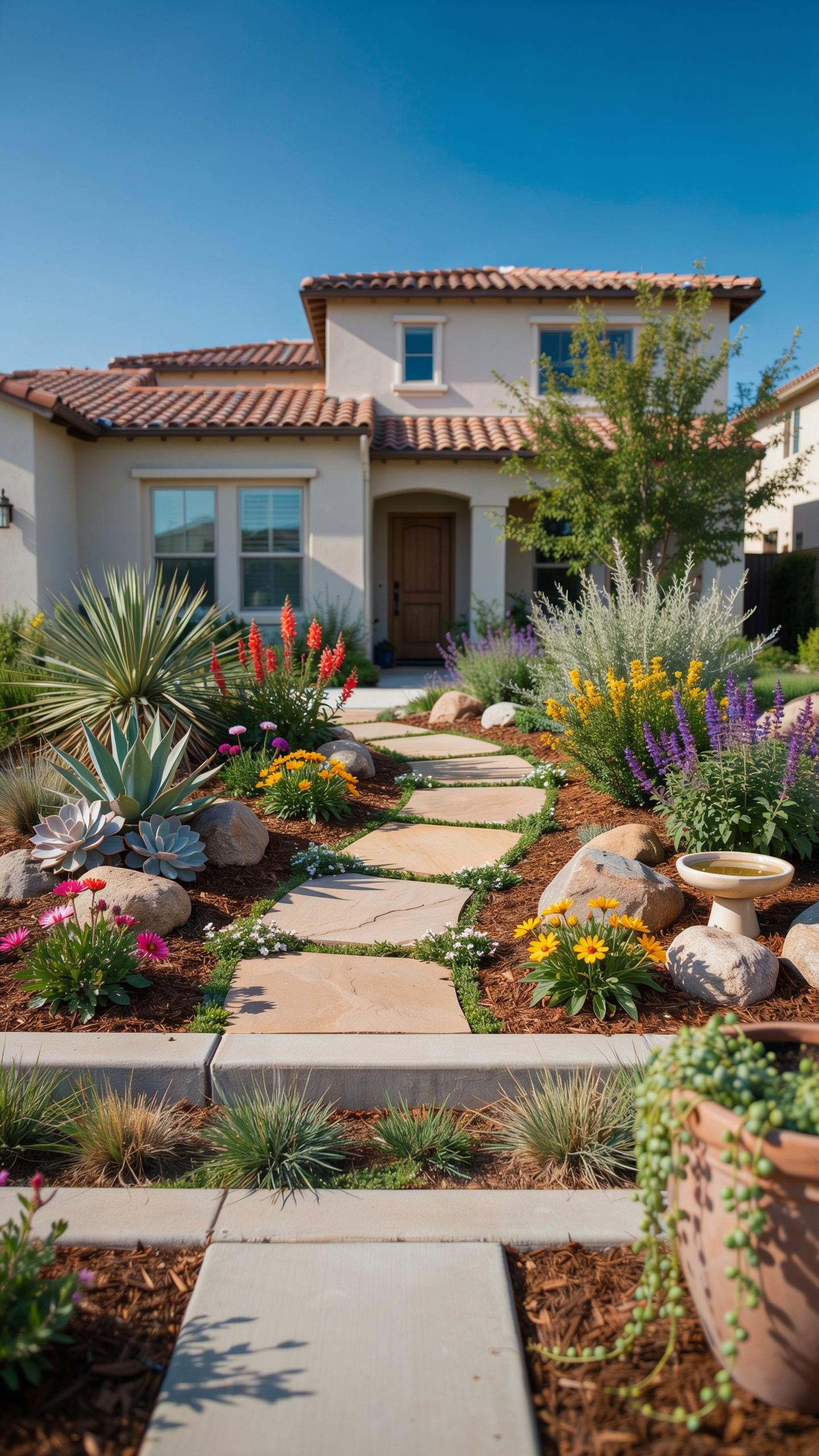
Water-efficient landscapes demand intentional visual structure because you cannot rely on dense greenery for impact. Use hardscaping materials like gravel, flagstone, and decomposed granite to create focal points and define spaces. Group plants by water need to simplify maintenance and prevent overwatering thirsty neighbors. Vary plant heights and textures to add visual depth without adding irrigation demands.

Color strategy matters more in low-water landscapes because you work with a narrower plant palette. Incorporate foliage colors like silvery artemisia, blue-green agave, and burgundy cordyline to create visual interest year-round. Use flowering plants strategically as accent pieces rather than mass plantings. Hardscape pathways and seating areas should form the design foundation, with plants functioning as supporting elements that enhance function and aesthetics simultaneously.
The Fundamentals Of Xeriscape Landscaping
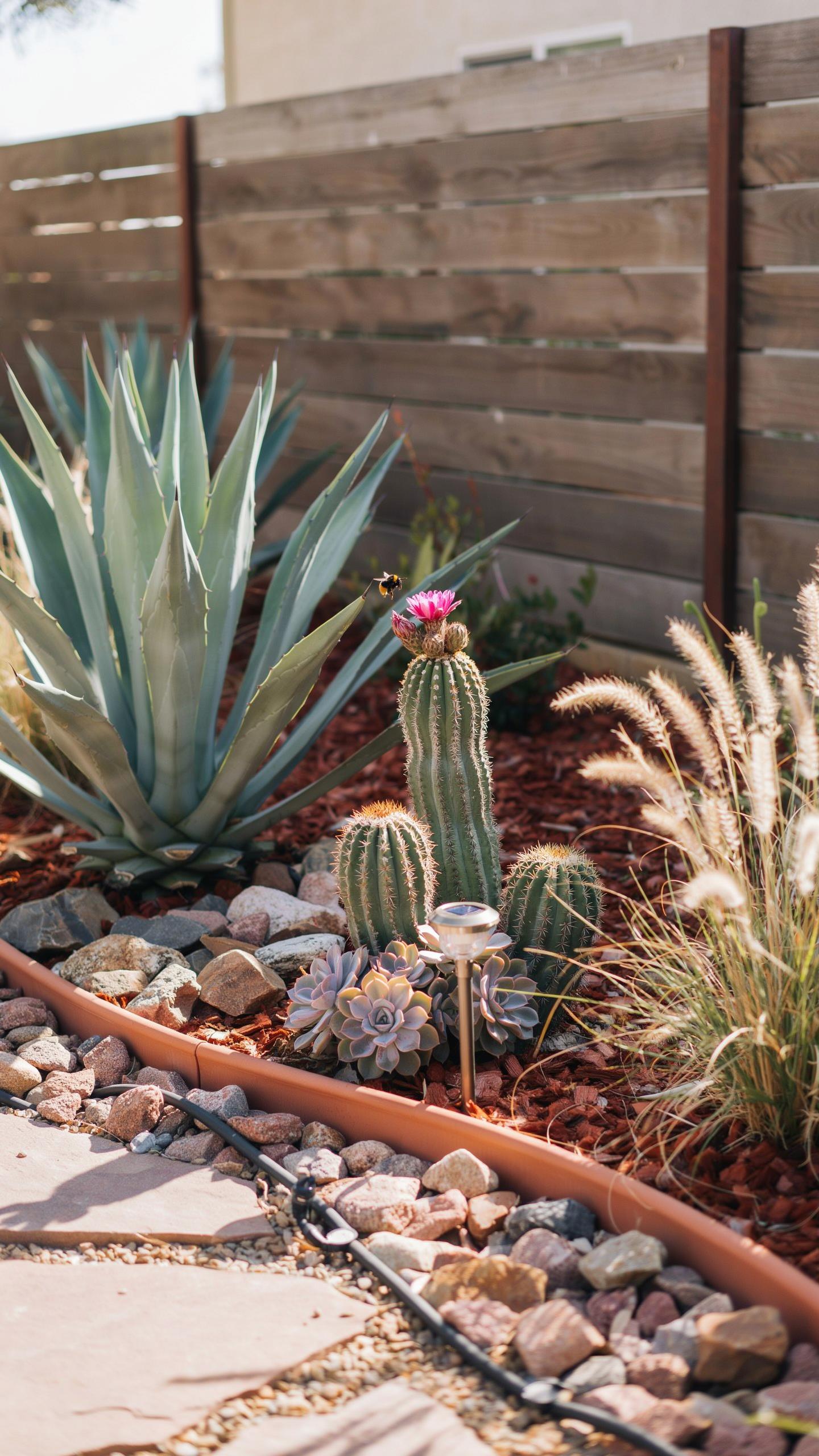
Seven Principles Of Xeriscaping
Xeriscaping emerged in Denver during the 1980s as a response to water scarcity. The approach applies seven core principles to reduce outdoor water consumption. These principles work together to create landscapes that function in arid climates without constant irrigation. They’re not optional add-ons. They’re the framework that determines whether your landscape survives or fails.
Each principle addresses a specific problem in water-intensive landscapes. Proper planning prevents waste before construction starts. Soil amendment improves water retention in native earth. Appropriate plant selection eliminates species requiring constant moisture. Practical irrigation design delivers water where plants need it. Maintenance schedules keep systems functioning efficiently. These aren’t theoretical concepts. They’re tactical decisions that reduce your water bill and maintenance costs immediately.
Best Plant Categories For Arid Regions
Native plants form the foundation of water-efficient landscapes because they adapted to local precipitation patterns over centuries. These species require minimal supplemental water once established. They survive on rainfall alone in most cases. Using non-natives forces you into permanent irrigation dependency. Native plants eliminate that problem entirely. Select species that thrive in your specific hardiness zone and soil conditions.
- Desert shrubs: Creosote, rabbitbrush, and saltbush handle extreme heat and alkaline soil. They establish deep root systems and demand minimal water after year one. Use them as framework plants throughout the landscape.
- Native grasses: Blue grama, buffalo grass, and sideoats grama require 40 percent less water than turf grass. They prevent erosion and provide seasonal color. Space them appropriately to avoid overcrowding.
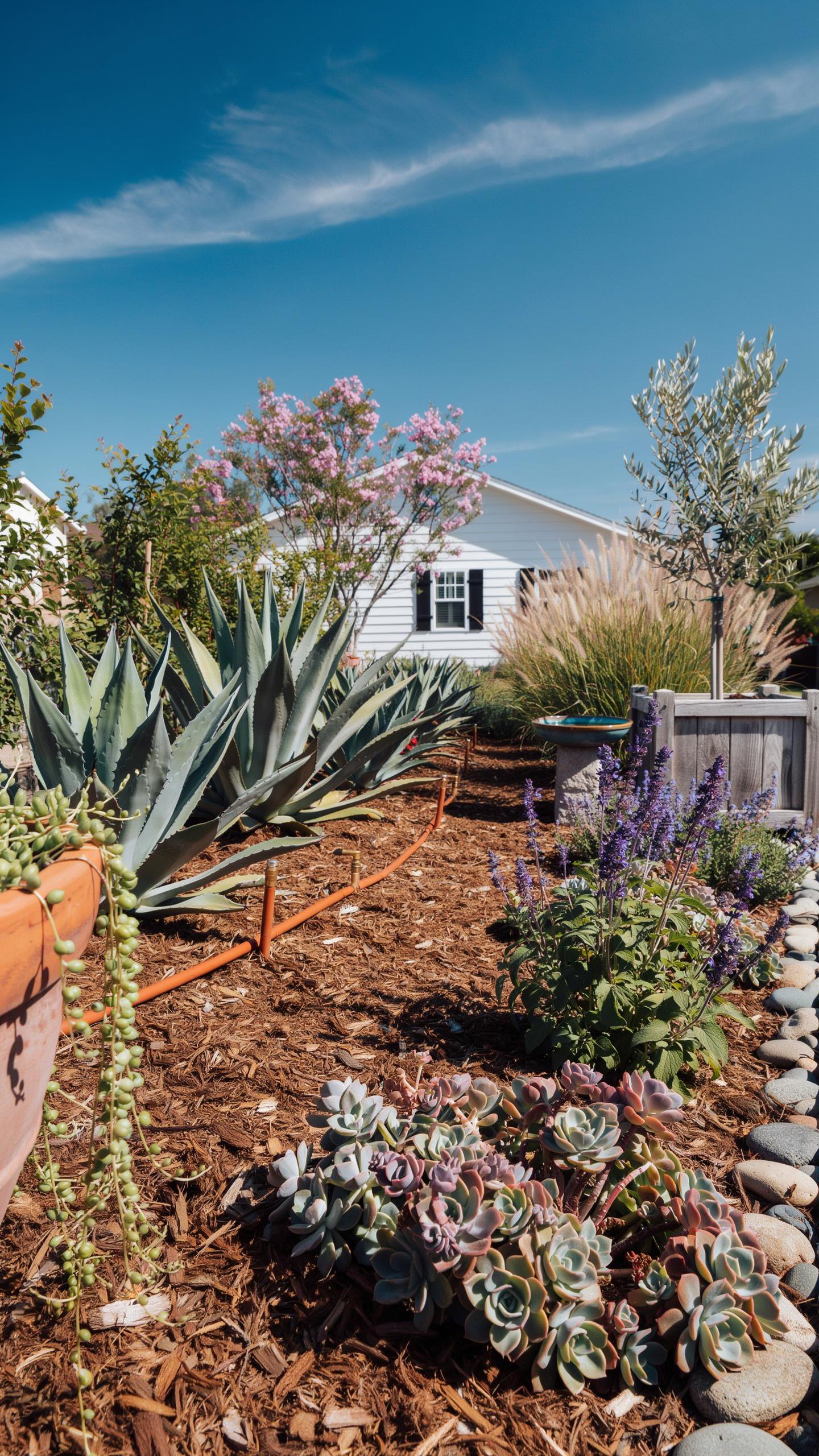
- Succulents and cacti: Agave, yucca, and prickly pear store water in their tissues. They handle drought stress better than any other plant category. Use them as accent plants or mass plantings in full sun areas.
- Native wildflowers: Desert marigold, blanket flower, and brittlebush add color without water demand. They attract pollinators and establish ground cover. Reseed annually for sustained blooms.
- Adapted trees: Mesquite, palo verde, and desert willow provide shade and structure. Their deep roots access groundwater unavailable to shallow-rooted plants. Space them 25 to 40 feet apart depending on mature size.

Grouping plants by water needs streamlines maintenance and prevents overwatering adjacent species. Plants with similar requirements cluster together in hydrozones. This approach cuts irrigation time in half compared to random placement. Strategic plant selection drives every decision in sustainable landscape design.
Stunning Low Water Landscape Ideas For Beginners
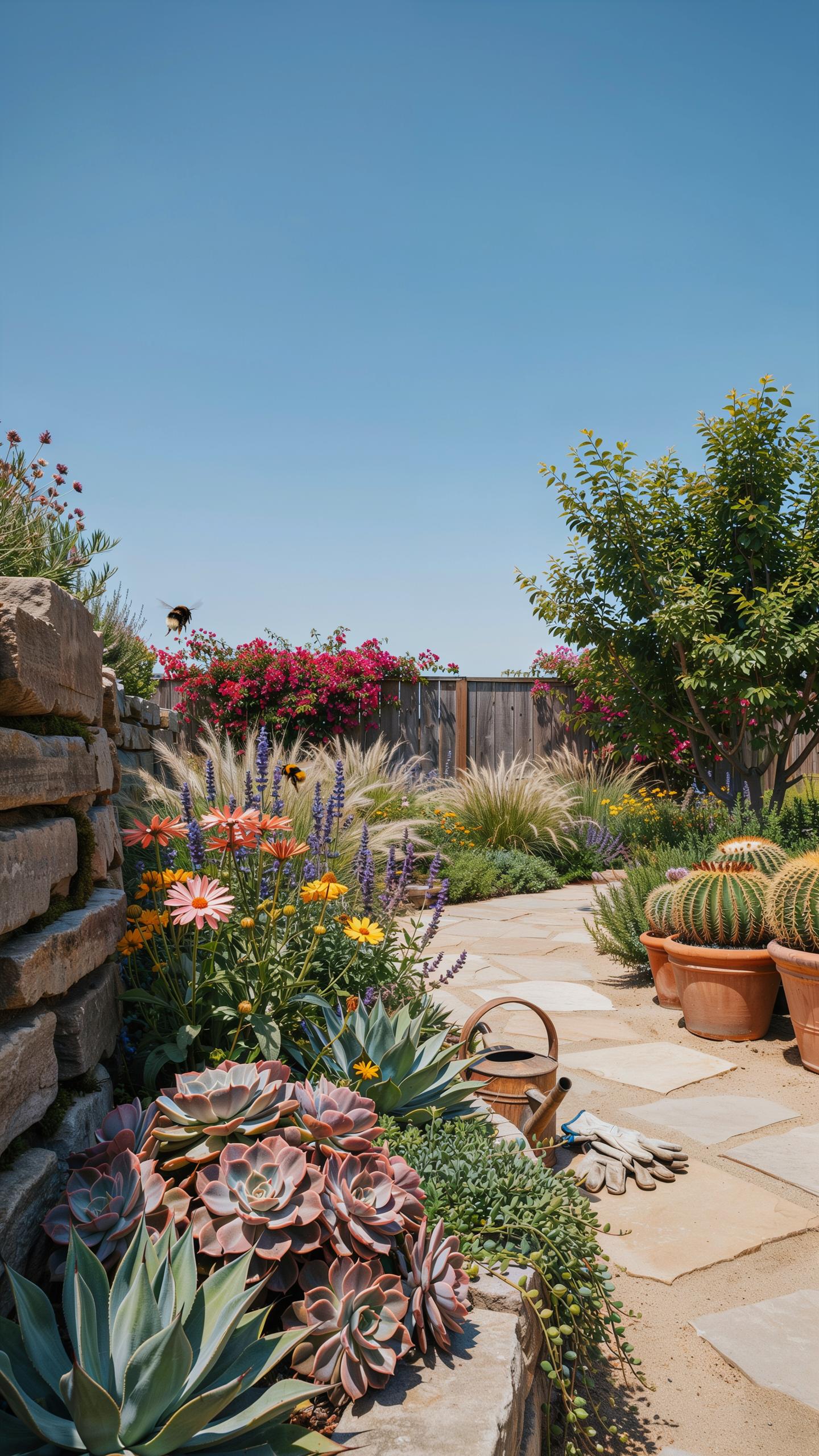
Hardscape Elements And Decorative Stone
Hardscape materials reduce water demand by replacing turf and water-dependent plants with functional surfaces. Stone, gravel, pavers, and mulch absorb less water than soil while managing runoff. These elements define space, improve drainage, and lower maintenance costs. Strategic hardscape placement creates visual structure without irrigation overhead.
Decorative stone serves dual purposes: it regulates soil temperature and reduces evaporation around plants. Gravel and decomposed granite compact over time, creating stable pathways while allowing water infiltration. River rock and flagstone add durability for high-traffic zones. Choose locally sourced stone to cut transportation costs and match regional aesthetics.
Creating Microclimates And Zoning Plants By Water Need
Microclimates form naturally through sun exposure, wind patterns, and soil composition. South-facing slopes dry faster than north-facing slopes. Buildings and walls create rain shadows that receive less moisture. Mapping these zones before planting ensures each plant gets appropriate water availability without waste.

Group plants by water requirements into distinct zones rather than scattering them randomly. High-water plants cluster near downspouts and low points where water collects naturally. Drought-tolerant plants occupy elevated areas and full-sun exposures. This zoning approach cuts irrigation runtime and prevents overwatering drought-adapted species that require minimal supplemental water.
Designing A Functional Dry Garden
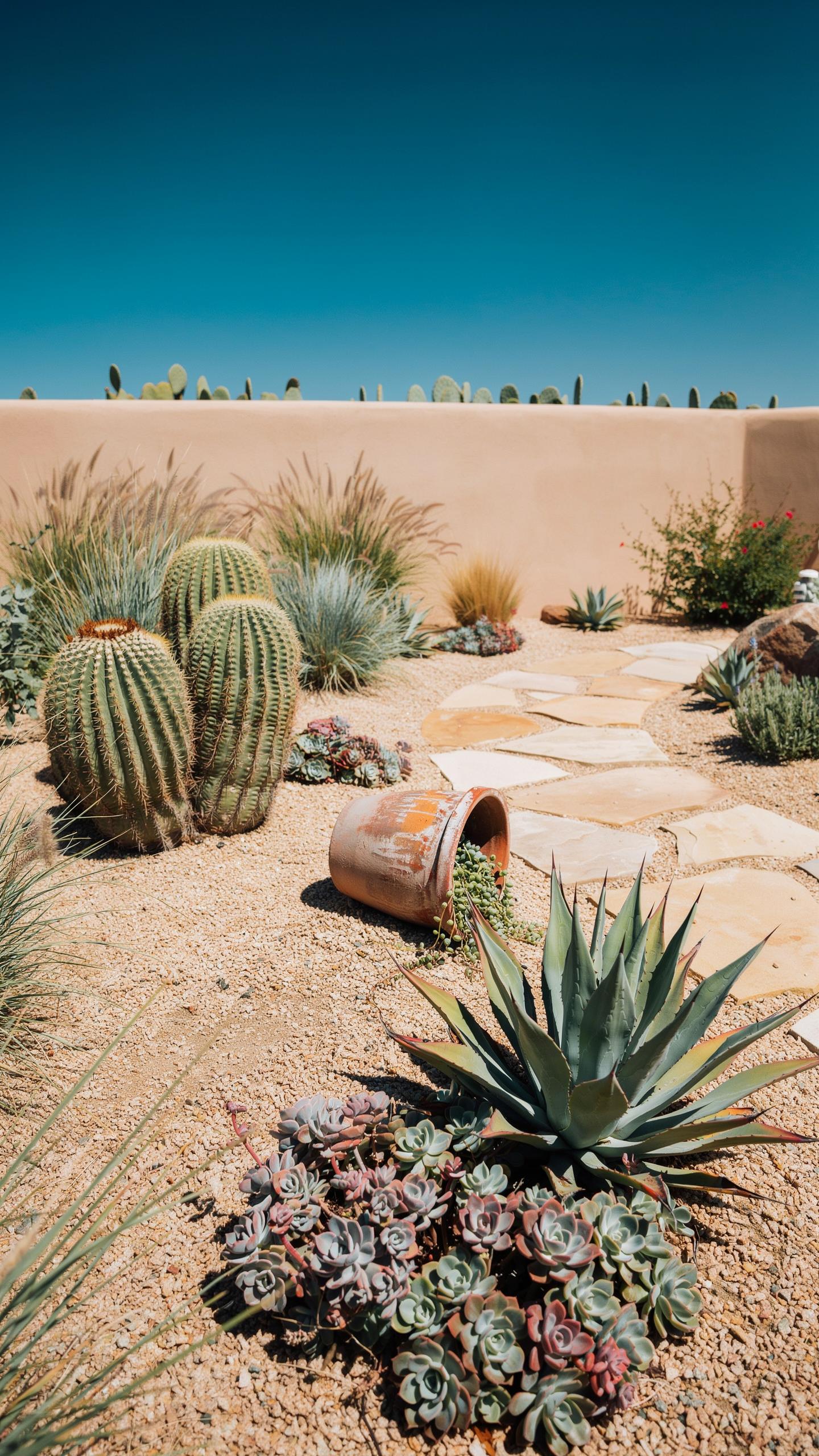
Soil Amendments
Dry soil lacks organic matter and water-holding capacity. You need to add compost, aged bark, and coconut coir to improve soil structure. These amendments create pore space that captures and holds moisture. Work amendments into the top 8 to 12 inches of soil before planting. This one-time investment pays off by reducing watering frequency throughout the growing season.
Native soil in low-water zones often contains clay or sand in poor ratios. Adding 2 to 3 inches of quality compost fixes drainage problems and water retention issues simultaneously. The organic material binds soil particles together, preventing water runoff. Reapply compost every 2 to 3 years as it breaks down. This maintenance cycle keeps soil functioning at peak efficiency.
Mulching Methods
Mulch blocks evaporation and regulates soil temperature in dry climates. Apply 2 to 4 inches of wood chips or shredded bark around plants, keeping material 3 to 6 inches away from plant stems. This barrier reduces soil water loss by 50 percent or more depending on climate. Replenish mulch annually as it decomposes. Consistent mulch depth is critical for consistent moisture retention.
Rock and gravel mulches reflect heat instead of moderating it, making them poor choices for water conservation. Wood-based mulches outperform inorganic options by maintaining cooler soil temperatures and adding organic matter over time. Choose mulches sized appropriately for your plants. Finer mulches work for small perennials while coarser chips suit shrubs and trees.
Step By Step Guide On How To Xeriscape
Site Preparation And Existing Turf Removal
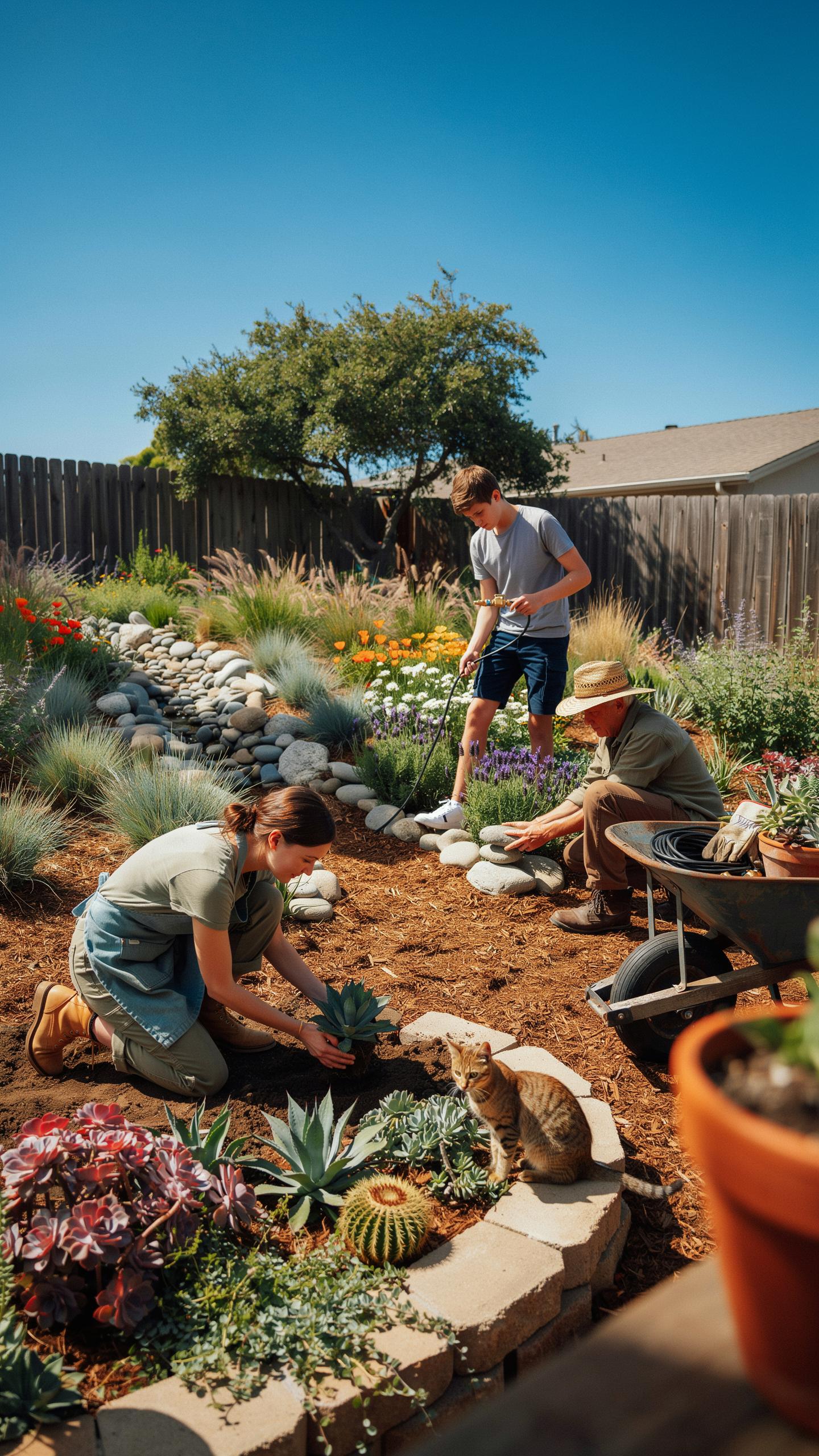
Remove existing turf mechanically or chemically before installation. Mechanical removal strips away the top layer of grass and roots with equipment or manual labor. This approach takes one to two weeks. Chemical removal uses herbicides and requires waiting for vegetation to die before clearing debris. Both methods expose the soil beneath, which you then amend based on soil testing results.
Analyze your soil composition after turf removal. Test drainage, pH, and nutrient levels to understand what you’re working with. Most low water zones require soil that drains quickly but retains minimal moisture. Add sand or gravel to heavy clay soils. Mix in organic matter only if your native soil lacks it, since most xeriscaping plants prefer lean soil conditions.
Step By Step Planting And Installation Guidelines
Group plants by water needs before placing them in the landscape. This practice, called hydrozoning, prevents overwatering drought tolerant species. Cluster high water plants together in one zone, moderate water plants in another, and low water plants in a third zone. This setup allows you to run separate irrigation systems or hand water specific areas without wasting water on plants that don’t need it.
- Soil Preparation At Planting: Dig holes twice as wide as the root ball but no deeper. Backfill with native soil mixed minimally with compost. Avoid planting too deep, as this causes root rot in drought tolerant species that evolved in shallow, compacted soils.
- Spacing Requirements: Space plants according to their mature width, not their current size. Undersized plants seem sparse initially but fill in within two to three years. Crowding plants causes competition and disease pressure.
- Mulch Application: Apply two to three inches of mulch around plants after installation. Use rock, gravel, or bark. Mulch regulates soil temperature and reduces water evaporation. Keep mulch one inch away from plant stems to prevent rot.
- Irrigation Timing: Install drip lines or soaker hoses at soil level before placing mulch. Run irrigation during early morning hours to minimize evaporation. Water deeply but infrequently during the establishment period, typically the first growing season.
- Plant Establishment Watering: Water newly planted trees and shrubs weekly for the first year. Reduce frequency by month six as root systems expand. Desert adapted plants require less water than temperate species but still need consistent moisture while establishing.

Water depth matters more than frequency during plant establishment. Apply water slowly to allow deep penetration rather than surface runoff. Most xeriscape plants establish faster with one deep watering per week rather than multiple shallow waterings. Once plants complete their first full growing season, reduce irrigation frequency based on rainfall and species requirements.
Essential Water Wise Landscaping Techniques
Drip Irrigation
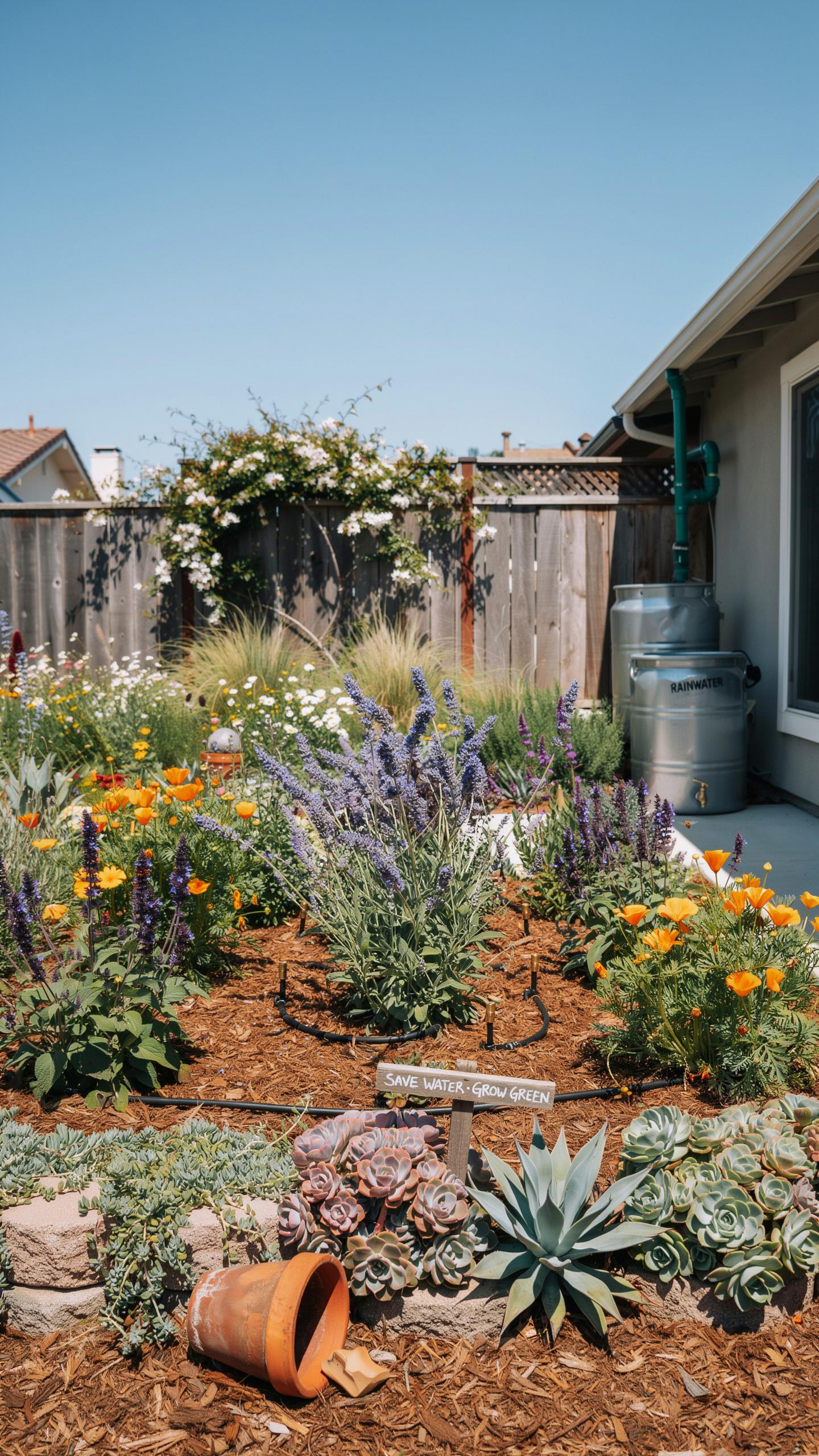
Drip irrigation delivers water directly to plant roots through emitters, tubing, or soaker lines. This method reduces water loss to evaporation and runoff compared to sprinklers. You install drip systems at soil level where plants need water most. The result is lower water consumption while plants receive consistent moisture.
Drip systems work on low pressure, which means you can run them from rain barrels or standard outdoor faucets. Maintenance involves clearing clogged emitters and winterizing lines in cold climates. Most systems pay for themselves within two to three seasons through reduced water bills. Installation takes a weekend and requires no digging or trenching in most applications.
Rainwater Harvesting And Rain Gardens
Rain gardens are shallow depressions planted with native species that capture and filter stormwater runoff. They reduce landscape watering needs while eliminating excess water that typically flows to storm drains. Position rain gardens downhill from roof gutters, patios, or driveways to intercept runoff. Well-designed rain gardens drain within 24 to 48 hours to prevent mosquito breeding and plant stress.
Rainwater harvesting involves collecting roof runoff in barrels, cisterns, or underground tanks for later use. A typical residential roof collects 600 gallons of water per inch of rainfall. Store this water for drip irrigation or hand watering during dry periods. Both techniques reduce municipal water demand and lower your utility costs while managing stormwater naturally.
Creating An Inviting Xeriscape Backyard
Outdoor Living Spaces In Dry Climates
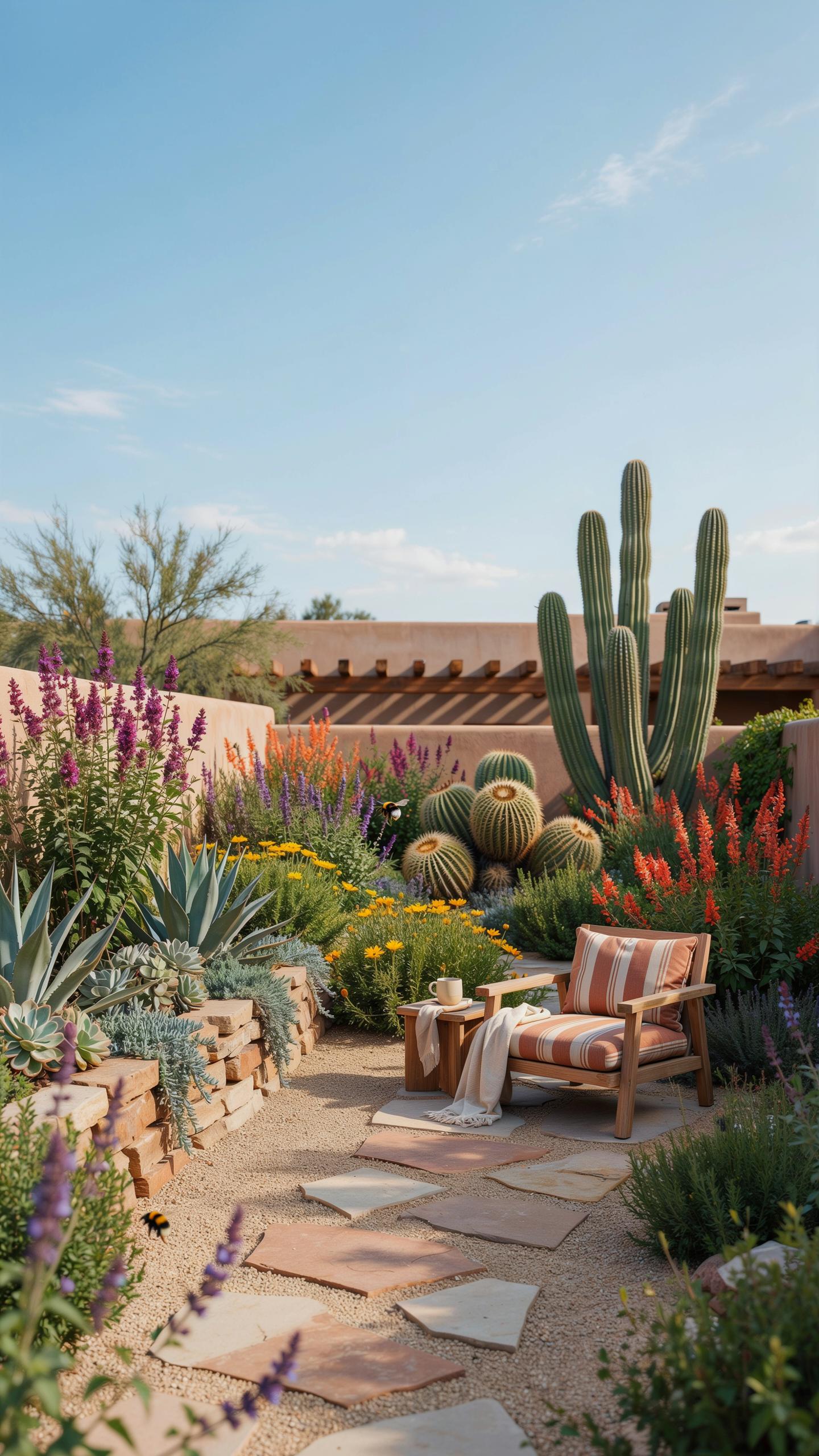
Outdoor living spaces in dry climates require strategic material selection and layout planning. Use hardscaping elements like decomposed granite, flagstone, and permeable pavers to define seating areas while reducing irrigation needs. Position shade structures using pergolas or shade cloth to make spaces usable during peak heat hours. These decisions reduce water demand while creating functional zones for recreation and entertainment.
Furniture placement and material choice directly impact comfort and maintenance in arid regions. Select weather-resistant materials that withstand temperature fluctuations without requiring water-based maintenance. Metal, composite wood, and concrete furniture perform well in dry climates. Design pathways and seating areas to maximize shade from existing structures and strategically placed shrubs, reducing cooling costs and improving usability.
Grass Alternatives For Pet Friendly And Low Maintenance Grass Alternatives
Pet-friendly grass alternatives perform better than turf in low-water zones while handling animal traffic effectively. Clover varieties tolerate foot traffic, require minimal fertilizer, and attract pollinators. Sedges like Carex species thrive in dry conditions and withstand pet activity. Buffalo grass and blue grama provide native options in western regions that endure heavy use while needing infrequent water and no mowing beyond seasonal maintenance cuts.

Hardscape alternatives work for areas where living ground covers don’t suit your needs. Mulched pathways using wood chips or bark absorb impact from pet movement while suppressing weeds. Decomposed granite and pea gravel create durable play surfaces that drain quickly and require no irrigation. These options eliminate maintenance cycles while providing durable, pet-safe surfaces year-round.
Selecting Drought Resistant Landscaping Plants
Resilient Shrubs And Trees For Canopy Cover
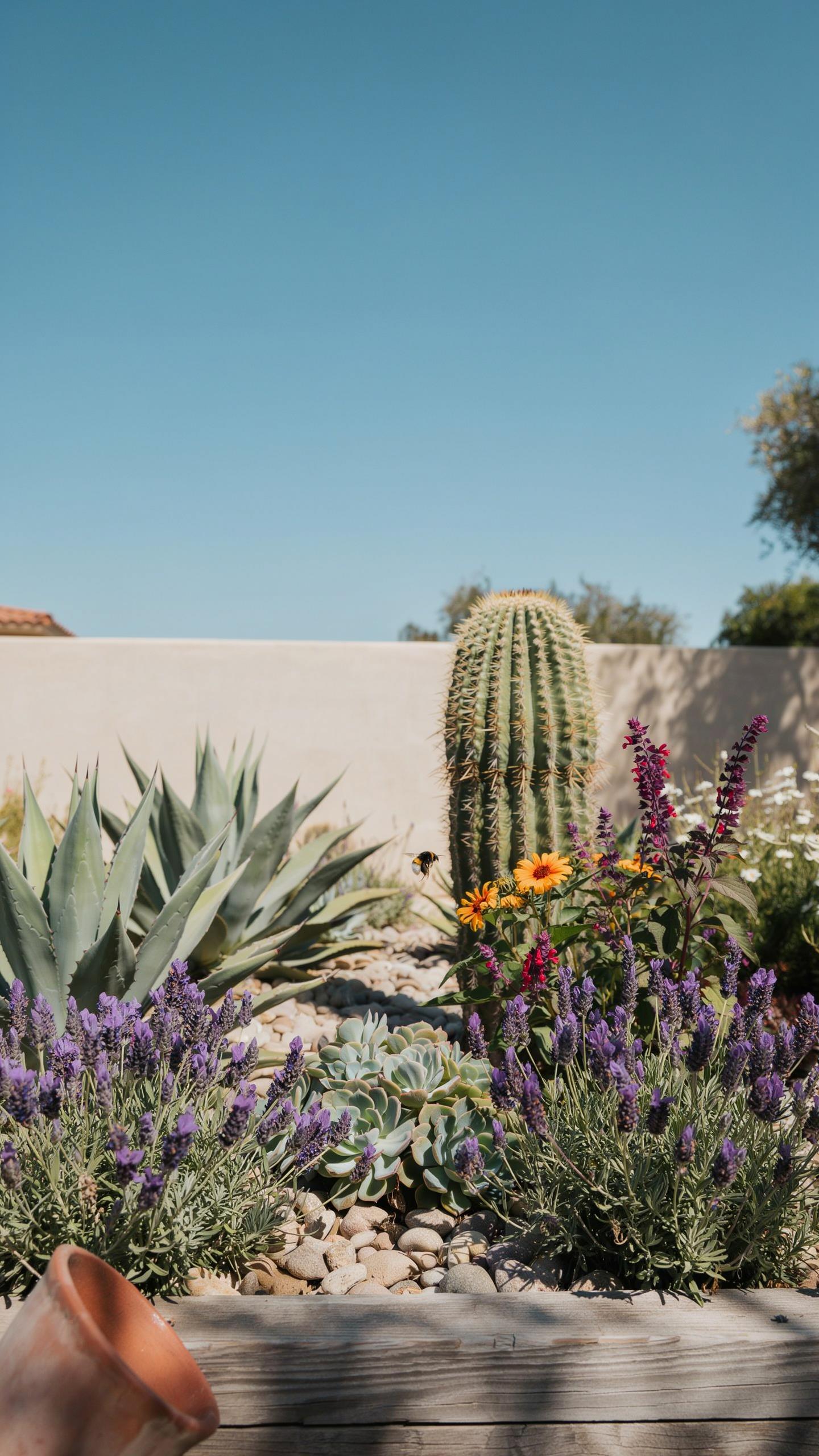
Shrubs and trees form the structural backbone of low-water landscapes. They establish canopy cover that reduces soil evaporation and moderates ground temperature. Native species adapted to your region require less supplemental water once established. Select plants with deep root systems that access moisture below the surface. Avoid species bred for ornamental appeal in wet climates.
Trees like mesquite, acacia, and juniper thrive in arid regions with minimal irrigation. Shrubs such as Texas privet, Apache plume, and desert marigold establish quickly in low-water zones. These plants tolerate temperature extremes and poor soil conditions. Their presence creates microclimates that benefit surrounding plantings. Choose mature sizes that fit your space to avoid future removal costs.
Utilizing Succulents And Ornamental Grasses For Texture
Succulents store water in leaves and stems, eliminating frequent watering needs. Agave, yucca, and prickly pear provide architectural forms while requiring minimal maintenance. These plants survive on rainfall alone in most low-water regions. They offer year-round visual structure without seasonal die-back. Position them as focal points or mass plantings for maximum impact.
Ornamental grasses add movement and texture to dry landscapes. Species like blue fescue, buffalo grass, and sideoats grama tolerate drought and poor soils. Grasses establish quickly and reduce erosion through dense root networks. They transition through seasons with color changes that eliminate the need for flowering plants. Combine grasses with succulents to create layered, functional designs.
Smart Irrigation For A Water Wise Property
Smart Controllers And Soil Moisture Sensors
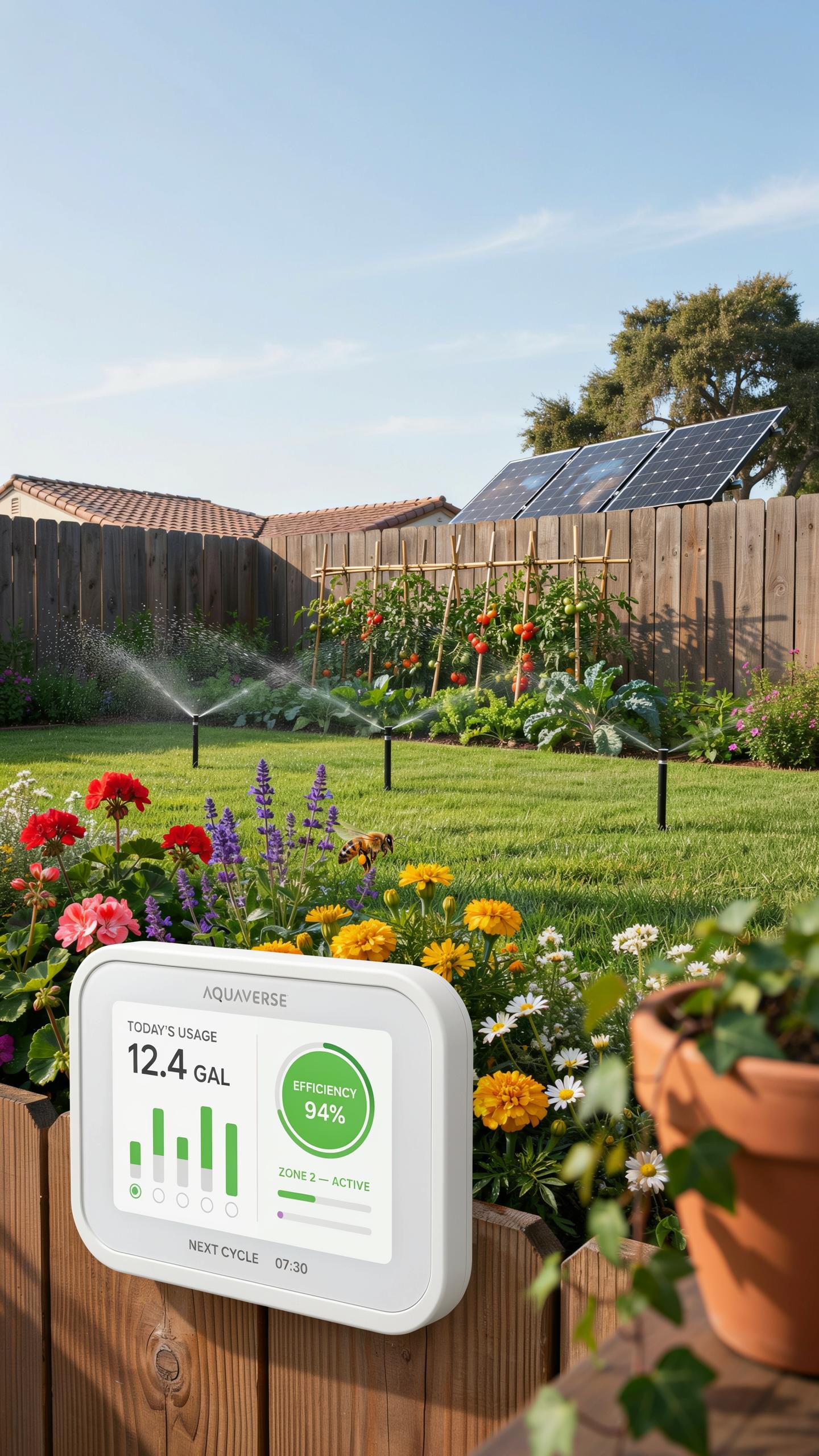
Smart irrigation controllers cut water waste by adjusting schedules based on real conditions, not guesses. These devices connect to weather data and soil sensors to deliver water only when plants need it. They eliminate the fixed timer approach that wastes thousands of gallons annually on overwatering.
Soil moisture sensors measure water content at root depth where it matters. Install sensors in representative planting zones at 6 to 8 inches below the surface. Controllers read these sensors and skip watering cycles when soil moisture is adequate, reducing water use by 20 to 50 percent depending on your climate and plant selections.
Seasonal Watering Adjustments And Long Term Management
Adjust controller settings quarterly to match plant growth cycles and seasonal rainfall patterns. Spring and early summer demand more water as plants establish and heat increases. Fall and winter reduce watering frequency as temperatures drop and growth slows. Winter irrigation becomes minimal in cold climates where soil freezes.
Track your property’s water performance over multiple years to refine schedules. Record monthly water bills, rainfall amounts, and plant health observations. This data reveals patterns specific to your site’s soil type, slope, and sun exposure. Update controller settings annually based on what actually happened, not industry averages that ignore local variation.
Frequently Asked Questions

What exactly are low water zones and why are they important for sustainability?
Low water zones, often referred to as hydrozoning, involve grouping plants with similar moisture needs together to maximize irrigation efficiency. This cornerstone of sustainable landscaping low water zones ensures that drought-tolerant species aren’t overwatered while thirstier plants get exactly what they need. By organizing your yard this way, you significantly reduce overall water waste, lower your monthly utility bills, and create a resilient outdoor environment that thrives during dry spells.
How do I successfully transition my current yard into a low water landscape?
Start by mapping your yard’s natural sun exposure and drainage patterns. Once identified, replace thirsty turf with native perennials and succulents that flourish in your specific climate. Implementing sustainable landscaping low water zones requires layering organic mulch to retain soil moisture and installing a drip irrigation system. This targeted approach delivers water directly to the roots, preventing evaporation and ensuring your new plants establish themselves deeply and quickly.
Is it possible to create an eco-friendly landscape if I am on a tight budget?
Absolutely! You can build a stunning landscape without a massive investment by starting small and using cost-effective materials like gravel, wood chips, or reclaimed stone for pathways. Propagating plants from cuttings or attending local seed swaps is a great way to source native species for free. Over time, these affordable additions create functional zones that require less maintenance and expensive fertilizers, making your gardening journey both eco-friendly and financially savvy.