Embrace Native Planting For Eco Friendly Landscaping Inspiration
Why Native Species Thrive Best
Native plants evolved in your region over thousands of years. They match your local soil chemistry, water availability, and temperature patterns. This alignment means they need less fertilizer, fewer pesticides, and minimal supplemental watering once established. You spend less time and money maintaining them.
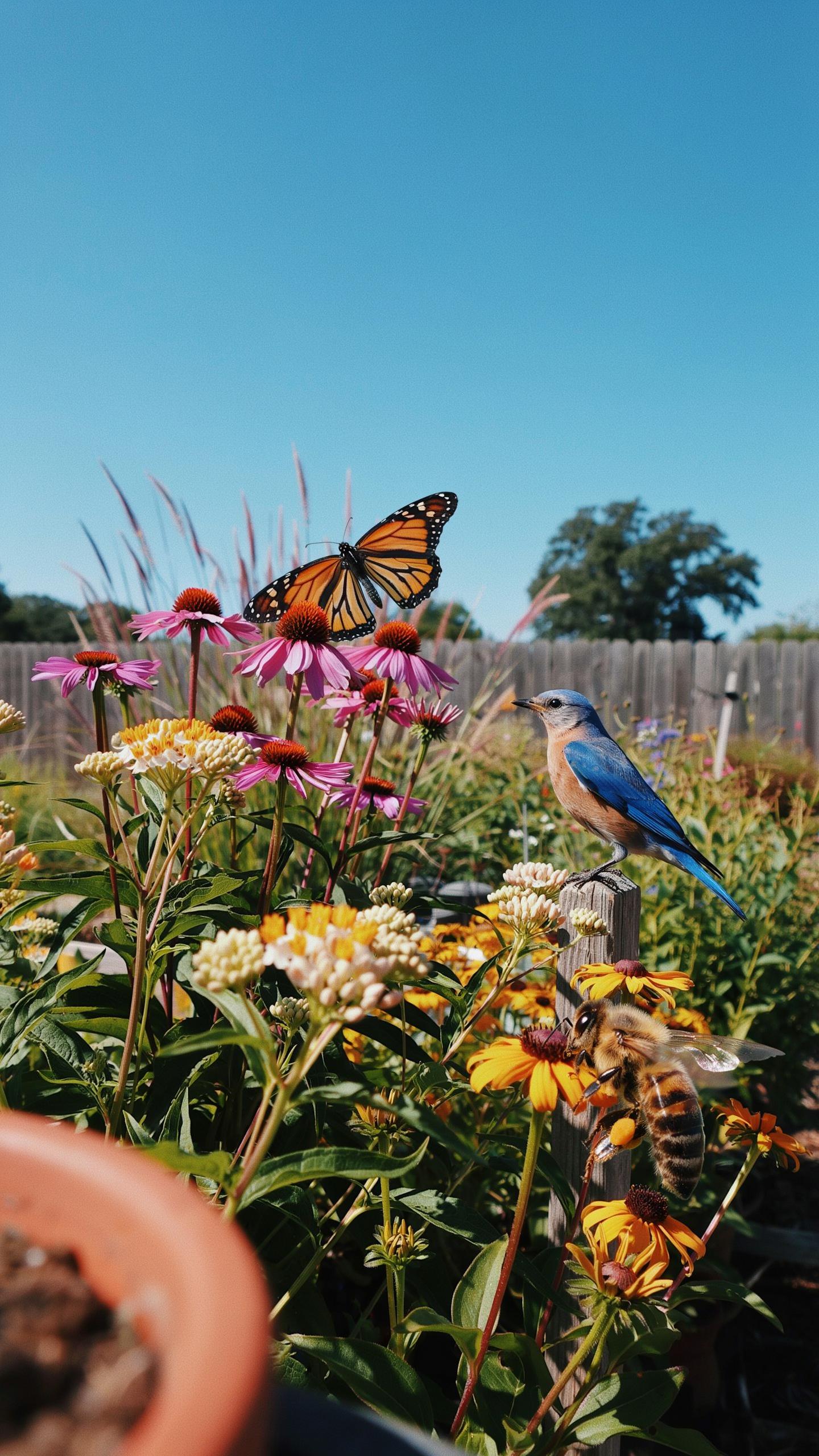
Native plants resist local pests and diseases naturally because they developed alongside regional insects and pathogens. Your yard becomes self-regulating. Birds, beneficial insects, and other wildlife depend on these plants for food and shelter. Supporting native species strengthens your entire local ecosystem while reducing your reliance on chemical inputs.
Selecting Plants For Biodiversity
A single plant type creates a dead zone. Mix native wildflowers, shrubs, and trees of varying heights and bloom times. This layered approach feeds pollinators across seasons. Bees need nectar from spring through fall. Butterflies require specific host plants for caterpillars. Regional birds hunt insects in your shrub layer and nest in your trees.
Diversity also builds resilience against disease and pest outbreaks. When one species struggles, others fill the gap. Your yard functions like a real ecosystem instead of a monoculture. Research which native species flourish in your specific zone and soil type. Local native plant societies and extension offices provide region specific plant lists and sourcing guidance.

Conserve Resources With Eco Friendly Home Landscaping Tips
Implementing Smart Irrigation Systems
Drip irrigation delivers water directly to plant roots rather than spraying it across your yard. This method cuts water waste by 50 percent compared to traditional sprinkler systems. Smart controllers adjust watering schedules based on soil moisture levels and weather patterns. You set the system once, and it handles the rest automatically.
Smart irrigation controllers use real time data to prevent overwatering. Soil moisture sensors detect when plants need water and when they don’t. Weather based controllers skip watering when rain falls. This precision approach reduces your water bill while keeping plants healthy.
Essential Water Conservation Practices
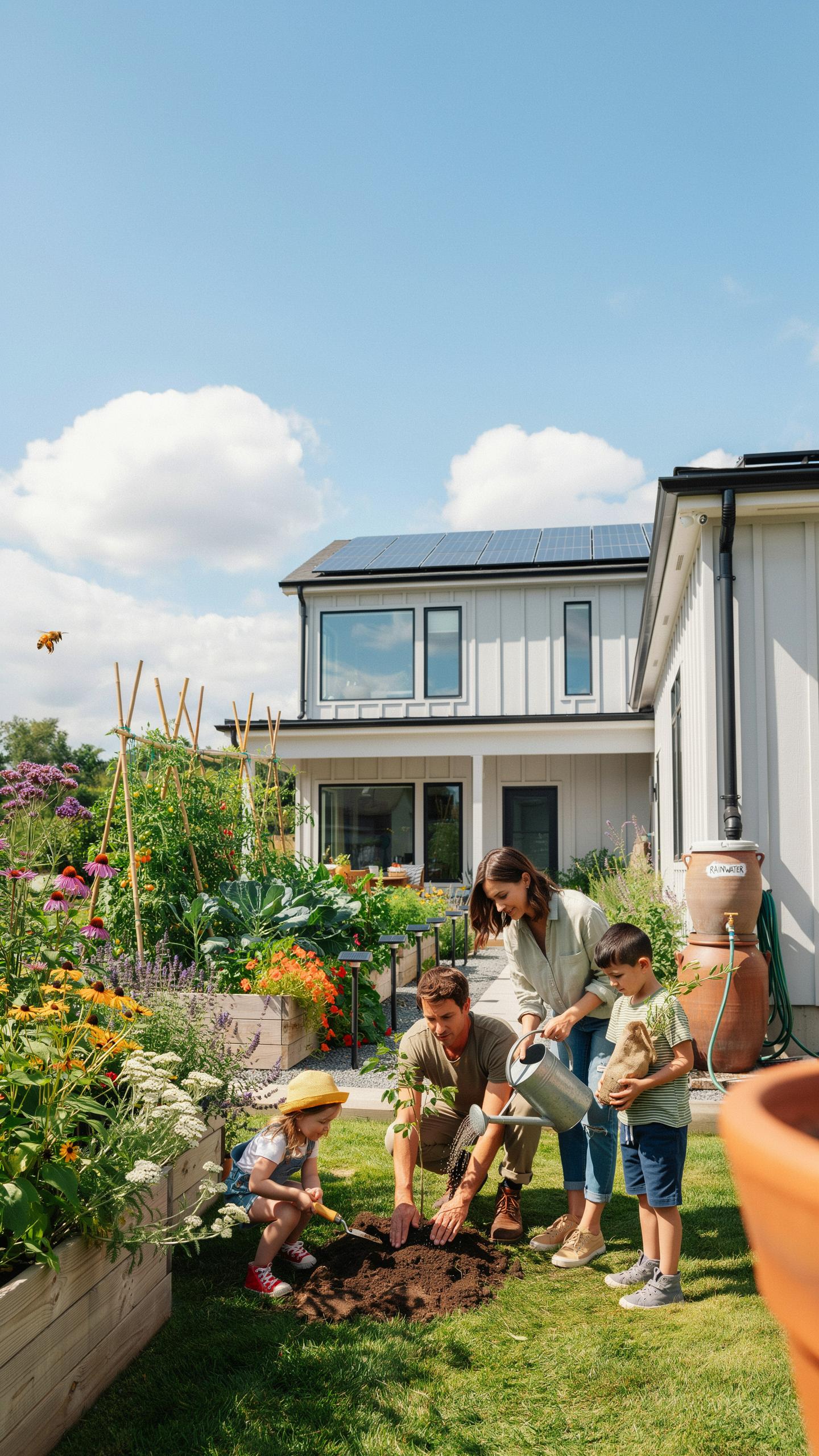
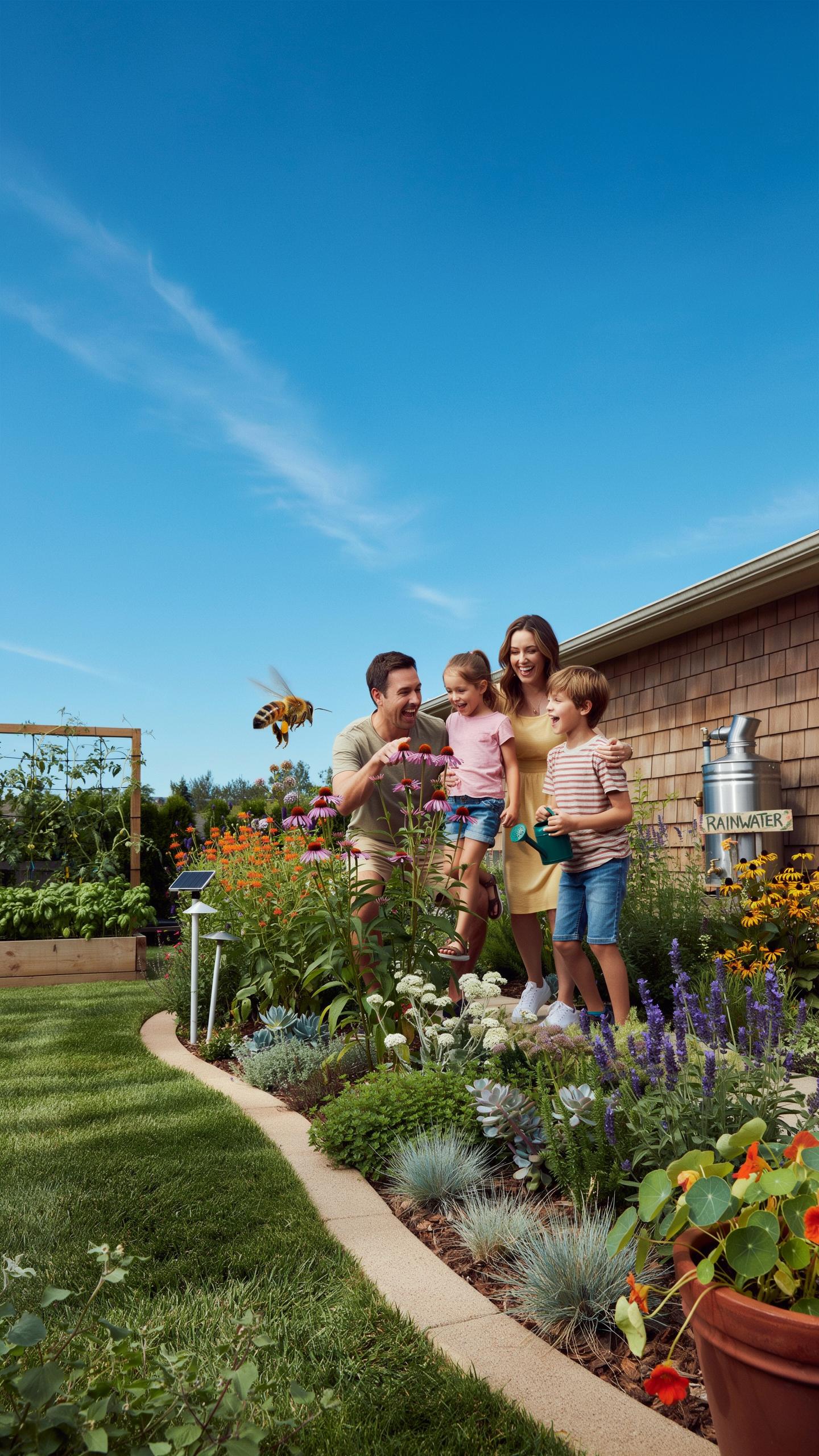
Collect roof runoff using rain barrels to capture free water for your garden. Grouping plants by water needs prevents overwatering thirsty plants and drowning ones that need less. Early morning watering reduces evaporation loss from heat and wind throughout the day.
- Rain Barrels: Capture hundreds of gallons annually from roof runoff to use during dry periods and reduce municipal water dependency.
- Plant Grouping: Organize hydrozones by grouping plants with matching water requirements to eliminate waste from overwatering low need species.
- Early Morning Watering: Water between 5 AM and 8 AM when temperatures are cool to maximize soil absorption and minimize surface evaporation.
- Mulch Application: Add 2 to 3 inches of mulch around plants to reduce evaporation, regulate soil temperature, and decrease watering frequency.
- Soil Amendment: Mix compost into garden beds to improve water retention and reduce the frequency of irrigation cycles needed.

These practices work together to cut water use without sacrificing plant health or garden appearance. Implement them based on your yard’s specific conditions and plant selections.
Build Rich Soil With Eco Friendly Yard Maintenance
The Magic Of Backyard Composting
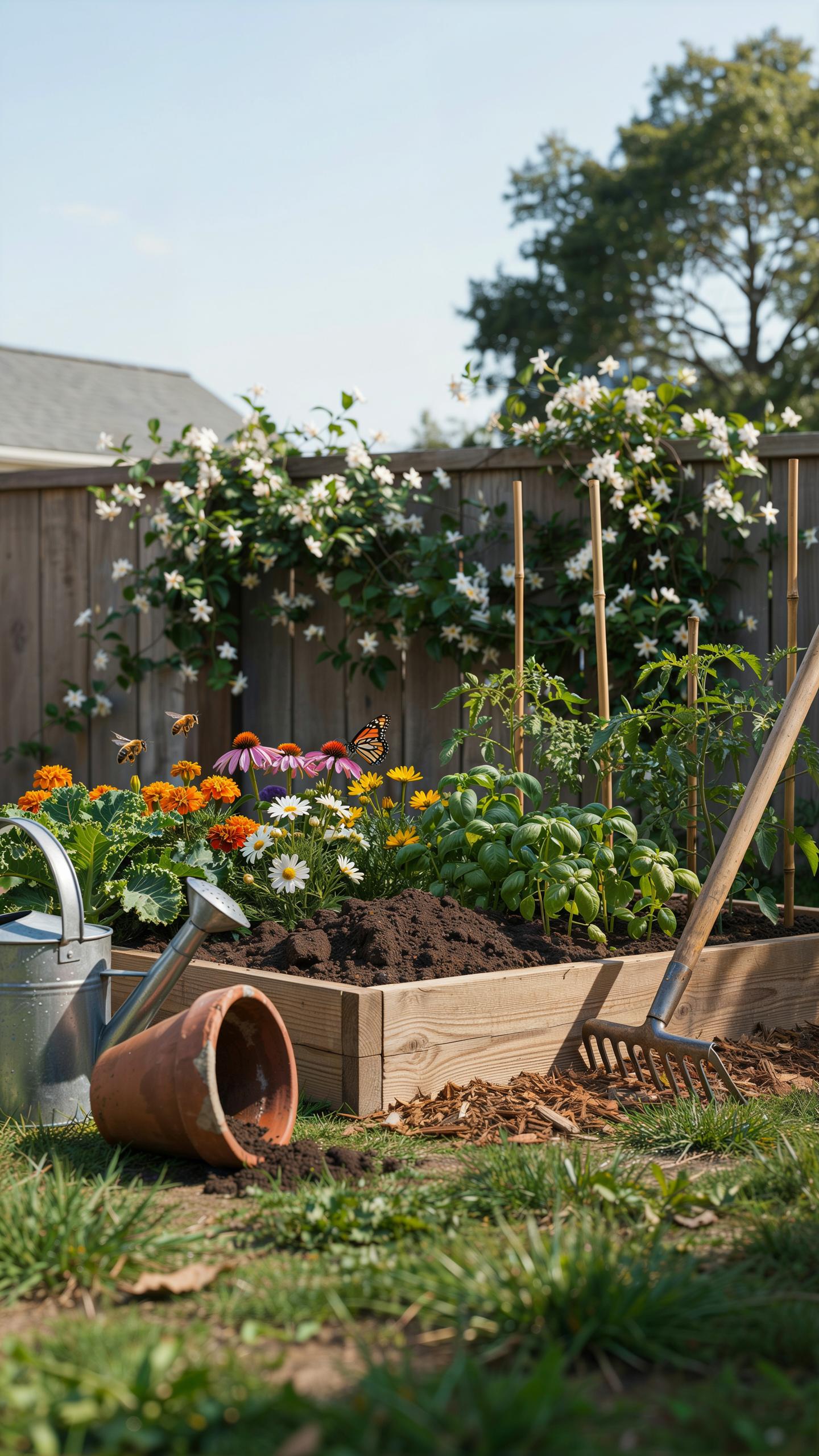
Composting breaks down organic kitchen scraps and yard waste into nutrient-rich soil amendment. The process accelerates natural decomposition, concentrating nitrogen, phosphorus, and potassium back into usable form. This eliminates the need for synthetic fertilizers while reducing landfill waste. Your garden beds gain improved structure, better aeration, and increased water retention capacity.
Start composting by layering nitrogen-rich materials like food scraps with carbon-rich materials like leaves and grass clippings. The microbial activity generates heat that kills weed seeds and pathogens. Most backyard systems produce finished compost within three to six months. You control the nutrient profile and eliminate chemical additives entirely from your soil system.
Mulching For Temperature And Moisture Control
Organic mulch such as wood chips, shredded bark, or fallen leaves creates a protective barrier over soil. This barrier suppresses weeds by blocking sunlight, regulates soil temperature by insulating against heat and cold extremes, and prevents rapid moisture evaporation from the root zone. Mulch also breaks down over time, adding organic matter that improves soil structure and microbial activity.

Apply mulch two to four inches deep around plants and trees, keeping it a few inches away from plant stems to prevent rot. Replenish mulch annually as it decomposes and settles. This maintenance reduces irrigation needs, cuts down on weeding labor, and prevents soil erosion during heavy rain events. The cost savings compound as your soil quality improves over consecutive seasons.
Transition Away From Turf With Eco Friendly Lawn Ideas
Planting Tapestry Lawns And Groundcovers
Traditional turf grass demands constant inputs: weekly mowing, frequent watering, and regular fertilizer applications. Tapestry lawns and low-maintenance groundcovers like clover and creeping thyme eliminate these demands. These alternatives establish themselves quickly, tolerate foot traffic, and provide year-round ground coverage without the resource drain of conventional grass.
Clover fixes nitrogen in soil, reducing fertilizer needs entirely. Creeping thyme thrives in poor soil and produces fragrant flowers that attract pollinators. Both spread laterally to fill bare patches and require mowing only a few times annually, if at all. The result is a functional green space that costs less to maintain while supporting local ecosystems.
Designing Functional Garden Path Zones
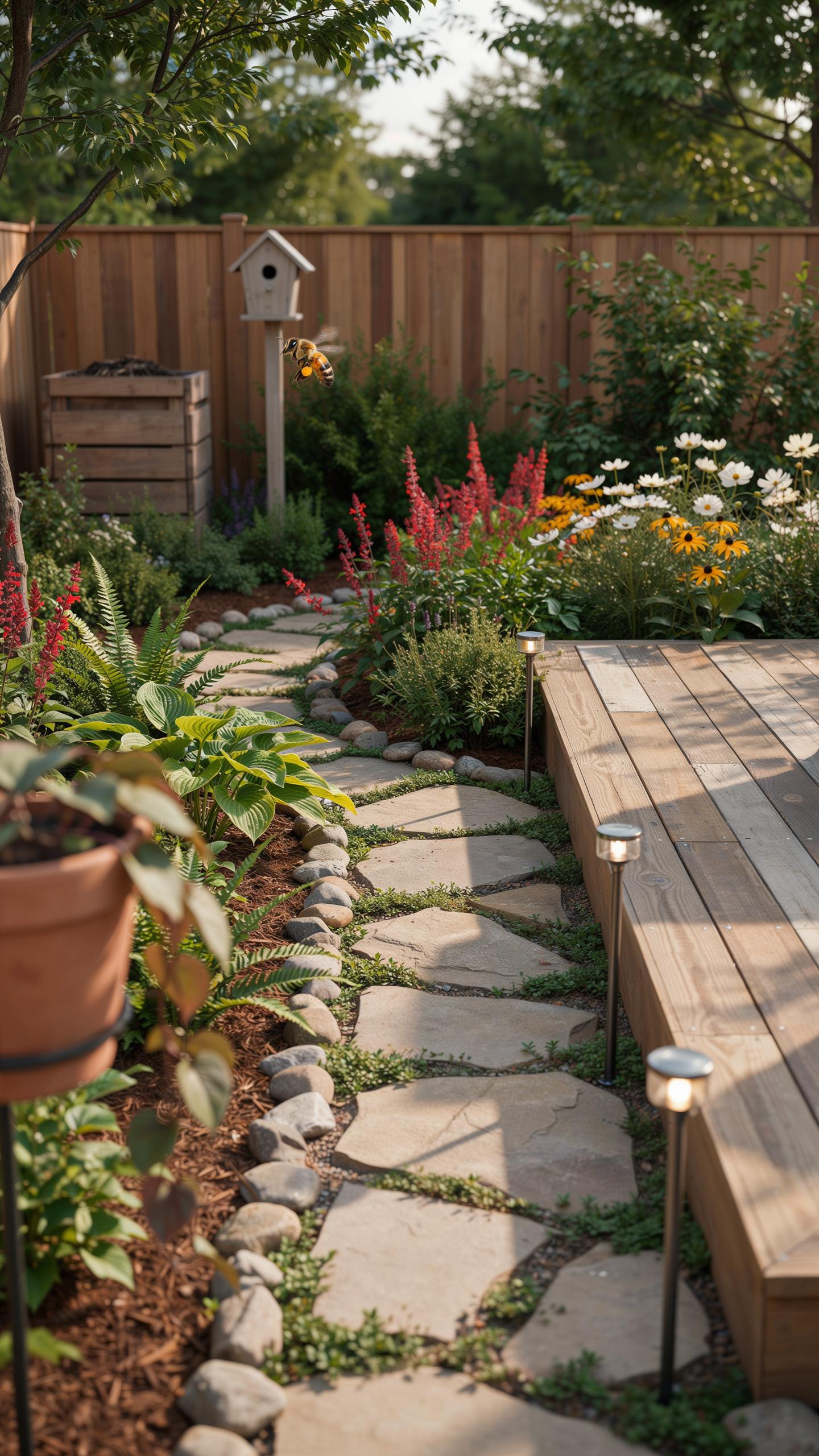
Breaking up continuous lawn with gravel or stepping-stone pathways accomplishes multiple objectives simultaneously. Pathways reduce the total turf area requiring maintenance, define distinct zones for different activities, and create visual structure within the yard. This strategic approach turns a monotonous grass expanse into a purposeful landscape.

Gravel paths drain quickly, suppress weeds beneath, and require minimal upkeep beyond occasional raking. Stepping stones embedded in groundcover or mulch create accessible routes while preserving permeable surfaces. Dry creek beds constructed between zones serve as functional drainage features and visual anchors. These hardscape elements work together to reduce both the lawn footprint and overall yard maintenance burden.
Choose Sustainable Materials For Eco Friendly Outdoor Landscaping
Sourcing Reclaimed And Recycled Hardscaping
Reclaimed wood, recycled brick, and local natural stone cut your yard’s carbon footprint immediately. These materials come from existing sources, eliminating the energy costs of new production. They arrive with weathered texture and patina that new materials cannot replicate, creating visual depth and authenticity in your outdoor space.
Using salvaged hardscaping materials supports local economies and reduces transportation emissions. Reclaimed materials often cost less than new alternatives because sellers want to clear inventory. Your patio or border gains character while your wallet and the environment both benefit from reduced manufacturing demand.
The glory of gardening: hands in the dirt, head in the sun, heart with nature. To nurture a garden is to feed not just on the body, but the soul.
Installing Permeable Paving Solutions
Permeable pavers let rainwater drain straight through the surface into soil below. This stops water from flooding storm drains and allows groundwater recharge in your area. The filtration process removes contaminants naturally, protecting local water quality without additional infrastructure costs.
Permeable paving prevents soil erosion around your yard’s edges and eliminates standing water that attracts mosquitoes. These pavers work in driveways, patios, and walkways where traditional concrete fails environmentally. Installation requires proper base preparation with gravel layers, but the long term water management benefits justify the upfront effort.
Create A Wildlife Haven In Your Eco Friendly Backyard
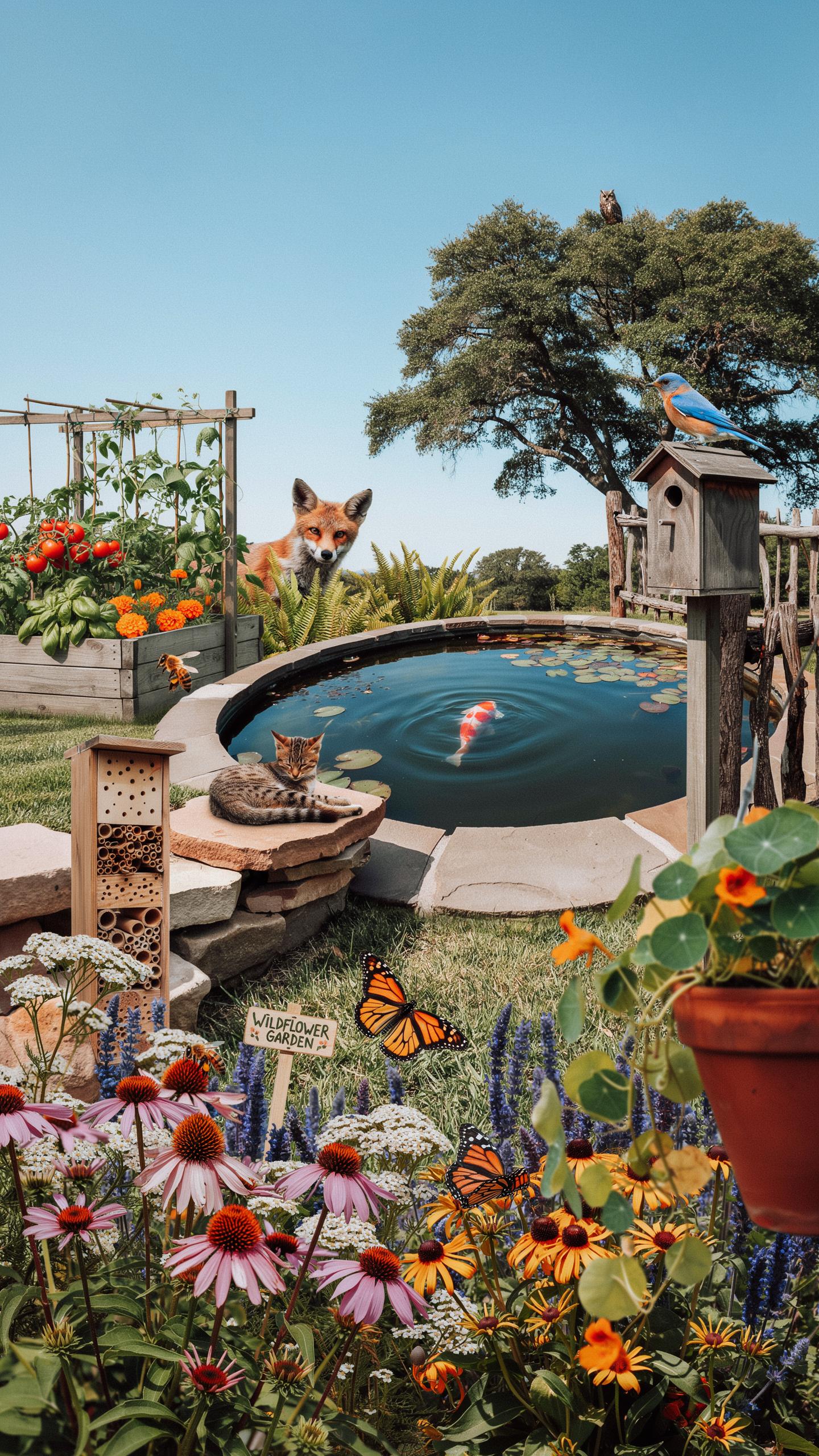
Providing Water And Shelter Stations
Water sources attract wildlife and serve a functional purpose in your yard. A birdbath provides drinking and bathing areas for birds. A small wildlife pond supports aquatic insects, amphibians, and dragonflies. Insect hotels, made from stacked wood and hollow stems, give beneficial insects winter shelter and nesting sites. These structures cost little to build or purchase and require minimal maintenance.
Placement matters for wildlife safety. Position birdbaths in open areas where birds can spot predators. Install ponds away from heavy foot traffic to prevent disturbance. Orient insect hotels toward morning sun exposure for warmth. Clean birdbaths weekly to prevent disease transmission. These stations transform your yard into a functioning ecosystem that supports multiple species year-round.
Cultivating Pollinator Friendly Borders
Pollinators need consistent food sources from spring through fall. Continuous blooms keep bees and butterflies fed during their active seasons. Coneflowers bloom mid-summer through frost. Asters flower late summer to autumn. Milkweed attracts monarch butterflies and other pollinators. Mix these perennials in borders to create reliable feeding zones throughout your growing season.

Plant borders in clusters of the same species for easy pollinator access. Space plants close enough to reduce flight distance between blooms. Avoid hybrid varieties that produce little nectar or pollen. Native perennials thrive with minimal water and maintenance once established. This design attracts beneficial insects while reducing your yard management workload.
Incorporate Cozy Elements With Eco Friendly Backyard Design Tips
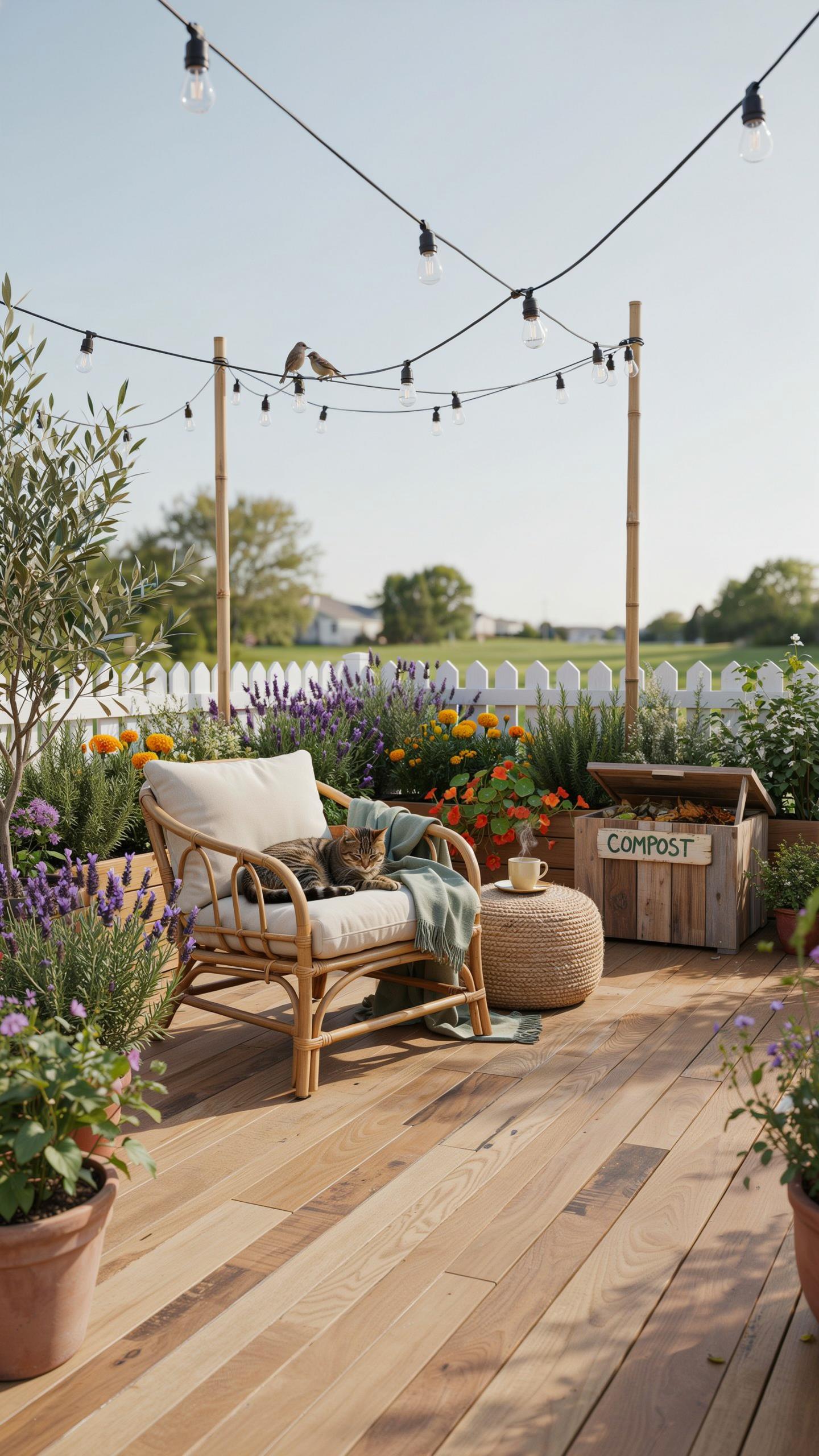
Designing Restful Solitary Outdoor Nooks
A bench placed under a mature shade tree creates an immediate retreat zone without requiring construction or materials. Native shrubs naturally form alcoves that block wind and noise. This strategy reduces your reliance on built structures while establishing usable space. Position seating to face away from the house for mental separation and privacy.
Lavender and chamomile serve functional purposes beyond aesthetics. Both plants attract pollinators that support your yard ecosystem. These herbs tolerate poor soil conditions and require minimal water once established. Placing fragrant plants near seating areas delivers sensory benefits while lowering landscape maintenance demands and costs.
Using Soft Eco Friendly Outdoor Textiles
Natural fiber rugs made from jute, sisal, or wool break down completely when they reach end of life. Organic cotton cushions eliminate synthetic pesticide residues that accumulate in soil and waterways. Linen throws provide durable comfort without microplastic shedding. These materials cost more upfront but last longer and create genuine ecosystem benefits compared to synthetic alternatives.

Synthetic outdoor fabrics shed microplastics into soil every time you wash or handle them. These particles persist in the environment indefinitely. Natural textiles biodegrade within months to years depending on fiber type and soil conditions. Selecting natural fibers directly protects soil organisms and groundwater from contamination while providing the comfort your outdoor space requires.
Illuminate Safely With Eco Friendly Landscaping Tips
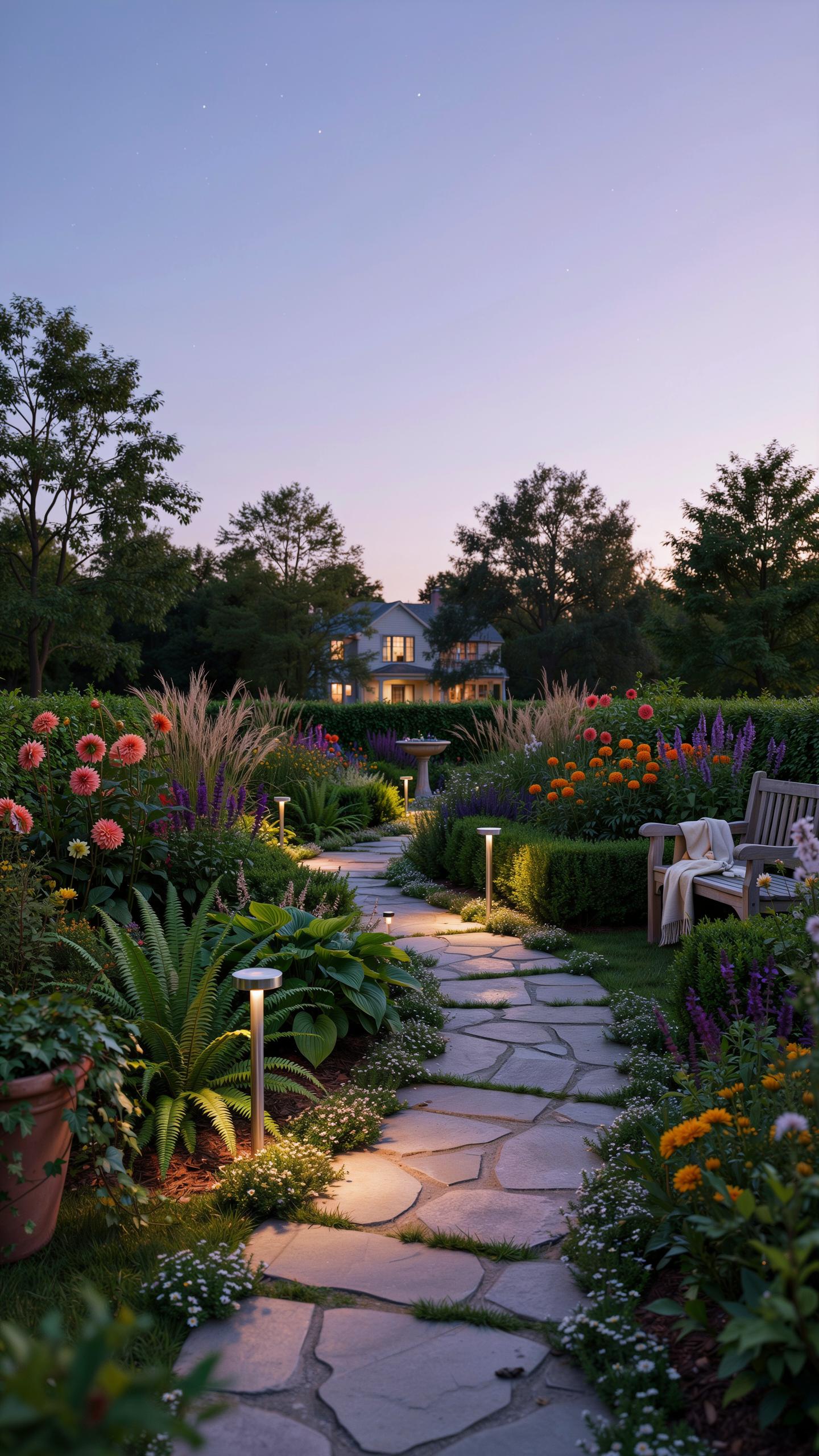
Utilizing Solar Powered LED Fixtures
Solar LED lights convert sunlight into usable energy during the day and release it at night without drawing from the grid. Install them along pathways, near seating areas, and around garden beds. Most models require minimal setup and need no wiring or electrical work. They deliver consistent ambient light for 8 to 12 hours after a full charge.
Solar LEDs cut your electricity costs to zero for outdoor lighting. These fixtures last 25,000 to 50,000 hours before degradation occurs. You avoid trenching, conduit installation, and ongoing maintenance associated with hardwired systems. The warm color temperature they produce matches traditional incandescent bulbs, creating the comfort you want without energy waste.
Minimizing Light Pollution For Wildlife
Downward facing, shielded fixtures direct light where you need it and prevent upward scatter that disrupts ecosystems. Nocturnal insects navigate by moonlight and celestial cues, so excess artificial light causes disorientation and behavioral changes. Birds become confused during migration seasons when exposed to bright overhead lighting. Keep fixtures low to the ground and use motion sensors to reduce continuous output.

Warm colored bulbs between 2700K and 3000K kelvin emit wavelengths that disturb wildlife less than bright white light above 4000K. This temperature range mimics sunset and sunrise, so animals recognize it as natural. Shield placement matters as much as color choice. Position fixtures to illuminate only your intended zones while keeping adjacent areas dark.
Upcycle Creative Hardscapes Via Eco Friendly Yard Projects
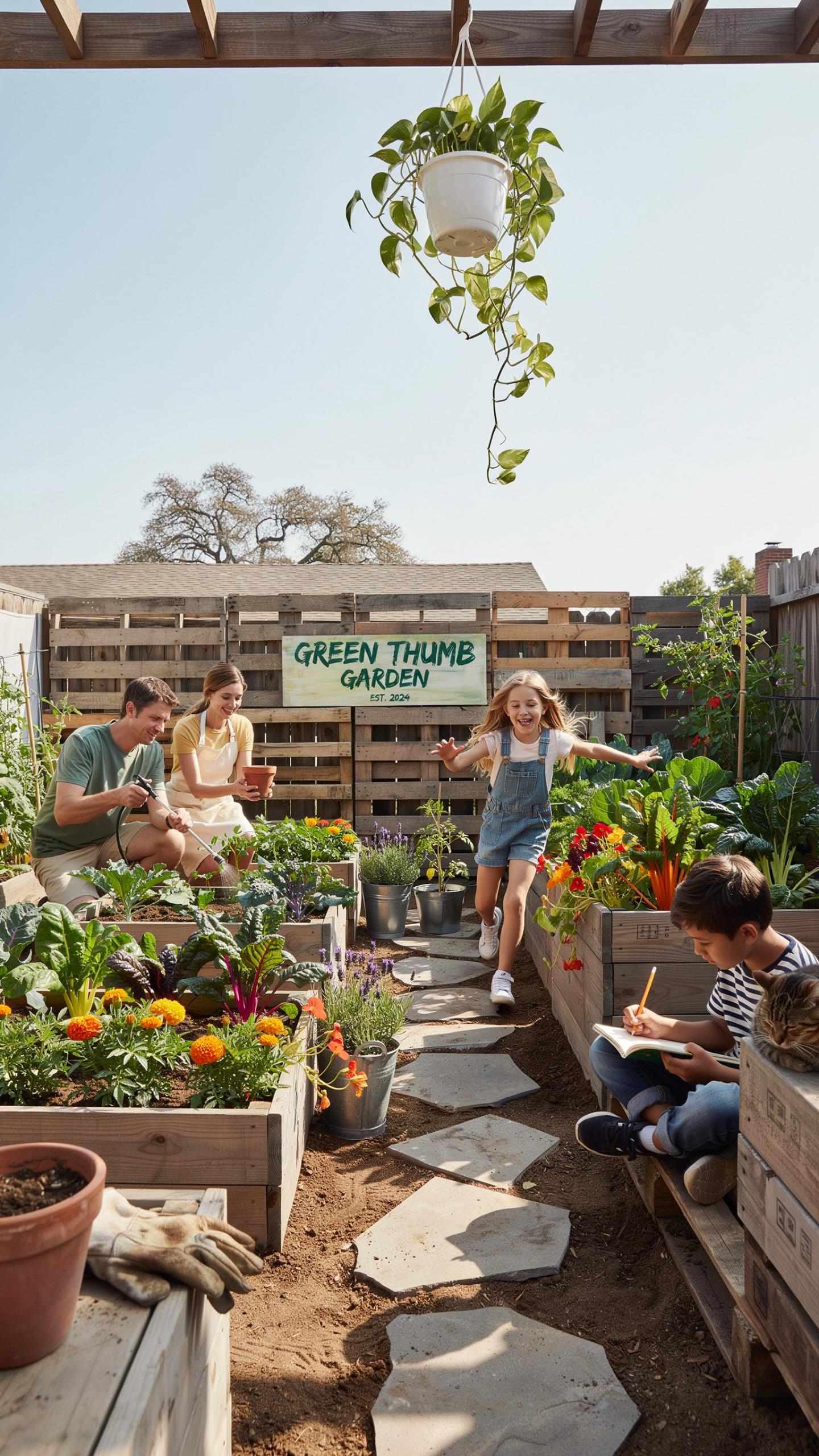
Creative Repurposed Garden Material Ideas
Stop buying new garden materials. Repurposing old items cuts waste and saves money while adding functional elements to your yard. Most households contain materials perfect for garden projects without any environmental cost.
- Wooden Ladders as Vertical Plant Stands: Position old wooden ladders against fences or walls to create tiered planting surfaces. Each rung holds pots of herbs, succulents, or trailing plants, maximizing vertical space in small yards.
- Cracked Terracotta Pots as Toad Houses: Stack broken terracotta pieces to form shelters for beneficial toads and insects. These creatures control garden pests naturally, reducing your need for chemical treatments.
- Wooden Shipping Pallets as Vertical Herb Planters: Attach pallets to walls or fences and fill pocket spaces with soil and herb seedlings. One pallet produces enough fresh herbs for regular cooking while taking minimal ground space.
- Reclaimed Brick Pathways: Salvage bricks from old structures or demolition sites to create permeable walkways. Brick allows water drainage, prevents runoff, and adds structure without new material extraction.
- Old Tires as Raised Planters: Stack painted tires to form durable raised beds for vegetables or flowers. Tires resist decay and contain soil effectively while diverting waste from landfills.
Upcycled materials outlast expectations when installed correctly. Your yard becomes a functional space while keeping construction waste out of disposal systems.
Building DIY Raised Beds From Untreated Wood
Cedar and untreated sustainably sourced timber prevent chemical contamination in your growing space. Treated lumber contains copper compounds or arsenic that leach into soil over time, compromising food safety for vegetables and herbs you plan to eat.
Constructing raised beds from quality untreated wood gives you direct control over soil composition and quality. You select the exact soil blend needed for organic vegetable production without fighting existing yard conditions. This approach yields faster results and healthier plants than working with compacted or contaminated ground soil.
Grow Your Own Food To Support Sustainable Living
Integrating Edible Crops Into Flower Beds
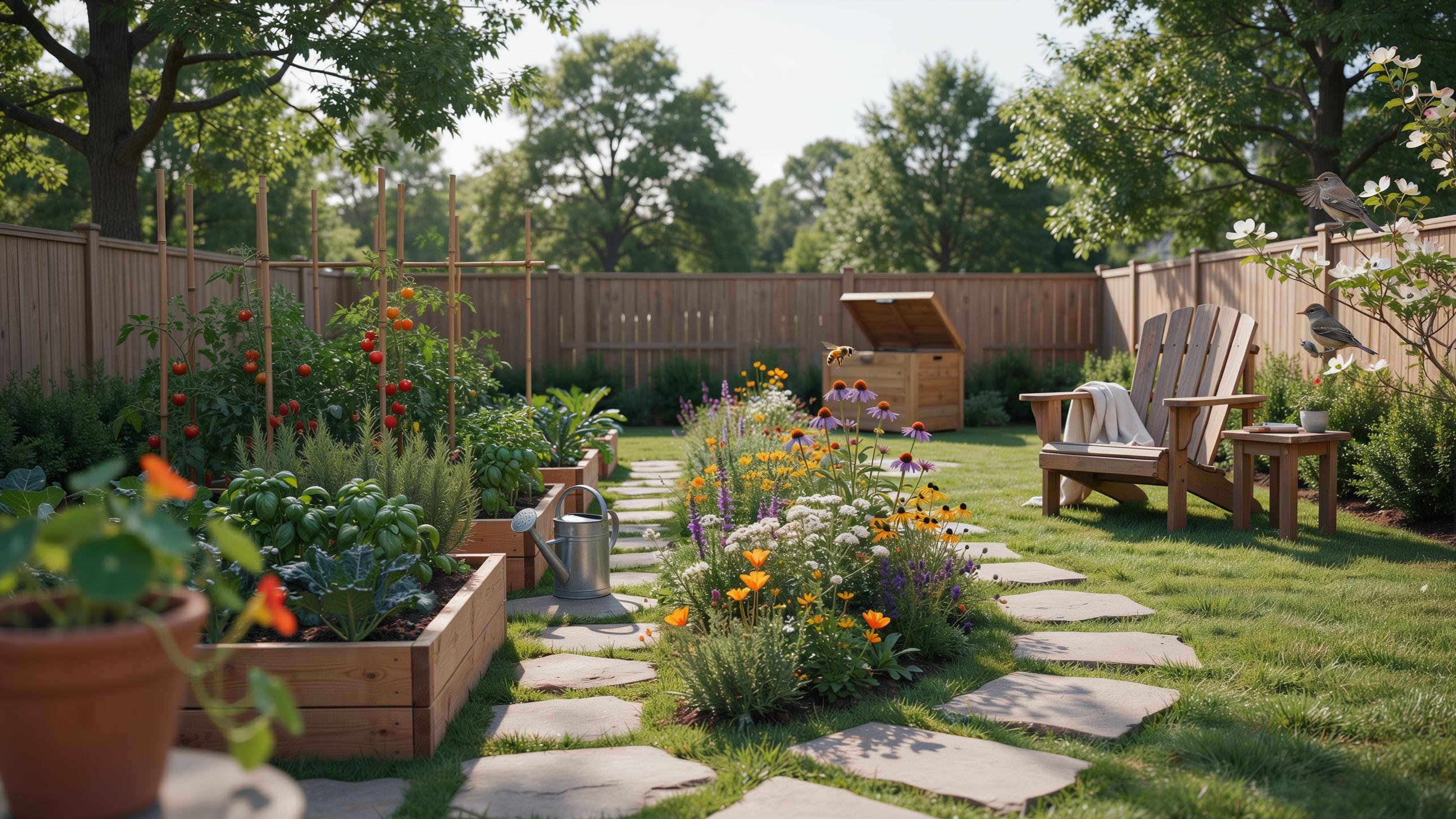
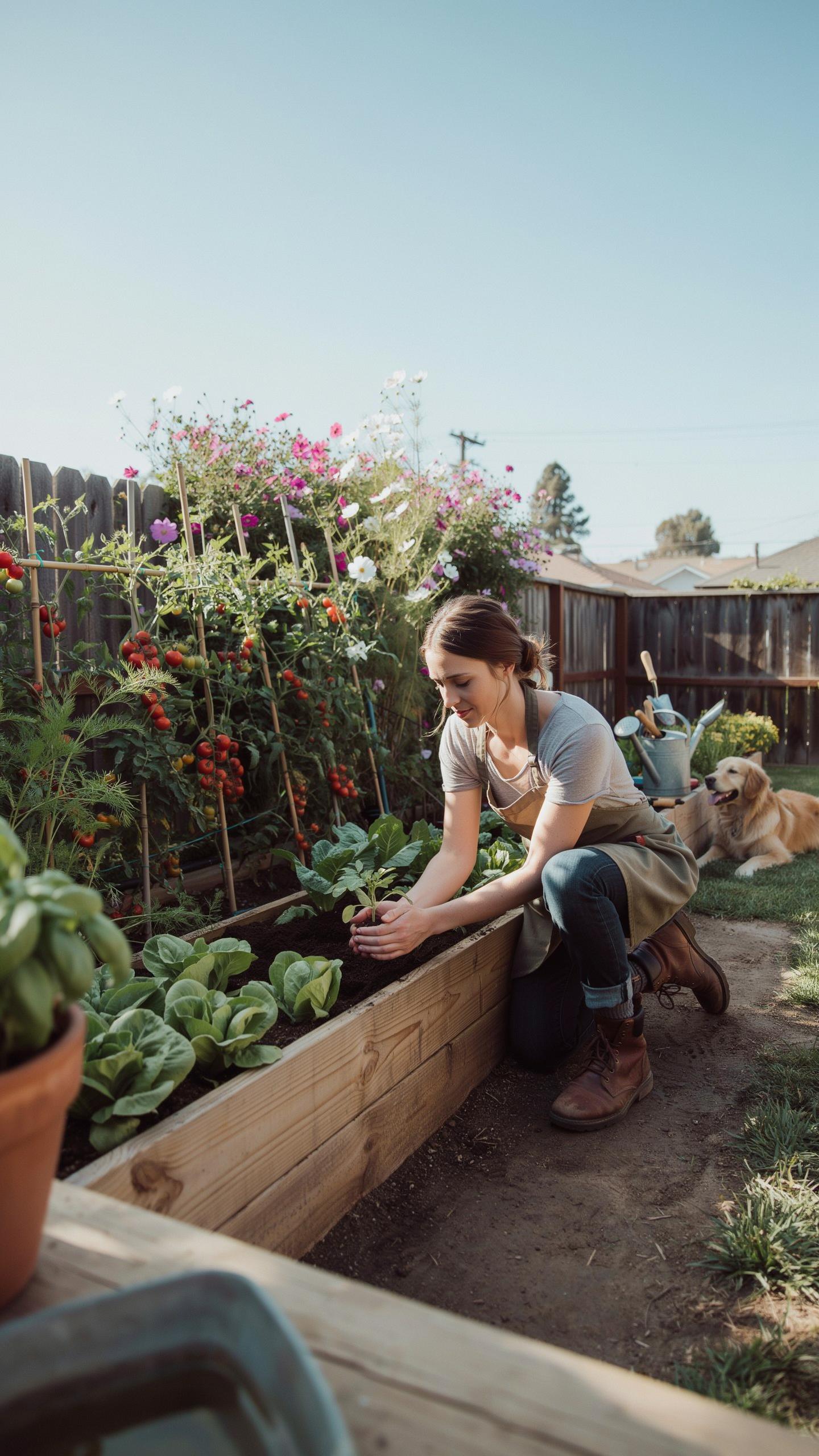
Edible landscaping combines vegetables, herbs, and berry bushes with ornamental plants. This approach eliminates wasted yard space and produces food without dedicated garden beds. Lettuce, kale, and chard work well among perennials. Herbs like basil and rosemary thrive alongside flowering plants. Berry bushes provide structure while yielding harvests.
Design your beds by layering height and selecting plants with compatible water needs. Place taller plants like tomatoes in back and lower herbs in front. Choose crops that tolerate partial shade if your flower beds lack full sun. This method cuts grocery costs while reducing your property’s environmental footprint through localized food production.
Harvesting Rain And Graywater Safely
Capture rainwater using gutters and downspouts directed into storage containers or cisterns. A typical roof collects roughly 600 gallons annually from one inch of rainfall. Stored rainwater eliminates dependence on municipal supplies for irrigation. Clean containers prevent algae and mosquito breeding. Use this water for vegetables and established trees, not root crops consumed raw.
Graywater from sinks, showers, and washing machines works for established plants and trees but not edible crops consumed raw. Install simple diversion systems or collect water manually in buckets. Avoid using water with harsh soaps or bleach. Test your water quality annually. This strategy cuts household water consumption while sustaining your food garden through recycled resources.
Frequently Asked Questions

What are the best eco friendly yard design tips for beginners?
Starting your sustainable journey begins with understanding your local ecosystem. One of the most effective eco friendly yard design tips is to replace thirsty lawns with native plants that thrive naturally in your climate. By choosing indigenous species, you reduce the need for chemical fertilizers and excessive watering, creating a low-maintenance sanctuary that supports local pollinators while making your outdoor space feel lush, lived-in, and welcoming.
How can I incorporate sustainable water management into my landscape?
You can easily manage water usage by installing rain barrels to collect runoff or designing a rain garden in low-lying areas of your property. Implementing these eco friendly yard design tips helps prevent soil erosion and filters pollutants naturally. Additionally, using permeable paving materials like gravel or woodchips allows rainwater to soak back into the ground, nourishing your plants deeply and ensuring your cozy retreat remains vibrant even during dry spells.
Is it possible to design an eco-friendly yard on a tight budget?
Absolutely! Sustainable landscaping is often more affordable because it emphasizes repurposing and natural growth. You can save money by starting a backyard compost pile to create free, nutrient-rich soil or by propagating plants from cuttings shared by neighbors. Utilizing salvaged materials like old bricks or reclaimed wood for garden borders adds instant character and a cozy, rustic charm to your home without requiring a significant financial investment.