


Introduction
Autumn salads offer a unique blend of seasonal ingredients that not only taste great but also provide essential nutrients. These salads combine fresh and colorful produce like kale, apples, squash, nuts, and seeds, making them rich in vitamins, minerals, and fiber. Eating autumn salads can help you enjoy the flavors of the season while supporting your body with wholesome nutrition.
This article covers the nutritional benefits of autumn salads and shares simple tips to prepare them easily at home. You will learn about the best ingredients to use, how to assemble a balanced salad, and ideas for tasty dressings. Whether you’re new to salad making or looking to add seasonal variety to your meals, these insights will help you make nutritious autumn salads effortlessly.
Benefits Of Eating Autumn Salads
Key Nutrients Found In Autumn Salads
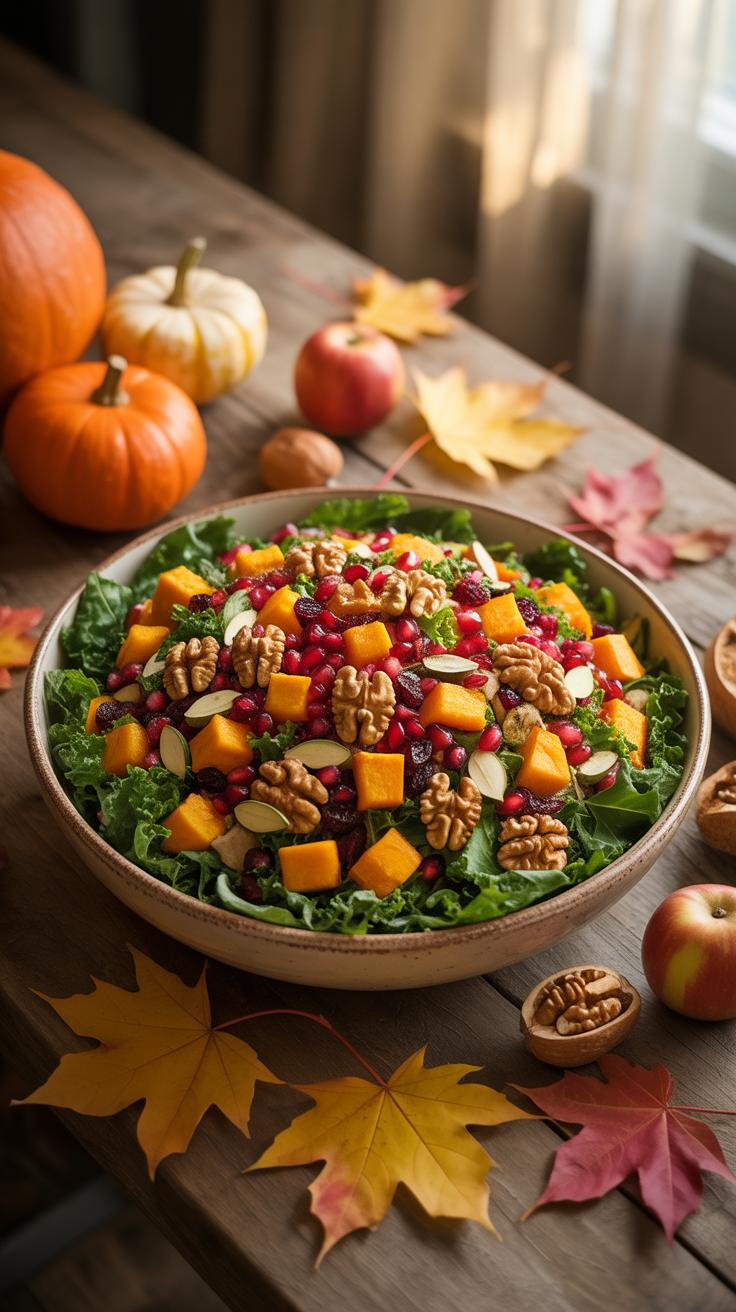
Autumn salads usually combine ingredients like roasted squash, kale, apples, beets, and nuts—all packed with nutrients that your body quite naturally needs as the days grow shorter. You’ll find a good mix of vitamins such as vitamin A from carrots and squash, vitamin C from apples and kale, and vitamin K mainly in leafy greens. These help with skin health, immune support, and even blood clotting.
Minerals like potassium and magnesium show up too, which help maintain muscle and nerve function when temperatures dip. Fiber is another heavy hitter here, especially from root vegetables and fruits, helping digestion stay smooth as seasonal changes sometimes disrupt appetite or routines. Plus, antioxidants like quercetin and beta-carotene help combat the mild rise in oxidative stress that can happen with cooler weather and less sunlight.
How Autumn Salads Support Your Health
Think about digestion first. The fiber in autumn salad ingredients gently encourages bowel regularity, avoiding that sluggish feeling many experience as activity levels drop off in fall. And since many autumn veggies slow the digestion of carbs, they can help maintain steady energy rather than sudden crashes, which is handy when daylight hours feel short.
The immune system also gets a boost. Vitamin C and antioxidants strengthen your body’s defenses—a welcome perk given cold season is looming. These nutrients help your white blood cells respond more effectively and reduce inflammation, maybe keeping you from catching every sniffle or cough that passes by.
Finally, autumn salads can contribute to keeping your energy levels balanced. Nutrients like iron (found in kale and beets) support healthy red blood cells that carry oxygen, while the natural sugars in fruits offer quick energy bursts. When packed together, these elements help you avoid the sluggishness many associate with fall.
So, eating autumn salads can be more than just seasonal enjoyment—they truly support your body through the subtle shifts falling weather brings. Have you noticed how your energy or digestion changes with the seasons? Maybe a salad like this could be part of the answer.
Choosing Fresh Autumn Ingredients

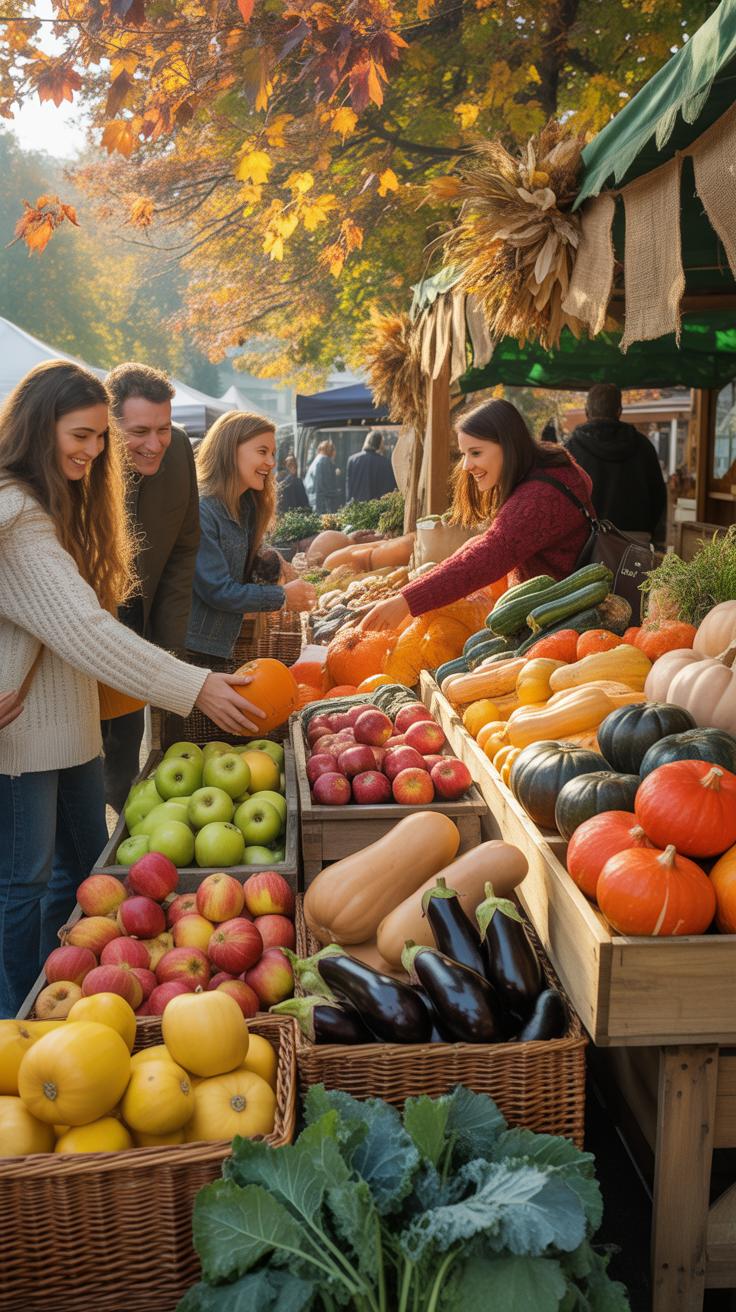
When you browse through markets in autumn, the choice of fresh veggies and fruits can be a bit overwhelming—yet also kind of inspiring. You want produce that feels hearty but still vibrant. It’s not just about color or size; sometimes the texture or even a subtle scent tells you what’s freshest.
Look for leaves that haven’t wilted or browned—especially with greens like kale, which should feel crisp, almost firm to the touch. For squash, the skin should be hard and blemish-free but also slightly dull—shiny ones can mean they’re not quite ripe. Carrots that snap when bent tend to make a better salad than soft, bendy ones. And with beets, check for firm roots and avoid any that look shriveled or too soft.
When you’re at the fruit stand, choose apples and pears with a little give under pressure—too hard, and they might be under-ripe; too soft, and well, maybe already past their prime. Pomegranates should feel heavy for their size; that weight means juicy seeds inside. Something I sometimes do, which isn’t always foolproof, is smelling the fruit. It’s oddly satisfying and sometimes gives away freshness better than sight alone.
Markets can surprise you with rare heirloom varieties or local specialties—don’t hesitate to ask the vendor for tips on what’s actually at its peak. Over time, you’ll build a sense for seasonal shifts and what those seasonal salad ingredients might really bring to your bowl.
Seasonal Vegetables Perfect For Autumn

Kale isn’t just a buzzword; its sturdiness makes it ideal for autumn salads. It can hold up well against richer dressings and warming ingredients. Squash, whether butternut or acorn, adds a subtle sweetness and texture that’s fresh without needing to be heated. It can be shaved raw or roasted lightly before adding—a bit of a personal preference, depending on your mood.
Carrots, with their natural crunch and bright orange or purple hues, bring color and freshness. Their sweetness intensifies in cooler weather, making them feel right at home in autumn bowls. Beets, earthy and sweet, can be sliced thin or shredded. Their color alone can make a salad feel festive, even without fancy garnishes.
Fruits That Enhance Autumn Salad Flavors
Apples are a classic choice—crisp and sometimes tart, they contrast nicely with denser greens. Just be careful to add them last, or toss them with a bit of acid to prevent browning. Pears, softer and more delicate, can create a balance when paired with crunchier elements like nuts or seeds.
Pomegranates are a bit messier, yes, but the pop of juicy seeds and their bittersweet flavor make any salad feel a bit more special. They bring a texture that’s both fun and unexpected. Mixing these fruits with roast veggies or caramelized onions can also bring out interesting layers of taste you might not find otherwise.
Simple Preparation Steps For Autumn Salads
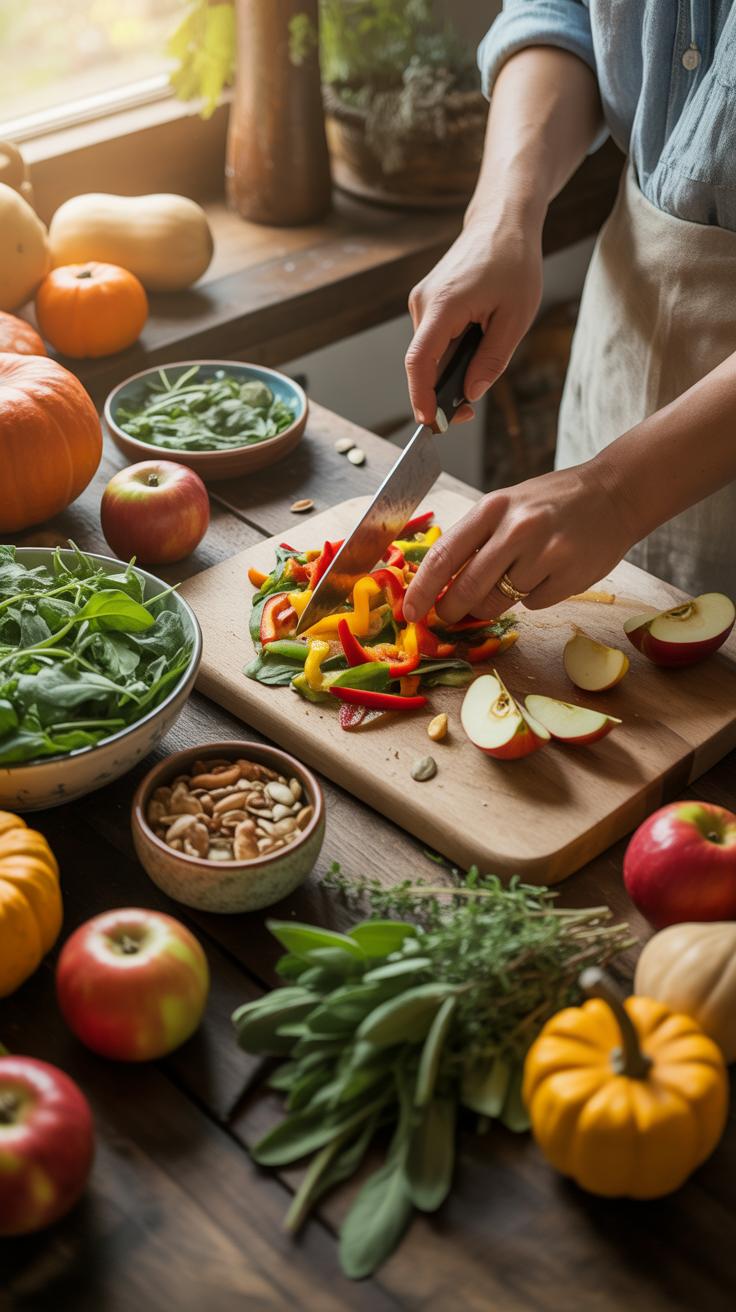

Getting an autumn salad ready doesn’t have to be complicated. First, gather your ingredients—think leafy greens, roasted squash, crisp apples, maybe some nuts or cheese. Start by rinsing your produce under cold water to remove any dirt or residues. Pat everything dry gently with a clean kitchen towel or use a salad spinner, which, honestly, can save a lot of time and mess.
Next, chop your vegetables and fruits into bite-sized pieces. Cut apples and pears just before assembling to avoid browning if you don’t want to prep everything at once. For harder veggies like carrots or squash, thinner slices help them blend better with the salad rather than overpowering every bite.
Layer your ingredients starting with greens, then add softer textures like roasted veggies, and top with crunchy nuts or seeds for contrast. Drizzle your dressing right before serving to keep leaves crisp—if you dress too early, the salad might get soggy rather quickly. Simple, straightforward steps can get you from kitchen to table fast, making a nourishing autumn meal almost effortless.
Washing And Cutting Tips
Washing salad ingredients is more than a quick rinse. Spend a little time soaking leafy greens in cold water—letting bits of soil settle—then rinse again. This helps keep dirt from lingering, which can affect taste and texture. For root vegetables or sturdier fruits, scrubbing with a soft brush can lift stubborn grit.
How you cut matters too. Try slicing fruits like apples and pears at an angle to increase surface area, giving you more crunchy bites. Thin, uniform slices cook or soften better if you’re roasting or steaming before adding to salad. And don’t be shy to leave some textures chunkier—sometimes a rough chop adds rustic charm and keeps salads interesting.
Balancing Texture And Flavor
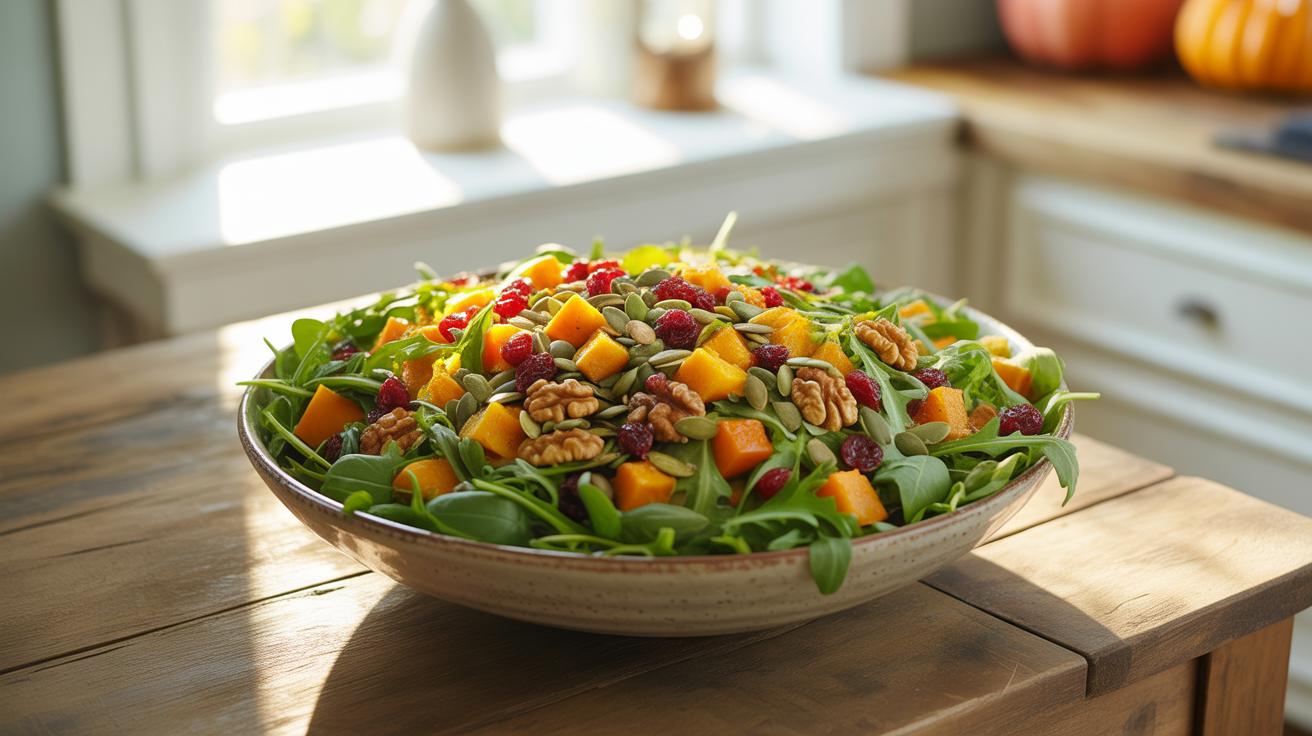
Combining textures in an autumn salad turns an ordinary bowl into something satisfying. Crunchy nuts, crisp apples, and toasted seeds bring fresh snap. Soft roasted squash or melting goat cheese offers creamy contrast. Sweet elements like dried cranberries or fresh figs balance tangy dressings made from citrus or vinegar.
Experiment with these pairings. Maybe a bitter green with a sweet, tart dressing? Or a crunchy pear alongside creamy avocado? Don’t feel bound to exact ratios. Sometimes a hint of saltiness from bacon bits or olives can flip the experience!
Balancing each bite so it’s neither too soft nor too hard keeps you coming back for more. It’s a little bit about your preferences. What’s delightfully balanced to you might feel off to me, and that’s okay.
How To Make Healthy Salad Dressings
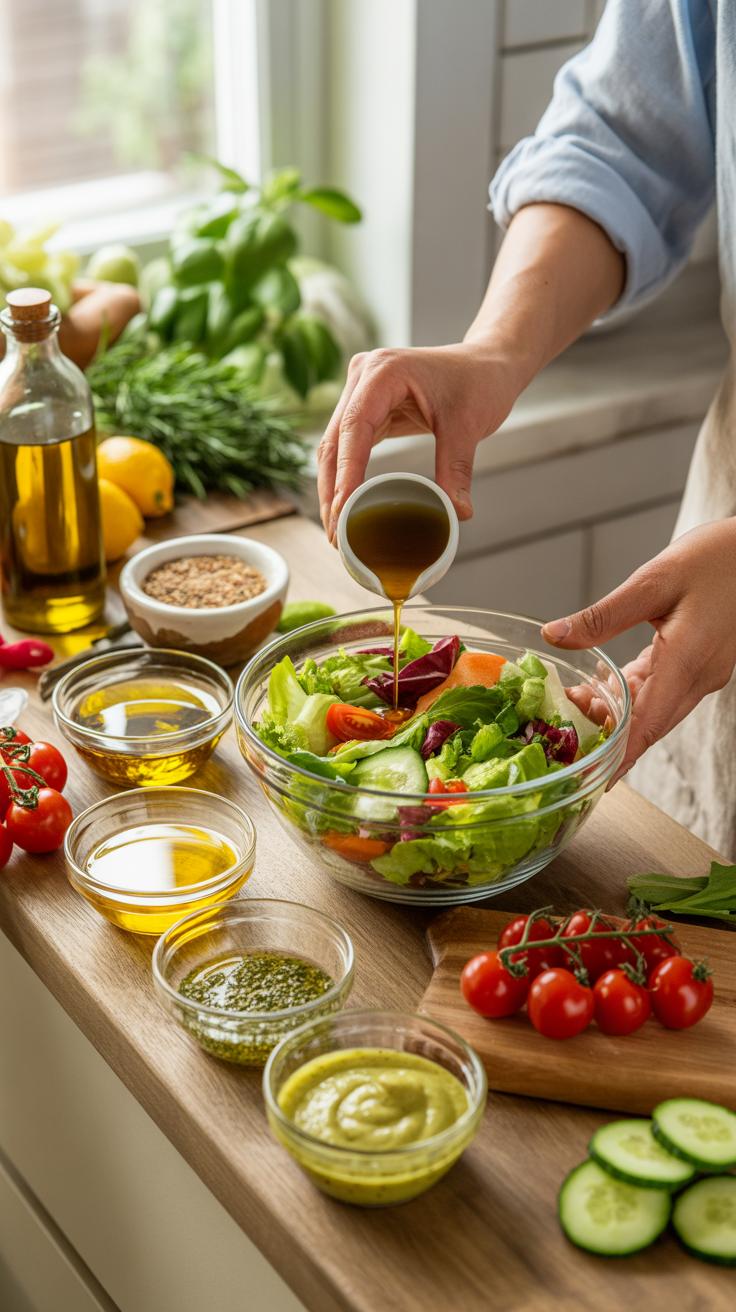
Salad dressings can either lift your autumn salad or weigh it down with hidden sugars and unhealthy fats. Making them at home lets you control what goes in—something I find really useful when trying to eat cleaner but still crave flavor.

One simple approach is vinaigrettes using fresh, whole ingredients. Think apple cider vinegar, olive oil, and herbs. For example, whisk together:
- 3 tablespoons olive oil
- 1 tablespoon apple cider vinegar
- A teaspoon of Dijon mustard (optional but nice)
- Fresh chopped herbs like parsley or thyme
- Salt and pepper to taste
This combo feels light but satisfying. The vinegar adds brightness, olive oil smoothness, and herbs bring that subtle freshness. It’s easy to adjust the tanginess by adding more vinegar or mellow it if you prefer.
On the creamier side, you don’t need to resort to heavy mayo or sour cream. Plain yogurt, a bit of mustard, or even mashed avocado work well here, providing richness without the downsides. For example, blending:
- Half a cup of plain Greek yogurt
- A teaspoon of whole grain mustard
- A squeeze of lemon juice
- Salt and pepper
gives you a tangy, creamy dressing that pairs nicely with roasted squash or apples in your salad. Or try blending a ripe avocado with lime juice and a splash of olive oil for something silky and mild.
These dressings don’t just add flavor; they contribute extra nutrients—healthy fats, probiotics from yogurt, antioxidants from herbs. Still, balancing taste and nutrition can be tricky. Sometimes I wonder if a dressing is too simple or too complicated, but that’s part of experimenting, right?
Comparing Leafy Greens For Salad Base
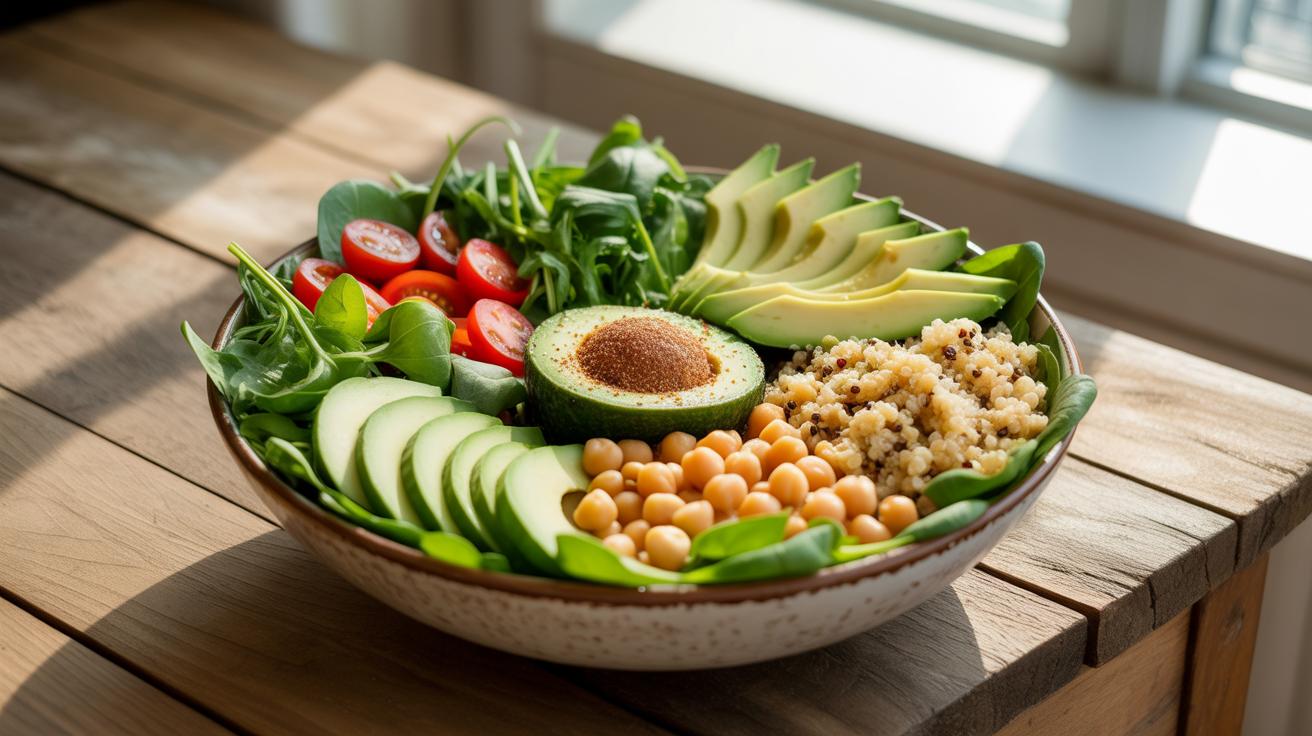
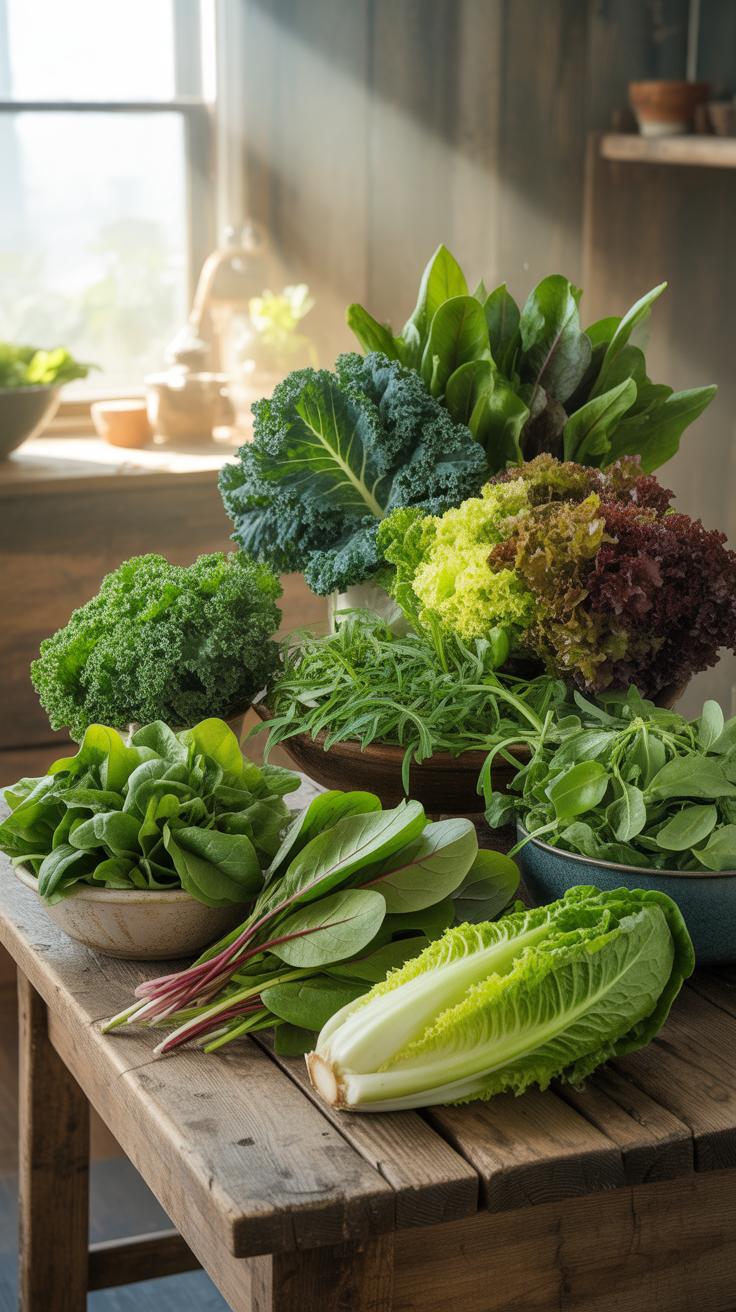
When choosing the leafy greens for your autumn salad, each type brings something a bit different to the table, both in flavor and nutrition. Kale, for instance, stands out with its firm, curly texture. It holds up well against heavier dressings and roasted veggies, which makes it great for fall’s heartier ingredients. Its slightly bitter, earthy taste might not be everyone’s favorite at first bite, but it grows on you, especially when massaged with a bit of olive oil or lemon juice.
Spinach, on the other hand, offers a softer, more delicate leaf that wilts a little under dressings but blends smoothly with sweeter or tangier components. It’s mild, almost neutral, so it lets the other flavors shine through. Nutritionally, spinach is rich in folate and iron, which supports energy levels during cooler months when you might feel sluggish.
Arugula gives the salad a completely different vibe. Its peppery bite can add a surprising pop, balancing sweeter autumn fruits like pears or roasted beets. The leaves are tender but slightly crisp, lending complexity to the texture. Nutrients-wise, arugula brings notable amounts of calcium and vitamin K, which supports bone health—something you don’t always think about when eating greens.
So, why pick one over another? It could come down to what you’re craving: kale for texture and robustness, spinach for smoothness and mildness, or arugula for a little spice. Or you could blend them, layering flavors and nutrients for a more interesting salad. Each green shapes the salad experience differently—taste, texture, and health all mixed together on your plate.
Adding Protein To Your Autumn Salad
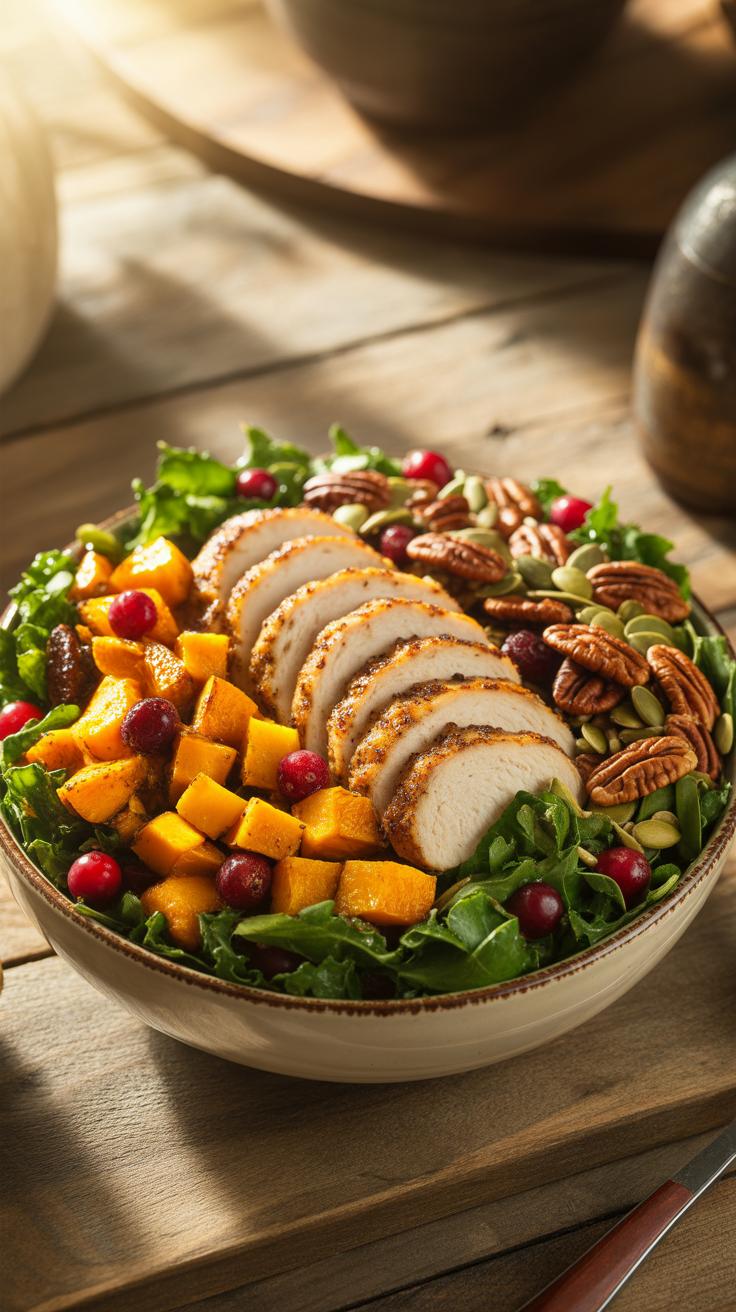

Getting protein into your autumn salad can make it more satisfying and keep you energized longer. When thinking of plant-based options, nuts and seeds really stand out—not just for protein but for texture. Walnuts, pecans, and pumpkin seeds add that light crunch you’ve probably noticed in some classic fall recipes. Beans and legumes like chickpeas or black beans fit the season surprisingly well, especially when roasted or spiced.
On the animal protein side, lean meats such as grilled chicken or turkey work nicely. They don’t overpower the other flavors, which is key when you’re balancing autumn ingredients like roasted squash or apples. Cheese can also add protein and depth; think goat cheese, feta, or even small cubes of aged cheddar. These cheeses bring a creamy, tangy contrast that complements sweeter components in the salad.
Of course, figuring out the right amount of protein might take a bit of trial and error. Too much cheese can make the salad feel heavy, while too many nuts might shift the focus away from the veggies. But once you find that balance, your autumn salad transforms into a full meal, not just a side. What’s a fall salad without a bit of warmth from hearty protein, right?
Preparing Autumn Salads For Meal Prep
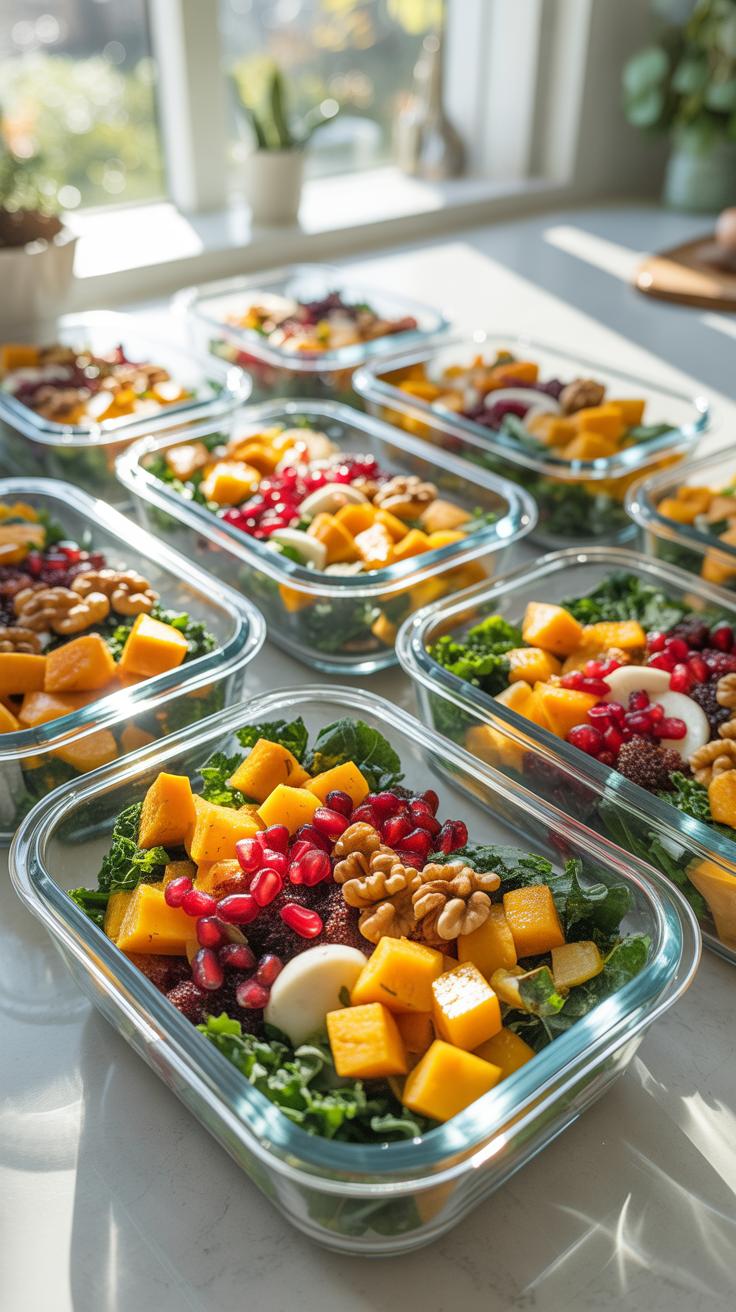
Getting autumn salads ready in advance can really change the game on rushed weekdays. You might think prepping a salad early means it turns soggy or sad by lunchtime, but there are ways around that. The trick is to think about each ingredient separately before mixing it all together.
Start by washing and drying leafy greens thoroughly; moisture is often the culprit behind limp lettuce. Store them in a container lined with paper towels to absorb any leftover dampness. Root vegetables, roasted or raw, hold up well over a few days and can add nice texture without wilting.
One thing I’ve noticed is that chopping fruits like apples or pears just before eating keeps them tasting fresher, but if you do prep them ahead, a bit of lemon juice helps prevent browning. Also, consider portioning your salad into jars or containers layered with heavier veggies or grains at the bottom and leaves on top—keeps the crispness intact.
Have you ever tried making a big batch of roasted butternut squash or beets? They reheat nicely or can eat cold, so prepping these components early lets you toss together a filling salad quickly without much fuss. Sometimes, spending that extra 10 or 15 minutes prepping ingredients in advance saves you from scrambling for dinner later, which feels worth it.
Storing Salad Ingredients Properly
Keeping your veggies and fruits fresh requires paying attention to how you store them in the fridge. Leafy greens benefit from being wrapped loosely in a damp (not wet) cloth or paper towel inside a container or plastic bag with a few small holes for airflow. It might seem odd to leave some moisture, but too dry means wilting faster.
Fruits like apples or pears prefer a crisper drawer with separate containers to limit exposure to ethylene gas, which speeds up ripening. If you leave carrots or celery in water, it can help them stay crunchy longer—just remember to change the water every couple of days.
Some salad bases, like kale or cabbage, tolerate fridge air better than delicate leaves such as spinach or arugula, so consider which greens hold up best for your prep style. Mixing them too early can lead to uneven freshness, so separate storage sometimes works best.
Keeping Dressings Separate
Salads turn soggy when dressings meet the greens too soon. Storing the dressing separately—whether in a small jar, container, or even a sealed dressing cup—is a game changer. This way, the salad stays crisp, and you get to control exactly how much dressing you add. Some mornings, you might prefer more tang; other times, less.
This separation also gives you space to tweak flavors last minute—maybe a splash of balsamic or a dash of maple syrup, depending on your mood. Plus, it’s easier to prevent messes if you’re just grabbing lunch on the go.
Have you noticed how leaves coated in dressing early tend to get a bit slimy? Keeping things apart keeps textures and flavors distinct until the very last moment, which is probably why homemade salads often taste better than store-bought pre-mixed ones.
Common Autumn Salad Mistakes To Avoid
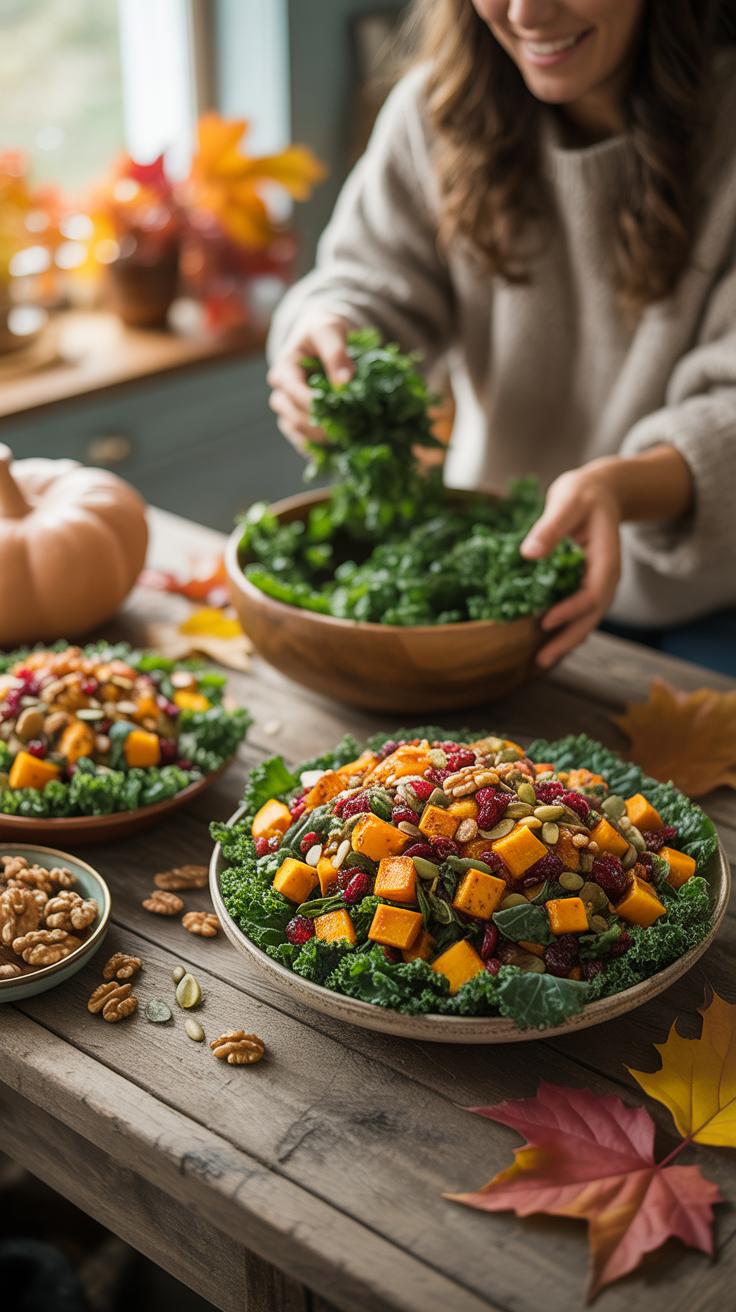
One mistake I often see is overdressing the salad. It’s tempting to pour on a generous amount of dressing because it looks tasty, but too much can easily drown the flavors and leave your salad soggy. Plus, it adds calories you might not expect. Try adding dressing little by little and toss as you go. You can always add more if needed, but it’s harder to fix once it’s soaked in.
Another frequent error is ignoring texture balance. Autumn salads should be a mix of crunchy and soft ingredients — that contrast makes eating more enjoyable. Think of pairing roasted tender squash with crisp nuts, or soft cheese with fresh apples. Without this balance, the salad can feel either too mushy or too dry. It’s easy to overlook how important this is.
Have you noticed your salad feels a bit one-note when eating? Experiment with different textures. Sometimes, just a handful of toasted seeds or crumbled bacon can turn a simple salad into something more interesting. Don’t be afraid to mix it up a bit; your mouth will thank you.
Easy Autumn Salad Recipes To Try
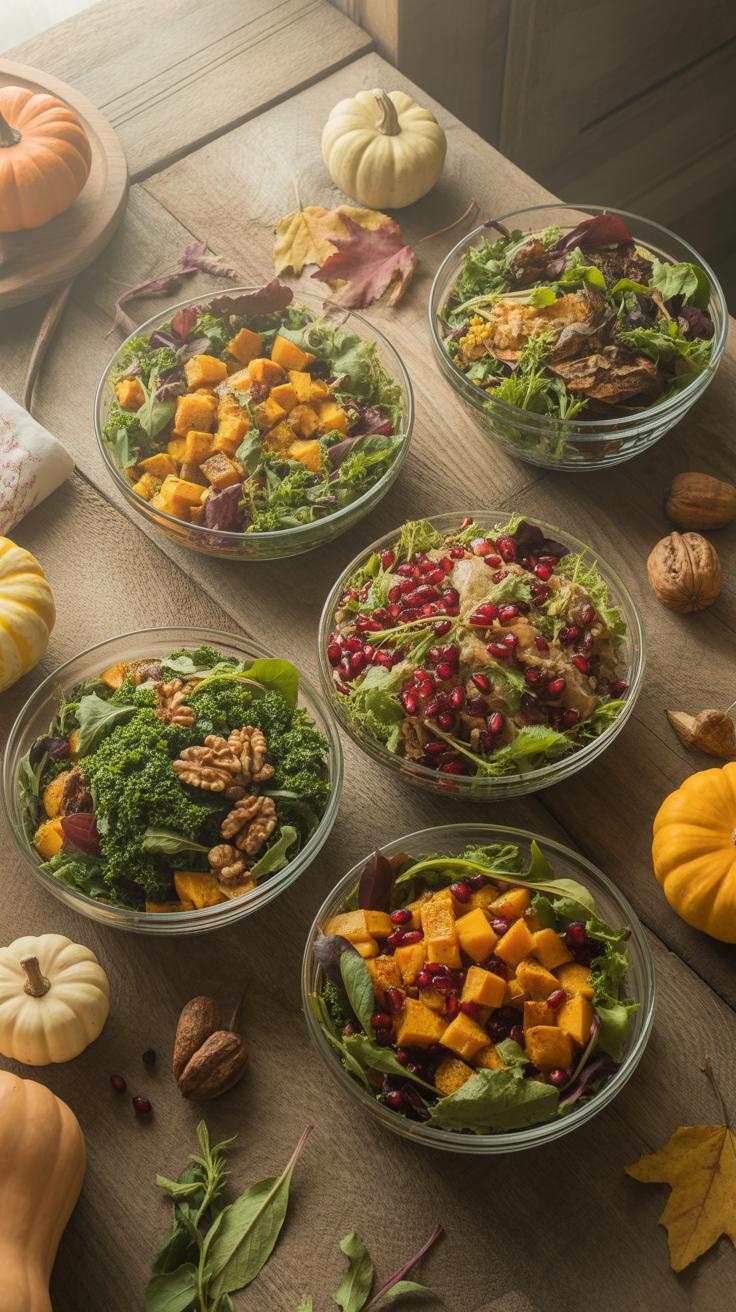
Here are two simple recipes that bring autumn flavors to your table without fuss. They’re the kind of salads you can throw together even after a long day but still feel like a treat.
Roasted Butternut Squash Salad
This one balances the sweetness of roasted squash with the crunch of nuts and the freshness of greens. You’ll need:
- 1 small butternut squash, peeled and cubed
- 4 cups mixed salad greens (like arugula and kale)
- ½ cup toasted pecans or walnuts
- 3 tablespoons olive oil
- 1 tablespoon apple cider vinegar
- 1 teaspoon Dijon mustard
- Salt and pepper to taste
Start by roasting the squash cubes with a drizzle of olive oil, salt, and pepper at 400°F for about 25 minutes. Once cooled, toss them with your greens and nuts. Whisk the vinegar, mustard, and olive oil for a quick vinaigrette. Pour over the salad. It’s simple. You get that warm, caramelized flavor against crisp leaves, which I always find comforting as temperatures drop.
Apple Walnut Spinach Salad
This one leans on fresh, crisp apples and creamy dressing — a contrast worth trying. Ingredients are straightforward:
- 2 cups fresh spinach
- 1 large apple, thinly sliced
- ½ cup chopped walnuts
- ¼ cup Greek yogurt
- 1 tablespoon honey
- 1 teaspoon lemon juice
Mix the yogurt, honey, and lemon juice for the dressing. Toss spinach, apple slices, and walnuts in a large bowl. Add your dressing and stir gently. You get creaminess without heaviness. Honestly, it might be the kind of salad you don’t expect to look forward to, but then it sneaks up on you with its crunchy sweetness and subtle tang.
Tips For Serving And Enjoying Autumn Salads

Plating For Visual Appeal
When it comes to plating autumn salads, think about layering colors and textures. Start by spreading leafy greens as the base—spinach or arugula work well—then add chunks or slices of roasted squash, apples, or pears. Group similar items together rather than mixing everything randomly. This way, your salad feels organized but still natural. A scattering of nuts or seeds on top gives a nice contrast and a bit of crunch.
Using shallow bowls or wide plates helps the salad ingredients shine. You don’t want everything piled high; instead, aim for a slightly spread-out look so each component is visible. Sometimes, placing a few edible flowers or fresh herbs on top can bring unexpected brightness. It’s a simple touch but, well, it does make the salad look more inviting—like you took a moment, which maybe you did or didn’t.
Pairing Autumn Salads With Other Foods
Autumn salads often hold their own as the main star, but they can also play well alongside heartier dishes. Think roasted chicken or turkey—a classic autumn combo. The freshness of the salad cuts through the richness of those meats. On the other hand, serving them with a warm grain bowl or lentils can create a fuller meal without feeling heavy.
Pair salads with crusty bread or a light soup to round out the experience. Drinks? A crisp apple cider or even a dry white wine often complements those earthy, sweet flavors in autumn salads. If you’re having them as snacks, small bites like cheese cubes or roasted chickpeas can balance textures and flavors. The idea is to mix simplicity with flavor contrasts, making each bite interesting rather than repetitive.
Conclusions
Autumn salads provide a delicious way to include more vegetables and fruits in your diet during the cooler months. They are rich in nutrients that promote good digestion, immune support, and overall wellness. Using seasonal and fresh ingredients ensures maximum flavor and wellness benefits for your body.
With easy preparation tips and ingredient suggestions, you can create a variety of autumn salads that suit your palate and nutrition goals. Try mixing different textures and flavors, such as crisp apples with roasted squash or crunchy nuts with fresh greens. Enjoy the season by making autumn salads a regular part of your meals.